
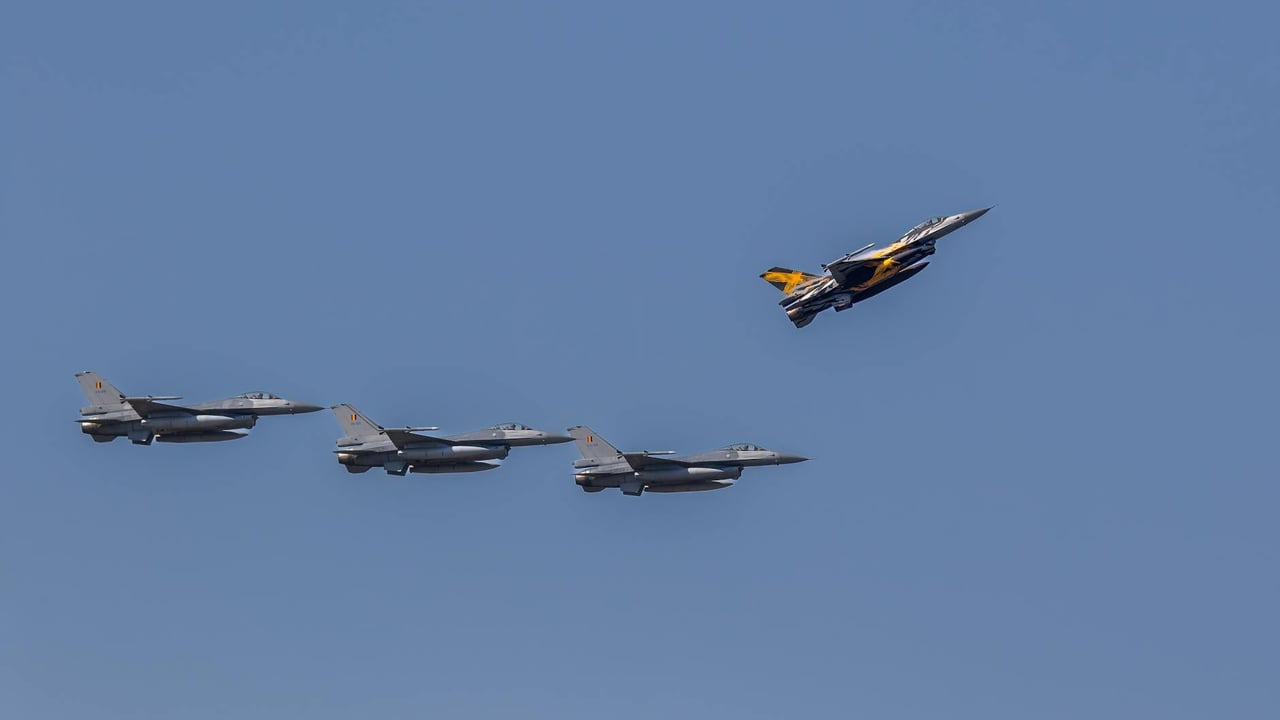

Deep in the Gobi Desert, the People’s Liberation Army Air Force (PLAAF) has conducted high-intensity combat drills featuring its most advanced domestic platforms. The exercise showcases the so-called 'Three Musketeers' of Chinese air power—the J-20 stealth fighter, the J-16 multi-role strike fighter, and the J-10C agile interceptor—operating in a unified tactical formation. This concentration of force highlights Beijing's increasing confidence in its domestically developed aerospace technology.
This combination of airframes represents the cornerstone of China’s strategy to achieve regional air superiority. By pairing the J-20’s low-observable capabilities with the J-16’s heavy payload and the J-10C’s versatility, the PLAAF is refining a 'system-of-systems' approach. This doctrine is specifically designed to counter advanced Western air assets by utilizing stealth to penetrate defenses while conventional fighters provide overwhelming fire support.
The choice of the Gobi for these drills is significant, as the vast and desolate landscape provides a realistic theater for electronic warfare and long-range engagement testing. These maneuvers are increasingly focused on multi-domain integration, testing how diverse platforms share data and sensor information in a contested electromagnetic environment. Such environments are essential for simulating the complexities of modern, high-tech battlefields where communication is constantly under threat.
For global observers, the frequency and complexity of these exercises signal a maturing of Chinese pilot training and tactical doctrine. No longer content with mere hardware parity, Beijing is now prioritizing the human and organizational elements of modern aerial warfare. The shift toward realistic, adversarial training suggests a military moving toward a proactive rather than reactive posture in the Indo-Pacific region.