
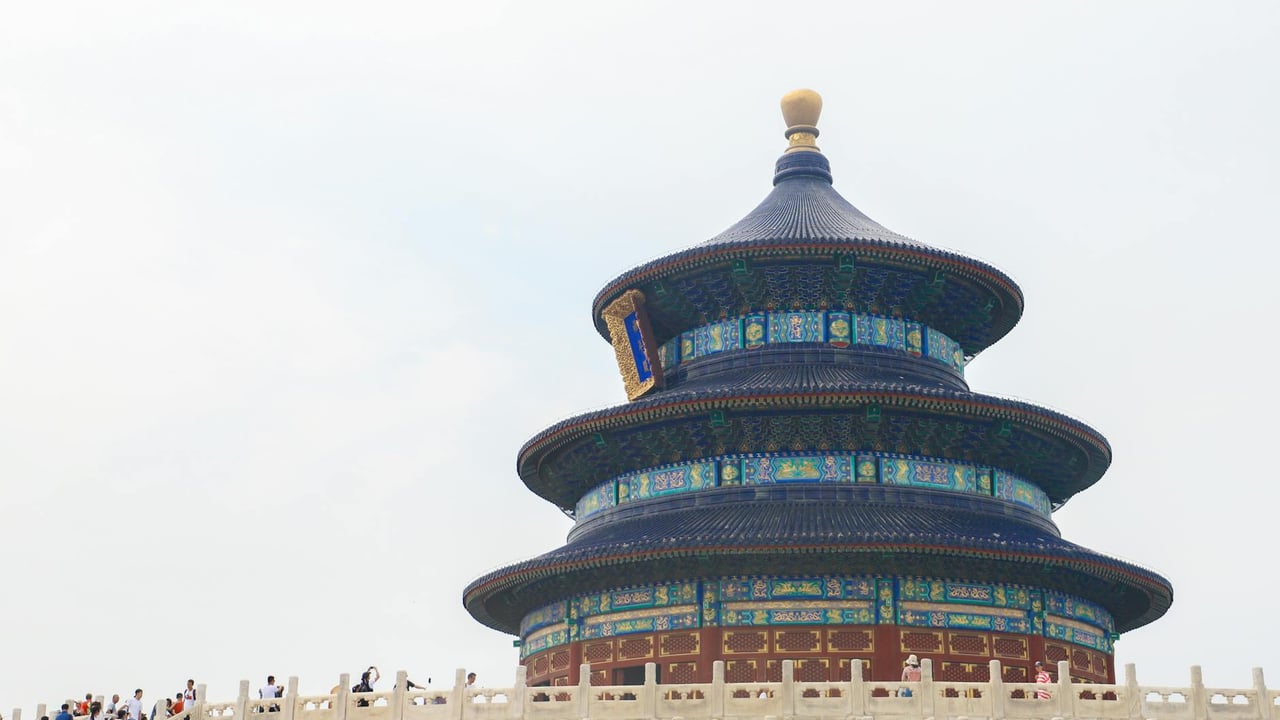

As the leaders of the world’s two largest economies walked through the sprawling grounds of Beijing’s Temple of Heaven, the visual was as carefully curated as any trade communique. Moving away from the austere, red-carpeted halls of the Great Hall of the People, this 2026 meeting suggests a deliberate pivot toward the deep historical and philosophical roots of Chinese statecraft. By choosing a site where Ming and Qing emperors once performed sacred rites to ensure the world’s harmony, Beijing is communicating through the language of civilization rather than mere bureaucracy.
The Temple of Heaven, or Tiantan, is far more than a tourist landmark; it is the architectural manifestation of the 'Mandate of Heaven.' In the Chinese political lexicon, the relationship between 'Tian' (Heaven) and the ruler is foundational, emphasizing that authority is conditional upon maintaining balance and the welfare of the people. In the context of a high-stakes summit, this setting frames the U.S.-China relationship as a matter of global stability and cosmic order, rather than a localized geopolitical friction.
Observers of Chinese diplomacy note that such venue choices are rarely accidental. While the Forbidden City represents the power of the State, the Temple of Heaven represents the aspiration for Peace. By inviting a U.S. President to this specific location, the Chinese leadership is likely attempting to lower the temperature of recent tensions, signaling a preference for 'common ground' over 'zero-sum' competition. The circular architecture of the Hall of Prayer for Good Harvests serves as a silent witness to the necessity of inclusion and continuity.
This move also reflects a broader trend in Beijing’s 'Great Power Diplomacy'—the utilization of traditional culture to soften China’s international image. As the two leaders traversed the Danbi Bridge, the imagery aimed to project a sense of timelessness, suggesting that the current rivalry is but a brief moment in a much longer historical arc. Whether this architectural charm offensive can bridge the deep-seated structural divides in technology and security remains to be seen, but for one afternoon, the focus was firmly on the 'Way of Heaven.'