

The spectacle of 60 million yuan in crisp banknotes stacked on an auditorium stage has become an annual rite of passage for Henan Mine, a heavy machinery giant that has recently eclipsed even the legendary retailer Pang Dong Lai in the annals of Chinese corporate generosity. At its most recent year-end gala, employees were invited to grab as much cash as their hands could carry within a set time limit, with some walking away with nearly 100,000 yuan in a matter of minutes. This is not the behavior of a desperate firm seeking headlines, but the calculated philosophy of Cui Peijun, a founder who distributed 180 million yuan of his company’s 270 million yuan annual profit directly back to his workforce.
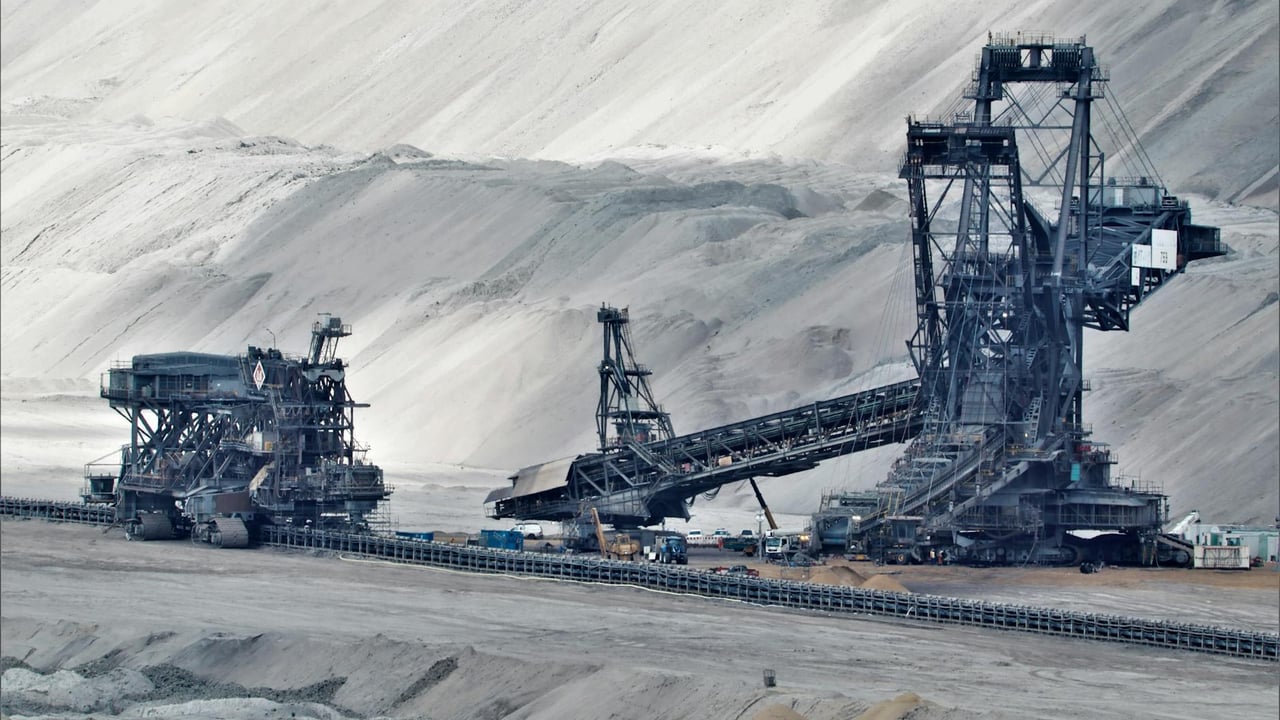
Despite its name, Henan Mine does not extract minerals; it dominates the unglamorous but essential world of overhead cranes. Based in Changyuan, a small county that controls over 70% of China’s gantry crane market, the company provides the literal heavy lifting for the nation’s most prestigious projects, from aerospace and naval shipyards to nuclear power plants. In a sector where average manufacturing margins are razor-thin, Henan Mine operates on a mere 2.5% profit margin, relying on massive scale and a staggering production volume of over 140,000 units annually to generate its 11.2 billion yuan in output.
What sets the firm apart from the debt-laden titans of the Chinese property and tech sectors is its defiant financial independence. Henan Mine is 98.88% owned by Cui, carries no bank loans, and has steadfastly refused to pursue an IPO or external financing. By insulating the company from the short-term pressures of equity markets and the interest burdens of the banking sector, Cui has created a closed-loop system where the fruits of labor are shared by the laborers rather than siphoned off by creditors or speculative shareholders. This 'parental' management style extends beyond cash, including fully funded domestic and international vacations for the parents of employees, a gesture that resonates deeply with traditional Chinese values of filial piety.
This radical approach to human capital appears to be paying dividends in an era of economic headwinds. While many Chinese manufacturers struggle with rising costs and flagging demand, Henan Mine saw orders jump by 16.9% and exports surge by 36% last year. The firm’s success suggests that in the 'Real Economy,' loyalty is a more effective hedge against volatility than financial engineering. By 'scattering wealth' to 'gather people,' Cui Peijun has arguably provided the most literal interpretation of Beijing’s 'Common Prosperity' mandate, proving that a low-margin business can thrive if it prioritizes internal stability over external expansion.