
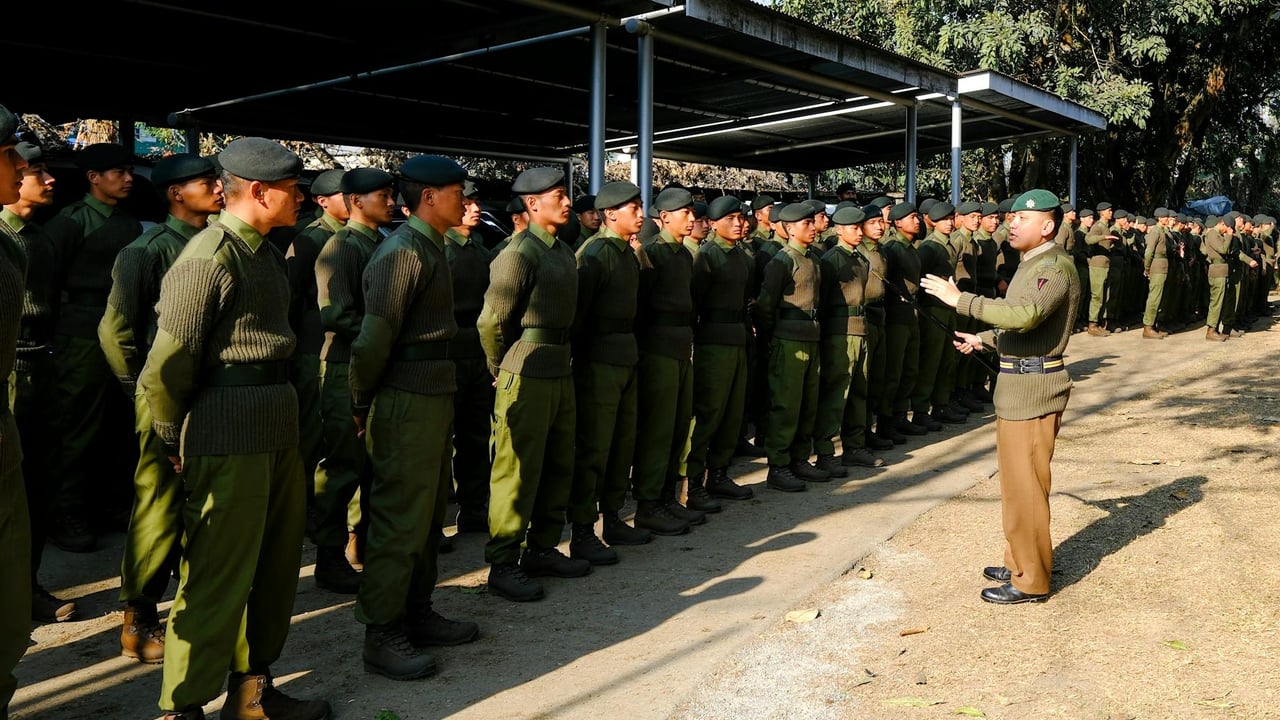

In the predawn hours at a brigade of the People’s Liberation Army’s 71st Group Army, a curious phenomenon recently caught the attention of high-ranking officers. Despite a newly implemented 10-minute 'buffer' period following the 6:00 AM wake-up call, units were arriving at the training grounds as early as 6:02 AM. This race to the bottom of the clock was not driven by tactical necessity, but by a pervasive fear of appearing 'slack' compared to neighboring platoons.
This behavior is a military manifestation of 'involution'—a term popularized in Chinese society to describe grueling, zero-sum competition that yields no true progress. Within the PLA, this has long translated into 'performative discipline,' where grassroots officers add extra layers of rigor to standard regulations. Leaders identified that this 'self-overloading' culture was actually eroding combat effectiveness by depriving soldiers of basic needs like hygiene and rest.
The 71st Group Army’s response marks a significant attempt to modernize the internal culture of the world's largest standing army. By changing the assembly mandate from 'ready by 6:10' to 'depart at 6:10,' the brigade effectively eliminated the 'elastic space' that officers previously exploited to show off their unit's discipline. This shift reflects a broader mandate from the Central Military Commission to purge 'formalism'—the practice of doing things for appearance rather than utility.
Beyond the morning drill, the brigade is now targeting other forms of administrative waste, such as redundant record-keeping and hyper-obsessive barracks maintenance. These tasks, often referred to as 'staying for the sake of a paper trail,' have been replaced with a streamlined 'reduction list.' The goal is to ensure that a soldier’s merit is judged by their performance in the field rather than the sharpness of their bedsheet folds.
The results of these reforms suggest a boost in morale and a more focused approach to actual warfare preparation. Soldiers report that the removal of psychological burdens has allowed them to concentrate more fully on rigorous training exercises. By treating time as a finite strategic resource, the PLA is signaling that modern military professionalization requires efficiency and pragmatism over traditional, performative rituals.