Fatah’s Rare Congress: Mahmoud Abbas Asserts Control Amid Palestinian Crisis

Fatah has launched its eighth general congress in Ramallah after a ten-year hiatus, aiming to elect new leadership and reaffirm its role as the central pillar of Palestinian politics. President Mahmoud Abbas used the platform to insist on Fatah's sovereignty over Gaza and its status as the legitimate voice for national independence.

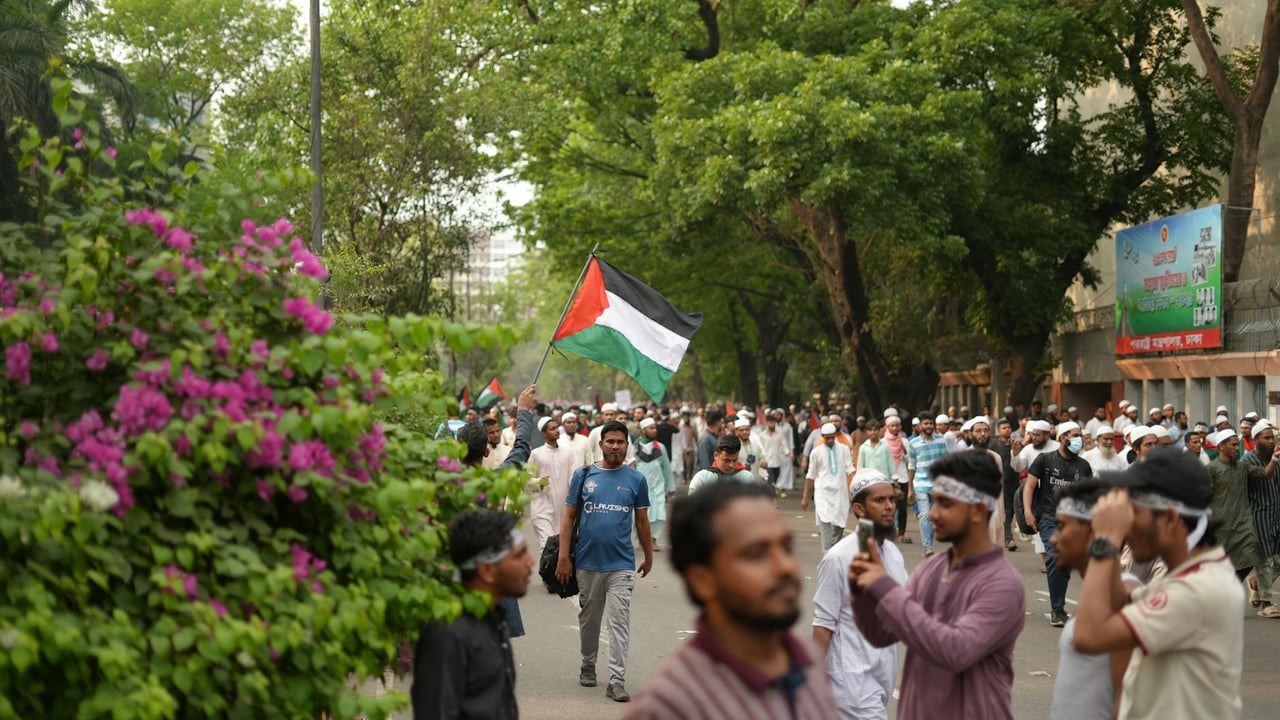
A crowd participates in a pro-Palestine rally in Dhaka, Bangladesh, waving flags in solidarity.

Key Takeaways

  • 1Fatah convened its first general congress in roughly ten years in the city of Ramallah.
  • 2President Mahmoud Abbas emphasized that Gaza is an inseparable part of Palestinian territory and rejected any permanent alternative governance.
  • 3The congress is tasked with electing a new Fatah Revolutionary Council and Central Committee, signaling a potential shift in leadership dynamics.
  • 4The event serves to bolster Fatah's image as a moderate, negotiation-focused alternative to Hamas in the eyes of the international community.
  • 5Abbas underscored national unity as the only viable foundation for ending internal divisions and achieving statehood.

Editor's
Desk

Strategic Analysis

The 8th Fatah Congress is less about policy innovation and more about institutional survival and succession management. By asserting that Gaza is an 'indivisible' part of the Palestinian state, Abbas is essentially auditioning for the 'day after' role in Gaza's governance, positioning Fatah as the only entity capable of reuniting the Palestinian territories under a single legal framework. However, the decade-long gap between congresses highlights a fossilized leadership structure that faces a massive credibility gap among younger Palestinians. For the international community, particularly the West, a revitalized Fatah is the preferred partner, but without significant internal reform and a clear succession plan, this congress may be seen as a mere performance of authority rather than a genuine renewal of the Palestinian national movement.

China Daily Brief Editorial
Strategic Insight
China Daily Brief

For the first time in a decade, the Palestinian National Liberation Movement, known as Fatah, has convened its eighth general congress in the West Bank city of Ramallah. The gathering comes at a pivotal moment for the aging leadership, as it attempts to reassert its relevance as the primary representative of the Palestinian people amidst shifting regional dynamics and internal fractures.

Addressing the delegation, President Mahmoud Abbas framed Fatah as the indispensable 'backbone' of the national cause and the sole guardian of independent decision-making. His rhetoric sought to consolidate authority, positioning the movement as the only legitimate bridge between the current struggle and a future sovereign state. This emphasis on continuity is a clear signal to both domestic rivals and international observers.

Central to the congress's agenda is the status of the Gaza Strip, which Abbas declared an 'indivisible part' of the Palestinian nation. He insisted that any interim governance arrangements following the current hostilities must be strictly temporary and must not compromise the political or legal sovereignty of the Palestinian Authority. This stance is designed to preempt international proposals for Gaza that might bypass the Ramallah-based leadership.

Beyond ideology, the congress serves a critical administrative function: the election of a new Revolutionary Council and Central Committee. These bodies will define Fatah’s path forward and, crucially, determine the movement’s stance on succession. With the leadership aging and no clear heir apparent, these internal elections are being closely watched for signs of a new generation of power brokers.

Fatah has historically championed a negotiated two-state solution, a position that has often put it at odds with the more militant Hamas. Since the 2007 schism that saw Hamas take control of Gaza, Fatah’s influence has been largely confined to the West Bank. This congress is an attempt to project a unified front and demonstrate that the movement is ready to govern a reunified territory when the opportunity arises.

Share Article

Related Articles

📰
No related articles found