
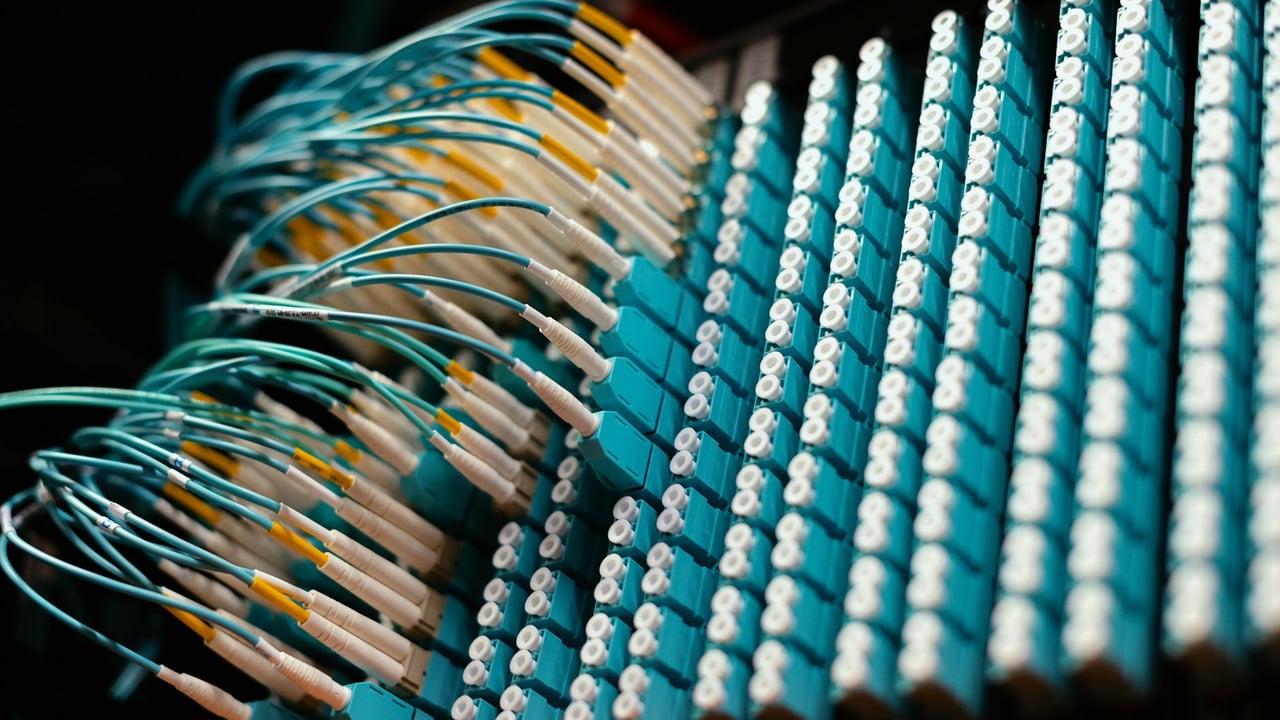

The global race for data supremacy has shifted from pure transmission speeds to the physical constraints of urban infrastructure. FiberHome Telecommunication Technologies, a central pillar of China’s networking industry, has announced the successful mass production of a 13,824-core ultra-high-density optical cable. This development represents a significant leap in fiber-optic density, aimed at resolving the increasingly crowded underground duct spaces in China’s tier-one megacities.
As artificial intelligence and hyperscale cloud computing demand unprecedented levels of interconnectivity, the physical volume of traditional cabling has become a logistical bottleneck. By packing over 13,000 cores into a single cable, FiberHome is providing a solution that allows telecommunications operators to multiply their capacity without the prohibitive costs of excavating new trenches. This efficiency is critical for the national 'East Data, West Computing' initiative, which seeks to balance data processing loads across the country’s vast geography.
The technical achievement underscores China's broader strategic push for self-reliance in high-end manufacturing and digital infrastructure. While Western competitors like Corning and Prysmian have long led the market, FiberHome’s move into mass production of such high-density hardware suggests that Chinese firms are no longer just catching up but are now setting the pace for industrial standards. This capability is essential for the backbone of 6G research and the densification of 5G networks in saturated urban environments.
Beyond domestic applications, the mass production of these cables positions China as a dominant supplier for the next generation of global internet infrastructure. As developing nations in the Global South look to build out smart city frameworks, the cost-to-performance ratio of ultra-high-density Chinese cabling offers a compelling alternative to Western providers. This technical milestone is a clear signal that China intends to maintain its lead in the physical layer of the global digital economy.