
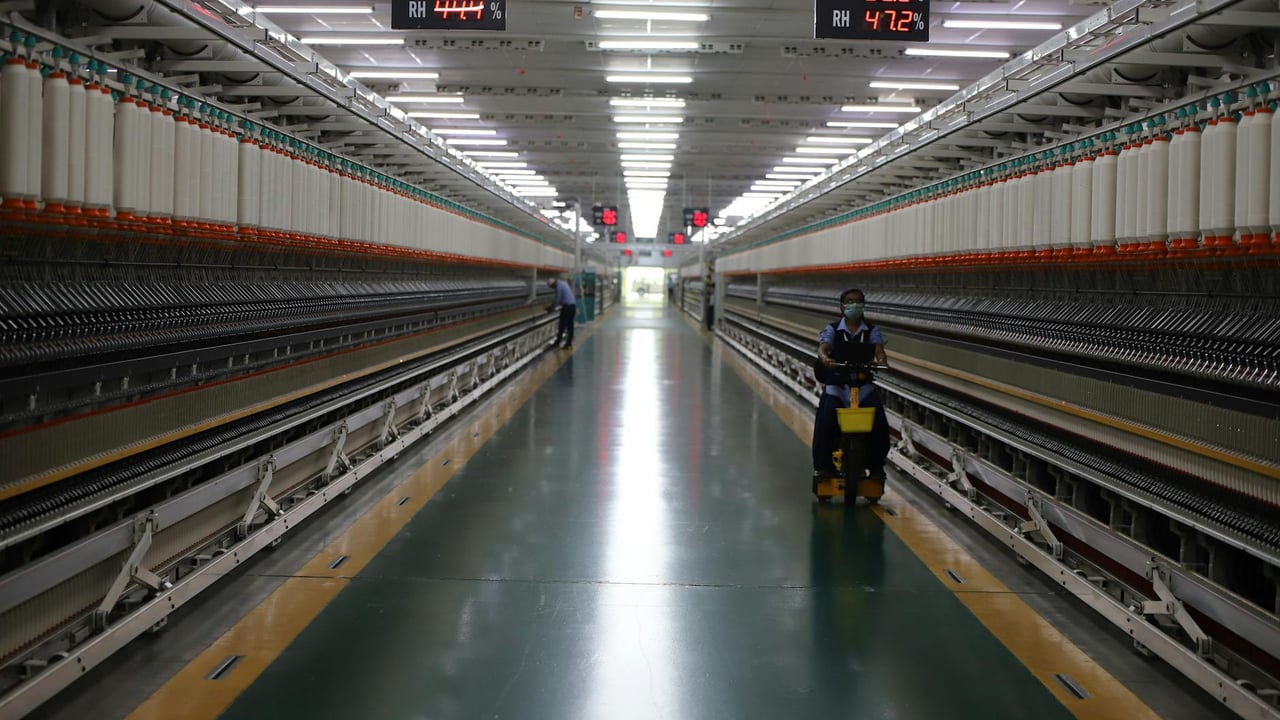

As China prepares to enter its 15th Five-Year Plan in 2026, the Communist Party has released a comprehensive anthology of President Xi Jinping’s directives on the 'real economy.' Spanning a decade of policy evolution, the collection reinforces a singular, unwavering doctrine: China’s future as a superpower rests on its ability to manufacture physical goods, not on the ephemeral gains of the 'virtual' economy. This strategic hardening represents a profound rejection of the Western financialized model, which Beijing views as a source of inherent instability and vulnerability.
From his 2016 warnings against 'hollowing out' the industrial base to his most recent 2025 instructions on 'New Quality Productive Forces,' Xi has consistently framed manufacturing as the 'lifeline' of the nation. The rhetoric has shifted from basic supply-side reforms to a sophisticated focus on 'securitized development.' By prioritizing high-end manufacturing, artificial intelligence, and green energy, Beijing aims to build a self-sustaining ecosystem that can withstand 'raging waves' of external pressure and international sanctions.
The documents reveal a leadership deeply wary of the 'virtual economy'—a term encompassing real estate speculation, over-leveraged finance, and certain internet platform services. Xi’s insistence that finance must serve the 'bloodstream' of industry rather than its own 'self-circulation' explains much of the regulatory crackdowns seen in recent years. For the Chinese leadership, a country of 1.4 billion people cannot rely on services alone; it requires a material foundation that ensures food, energy, and technological sovereignty.
Looking toward the 2026–2030 period, the focus has expanded to 'investing in both things and people.' This signifies a move to integrate educational and talent development directly into the industrial chain. By fostering 'Little Giant' enterprises—specialized firms that dominate niche global markets—China hopes to solve the 'bottleneck' problems of critical technologies. This is not merely an economic plan; it is a blueprint for national survival in an increasingly fragmented global order.