
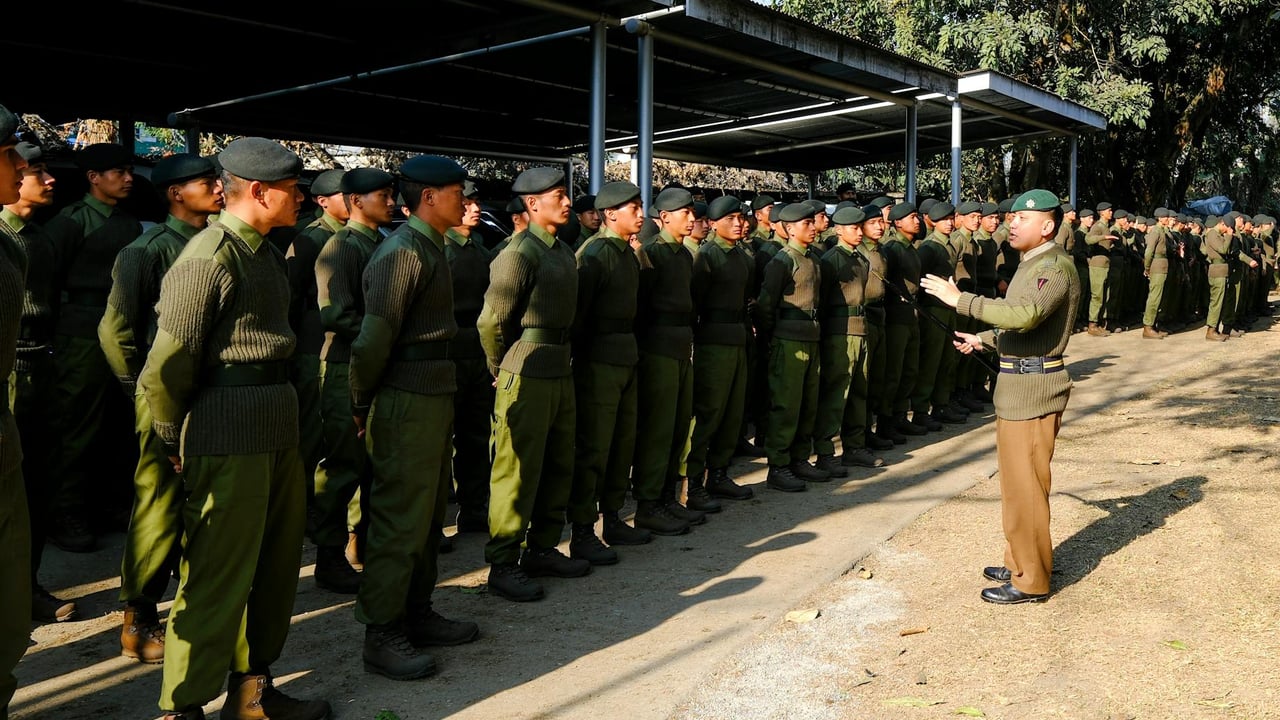

At a base belonging to the 71st Group Army of the People’s Liberation Army (PLA), a simple ten-minute window has become a microcosm of a much larger institutional struggle. Initially, commanders introduced a buffer between the morning wake-up call at 6:00 AM and the start of exercises at 6:10 AM to allow soldiers time for basic hygiene. Yet, within weeks, the ‘buffer’ vanished as units began competing to arrive earlier and earlier, eventually creeping back toward the original 6:00 AM start time.
This phenomenon is a classic example of what Chinese sociologists call 'neijuǎn' or involution—a state of hyper-competition where individuals exert increasing effort for diminishing returns. In the context of the barracks, soldiers felt that arriving ‘on time’ at 6:10 AM looked like a lack of discipline compared to peers who arrived at 6:05 AM. This drive to appear more dedicated than one's neighbor created an environment where the prescribed rest period was effectively competed out of existence.
The leadership of the 71st Group Army recognized that this was not a sign of high morale, but rather a symptom of performative formalism. Officers noted that the same logic was infecting other areas of military life, such as obsessively straight bedding that hampered rapid deployment or the maintenance of redundant logs to satisfy inspectors. These behaviors were identified as ‘empty rotations’ that consumed energy without contributing to actual combat readiness.
To break the cycle, the brigade shifted its linguistic and regulatory approach from 'assemble by 6:10' to a more rigid 'move out at 6:10.' By mandating a specific time for action rather than a window for arrival, they removed the incentive for competitive early birding. This was part of a broader 'three reductions' campaign aimed at stripping away unnecessary administrative burdens and performative tasks that distract from training.
The military's new 'burden reduction list' specifically targets the culture of 'leaving traces'—the practice of over-documenting work purely for the sake of future inspections. It also emphasizes that internal standards, such as the neatness of barracks, must serve the needs of war preparedness rather than aesthetic uniformity. The goal is to move away from a culture where subordinates do things primarily 'to show the leaders' or 'to tell the superiors.'
Early results suggest the shift is being welcomed by the rank and file, who report reduced anxiety and a sharper focus on actual training during the day. By reclaiming these ten minutes, the PLA is attempting a much larger feat: modernizing its organizational culture to prioritize efficiency and combat lethality over traditional, performative displays of discipline. For a military in the midst of a massive technological overhaul, these cultural adjustments are seen as essential for developing a truly professional fighting force.