
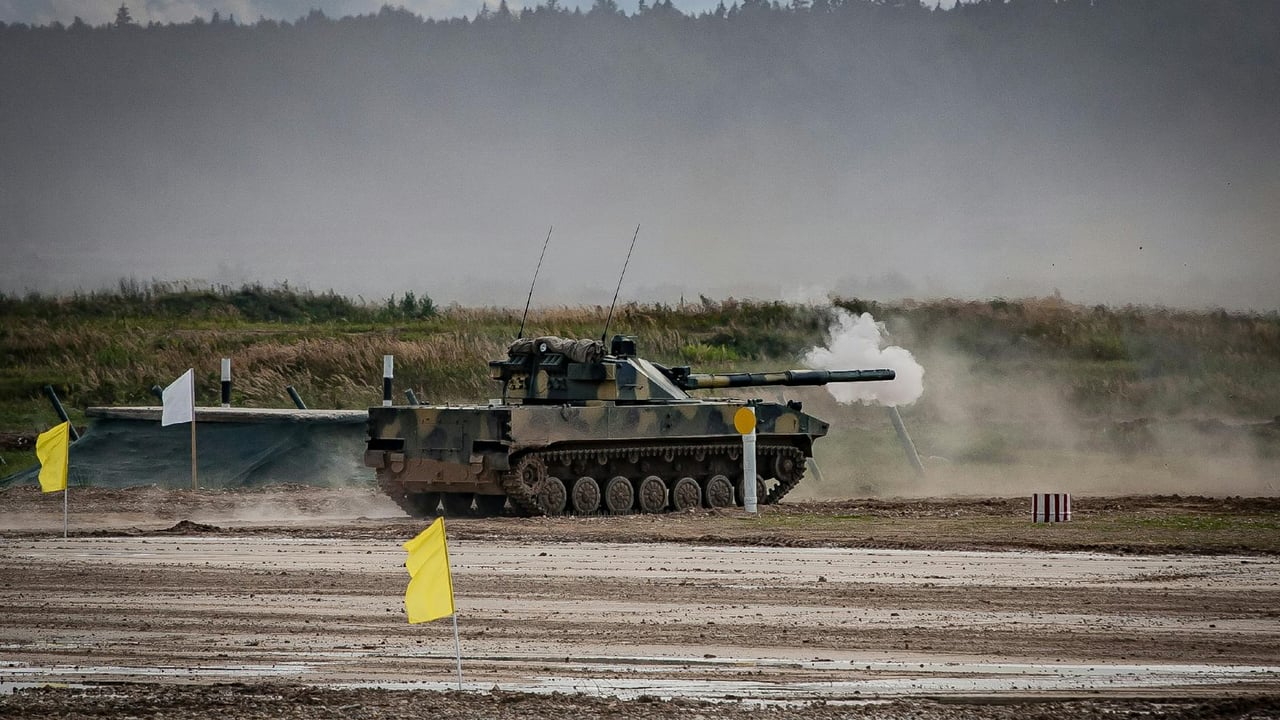

A fleeting three-second clip of a dust-covered armored vehicle navigating a training ground has signaled a major shift in China's ground forces. The vehicle, identified as the Type 100 main battle tank, has transitioned from a ceremonial centerpiece at military parades to an active-duty asset. This rapid deployment from public unveiling to field integration suggests a high level of confidence in its radical new design and sub-systems.
At the heart of this machine is a 1500-horsepower hybrid-electric drive system, a departure from traditional internal combustion powertrains. By utilizing an engine as a high-efficiency generator to power electric motors, the tank achieves a 600-kilometer range while gaining a unique tactical advantage. In sensitive environments, it can switch to a pure-electric 'stealth mode,' drastically reducing its acoustic and infrared signatures to evade modern thermal sensors.
The vehicle’s weight, clocked at approximately 40 tons, places it in a strategic 'sweet spot' compared to its Western counterparts. While American and European main battle tanks have ballooned to over 70 tons, complicating transport and bridge-crossing, China’s new platform maintains a high power-to-weight ratio. This agility is particularly potent in the high-altitude and rugged terrains often found along China's borders where oxygen-starved diesel engines typically struggle.
Survivability has been reimagined through an unmanned turret and a reinforced crew capsule located at the front of the hull. This layout physically isolates the three-man crew from the ammunition magazine, a design philosophy born from observing the catastrophic 'jack-in-the-box' turret losses in recent regional conflicts. By removing the crew from the turret, the tank reduces its vertical profile and focuses its heaviest armor on the occupied section.
In terms of lethality, the Type 100 utilizes a 105mm main gun rather than the larger 120mm or 125mm standards. This choice reflects advancements in metallurgy and propellant chemistry that allow smaller rounds to achieve comparable penetration with higher muzzle velocities. The smaller caliber also permits a larger internal magazine and a faster autoloader, ensuring sustained fire-power in high-intensity engagements.
Modern threats, specifically the proliferation of low-cost drones and loitering munitions, are addressed by a comprehensive active protection suite. A 360-degree sensor array identifies incoming projectiles, while a roof-mounted remote weapon station acts as a dedicated point-defense system against aerial threats. This shift from passive armor thickness to active electronic and kinetic interception marks the next evolution in armored survival.