China’s Orbital Ambition: Launching the World’s First Photonic Computing Satellite

China has initiated the development of the world’s first photonic computing satellite, aiming to replace electronic processing with light-based systems to overcome orbital power and heat constraints. The project, slated for 2026 deployment, seeks to move AI processing directly into orbit, significantly reducing the costs and latency associated with traditional satellite data management.

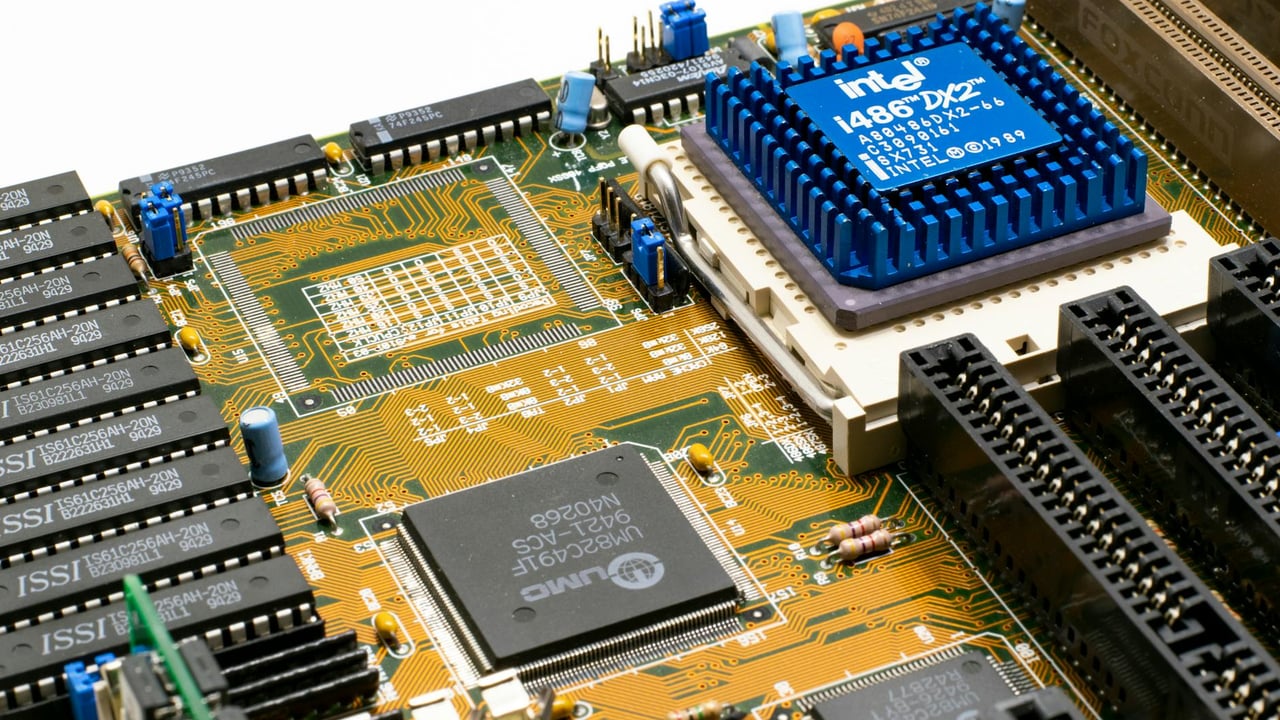
Detailed view of an Intel i486 DX2 CPU installed on a vintage motherboard with chips and circuits.

Key Takeaways

  • 1Oriental Space Computing and Lightelligence have established a joint center to develop the world's first optical computing satellite payload.
  • 2The transition to photonic computing aims to solve the 'impossible triangle' of radiation hardening, high power consumption, and heat dissipation in space.
  • 3The strategic shift moves the industry from 'ground-based processing' to 'on-orbit AI training and inference' for real-time data utility.
  • 4Prominent investors view silicon photonics as a strategic opportunity for China to lead in post-Moore’s Law computing architectures.
  • 5The initiative aims to reduce orbital computing costs by a factor of ten through integrated design and industrial-grade component supply chains.

Editor's
Desk

Strategic Analysis

This move into space-based optical computing is a calculated attempt by China to leapfrog traditional semiconductor bottlenecks. By focusing on silicon photonics, Chinese firms are betting on a technology where the global playing field is relatively level compared to advanced lithography for electronic chips. If successful, on-orbit processing would drastically reduce the bandwidth required to transmit raw data back to Earth, effectively turning satellite constellations into a distributed global supercomputer. This has profound implications for military surveillance, autonomous navigation, and global communications, potentially allowing China to challenge the architectural dominance currently held by Western 'Starlink-style' constellations through superior on-board intelligence rather than just numerical scale.

China Daily Brief Editorial
Strategic Insight
China Daily Brief

In a bid to redefine the economics of space-based data, Chinese researchers and private firms have officially launched the development of the world’s first optical computing satellite. Announced at a high-level technology forum in Shanghai, the project marks a pivot from traditional electronic processing to photonic systems. By replacing electrons with photons, the initiative seeks to overcome the 'impossible triangle' of space hardware: radiation vulnerability, high power consumption, and thermal management constraints.

The project is spearheaded by a joint innovation center formed by Oriental Space Computing and Lightelligence (Guangbenwei Technology). This partnership aims to transition space-based computing from theoretical proof-of-concept to full-scale system deployment by 2026. The shift represents a fundamental change in how satellite data is handled, moving away from the 'space data, ground processing' model toward real-time, on-orbit AI inference and training.

Industry leaders at the event, including representatives from the Shanghai Science and Technology Commission and venture firm CAS Star, emphasized that integrated photonic circuits are the critical infrastructure of the intelligent era. As the cost of launching satellites continues to plummet, the competitive frontier is shifting from rocket lift capacity to 'payload efficiency.' Photonic chips offer a strategic bypass for semiconductor limitations, providing higher bandwidth and lower latency without the heat signature of traditional silicon processors.

This development comes as global players like SpaceX explore orbital data centers to support massive satellite constellations. However, the Chinese approach emphasizes a 'system-level reconstruction' that integrates satellite, rocket, and payload design. By optimizing the supply chain from aerospace-grade to industrial-grade components, the project aims to reduce the cost of orbital computing by an entire order of magnitude, paving the way for a ubiquitous space-based AI network.

Share Article

Related Articles

📰
No related articles found