
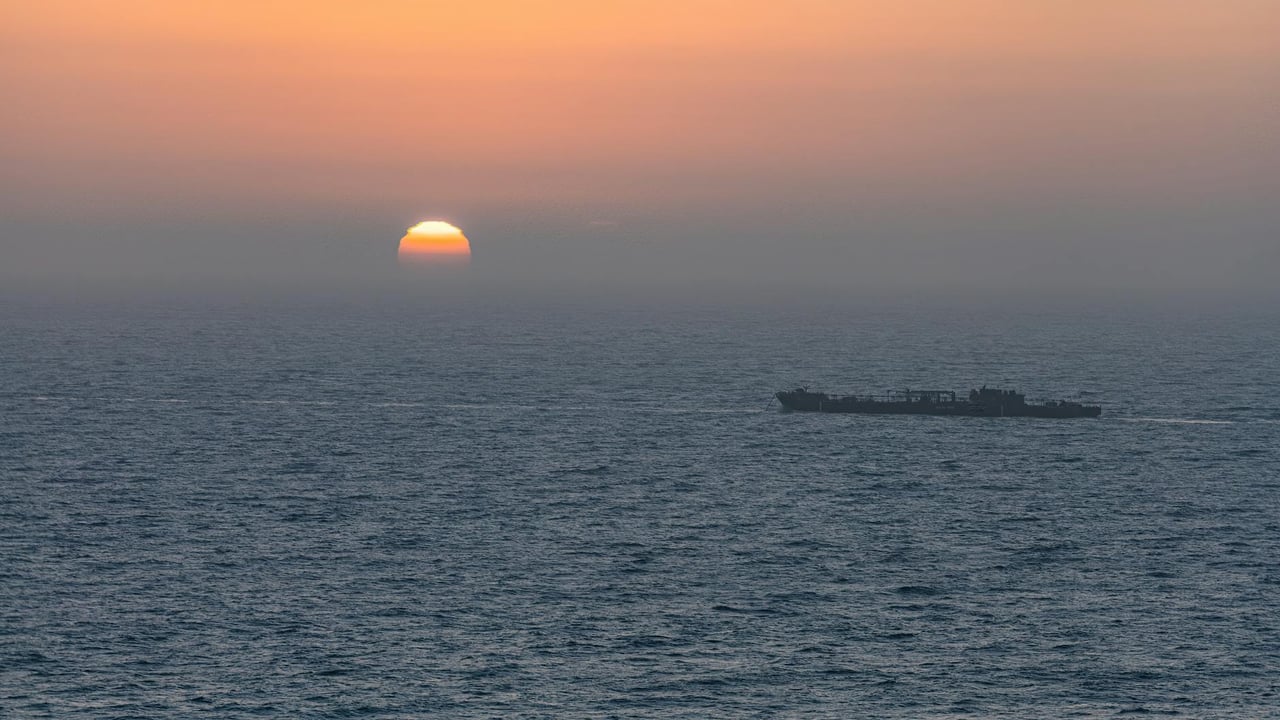

The arrival of the Charles de Gaulle in the Arabian Sea marks a significant expansion of European naval presence in the volatile Middle East. France’s lone nuclear-powered aircraft carrier is now positioned to spearhead or support multinational escort operations intended to secure the Strait of Hormuz, a critical chokepoint for global energy supplies.
This deployment follows a period of heightened uncertainty regarding the safety of commercial shipping in the region. Alice Rufo, the French Ministerial Delegate for Defence, clarified that the carrier strike group's mission is fundamentally aimed at "restoring the possibility" of navigation. By framing the operation as purely "defensive" and strictly "compliant with international law," Paris is attempting to navigate the complex geopolitical waters of the Gulf without triggering further escalation.
For France, this move is as much about diplomacy as it is about defense. By deploying its premier power-projection asset, the French government is asserting its role as a primary maritime power capable of operating independently of, or in concert with, its allies. This underscores the "Strategic Autonomy" doctrine favored by the Élysée, ensuring that European interests are represented in the management of global commons.
As the Charles de Gaulle integrates with multinational task forces, its presence serves as a high-stakes deterrent. The success of this mission will be measured not by kinetic action, but by the sustained, unhindered flow of trade through one of the world's most sensitive maritime arteries. The international community will be watching closely to see if this European-led effort can stabilize a region often prone to sudden shifts in security dynamics.