Beyond the Yellow Line: Netanyahu’s Expanding Footprint and the Shrinking Map of Gaza

Prime Minister Netanyahu announced that Israel now controls 60 percent of the Gaza Strip, bolstered by a new 'restricted zone' that expands beyond previous ceasefire boundaries. This territorial expansion signals a transition toward a permanent security buffer, complicating future negotiations and violating existing demarcation agreements.

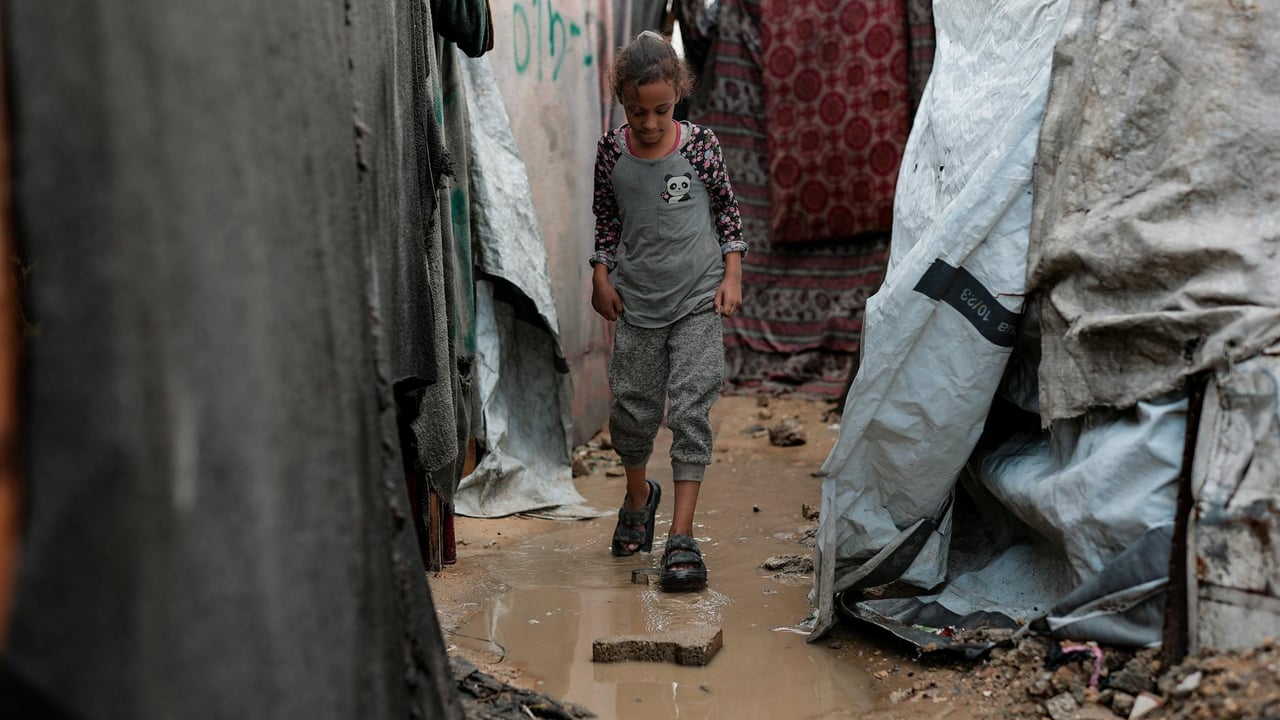
A young girl navigates a muddy path in a Gaza refugee camp, surrounded by makeshift shelters.

Key Takeaways

  • 1Netanyahu claims Israeli control over Gaza has increased from 50% to 60%.
  • 2A new military map includes an 11% 'restricted zone' that sits outside previously agreed-upon boundaries.
  • 3The expansion violates the 'yellow line' protocol established in the phase-one ceasefire agreement.
  • 4The IDF has begun enforcing these new boundaries with lethal force against those crossing the lines.
  • 5The strategic objective has shifted toward permanent territorial control to prevent future threats.

Editor's
Desk

Strategic Analysis

The expansion of the Israeli-controlled area to 60 percent of Gaza represents a transition from a counter-insurgency operation to a de facto territorial reconfiguration. By establishing a 'restricted zone' that ignores the 'yellow line' markers of previous ceasefire talks, the Netanyahu government is creating facts on the ground that make a two-state solution or even a return to Palestinian civil administration nearly impossible. This strategy suggests that Israel is building a permanent 'security envelope'—a buffer zone that effectively shrinks the habitable and sovereign area of the Gaza Strip. For the international community, this signifies a move toward long-term occupation rather than a surgical military intervention, likely leading to prolonged friction with regional partners and international law.

China Daily Brief Editorial
Strategic Insight
China Daily Brief

Israeli Prime Minister Benjamin Netanyahu has significantly raised the stakes in the ongoing conflict by announcing that Israeli forces now control approximately 60 percent of the Gaza Strip. This development, revealed during a recent government meeting, marks a 10 percent increase from previous estimates of Israeli territorial dominance. The Prime Minister framed this expansion as a critical step in a broader strategy to systematically dismantle Hamas and ensure that the enclave never again poses a security threat to Israel.

Central to this territorial shift is a new cartographic reality that surfaced in March, involving a redesigned map of the Gaza Strip. Beyond the 53 percent of territory formally under military administration, Israel has designated an additional 11 percent as a 'restricted zone.' This new perimeter pushes Israeli influence deep into areas previously considered outside the immediate zone of military occupation, effectively rewriting the geography of the conflict in real-time.

This expansion appears to directly challenge the established 'yellow line' framework, which was a cornerstone of the initial phase-one ceasefire agreements. Under those terms, the yellow line served as a demarcation for Israeli military presence, intended to limit kinetic operations and troop deployments within specific boundaries. By breaching these lines to establish a restricted zone, the Israel Defense Forces (IDF) are signaling a shift from temporary tactical maneuvers to a more permanent security architecture.

The humanitarian and political consequences of this creeping perimeter are already manifesting on the ground. Reports indicate that the IDF has repeatedly engaged individuals crossing these new boundaries, leading to Palestinian casualties. As Israel tightens its grip on the majority of Gaza's landmass, the prospects for a return to the pre-war status quo or a negotiated withdrawal seem increasingly remote, replaced by the reality of a fragmented and heavily buffered territory.

Share Article

Related Articles

📰
No related articles found