
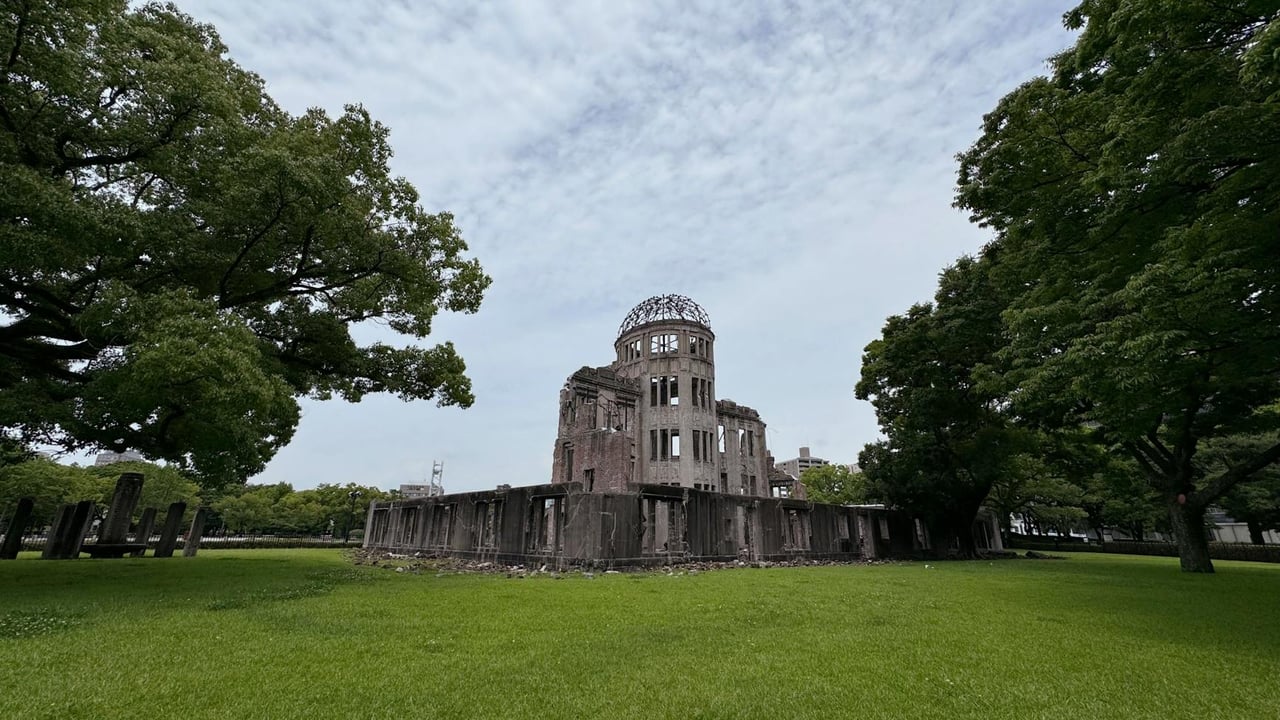

As the Eleventh Review Conference of the Treaty on the Non-Proliferation of Nuclear Weapons (NPT) unfolds at the United Nations in New York, a profound ideological schism is widening within Japan. While top-tier politicians like Sanae Takaichi suggest a re-evaluation of Japan’s long-standing 'Three Non-Nuclear Principles' and entertain the prospect of 'nuclear sharing' arrangements, a fading generation of survivors is fighting to ensure the horrors of the atomic age are not sanitized by geopolitical realism.
At the center of this cultural preservation is Abe Katsushi, a 71-year-old journalist for the Akahata newspaper who has spent four decades documenting the 'Japanese nuclear tragedy.' Abe’s work bridges the gap between the 1945 incinerations of Hiroshima and Nagasaki, the 1954 Bikini Atoll hydrogen bomb tests, and the 2011 Fukushima meltdown. For Abe, these are not disparate events but a singular, continuous narrative of human suffering that his country’s leadership seems increasingly willing to ignore.
Abe’s chronicles are built on the lived experiences of men like Saito Seiichi, who was a 20-year-old communications officer in Hiroshima when the first bomb fell. Saito famously described the 'hell' of seeing fish boil in their bowls and glass shards embedding in his skin, a trauma that manifested as lifelong radiation sickness. Despite his infirmity, Saito spent his final years traveling to the UN to warn that the world must never produce another nuclear victim, a plea that gained renewed urgency after the Fukushima disaster displaced thousands and poisoned the local environment.
The tragedy of the 'hibakusha'—atomic bomb survivors—is compounded by those who suffered in the shadows of the Cold War. Yokoyama Kokichi, now 96, represents a rare 'double victim' who survived the Nagasaki blast only to be irradiated again in 1954 as a crewman on a fishing vessel near the U.S. 'Castle Bravo' nuclear test site. Yokoyama watched nine of his crewmates die of cancer, a fate he later saw befall his own daughter, leading him to conclude that the ultimate stupidity of war is its generational toxicity.
Abe Katsushi argues that the root of Japan’s nuclear victimization is inextricably linked to its own history of aggression. He posits that the atomic bombings were the final, devastating chapter of a war Japan started, and that the current government’s move toward remilitarization stems from a fundamental failure to reflect on this past. This lack of introspection, Abe warns, is what continues to fuel friction between Japan and its Asian neighbors, particularly China.
As the 'hibakusha' generation passes away, the mechanism of memory is under threat. Abe expresses deep concern that without living witnesses, the younger generation will lose its visceral connection to the cruelty of war, allowing right-wing factions to dismantle the pacifist guardrails that have defined post-war Japan. His mission, as he enters his eighth decade, is to transform the stories of victims into a permanent 'independent history' that can withstand the shifting winds of Tokyo’s political landscape.