
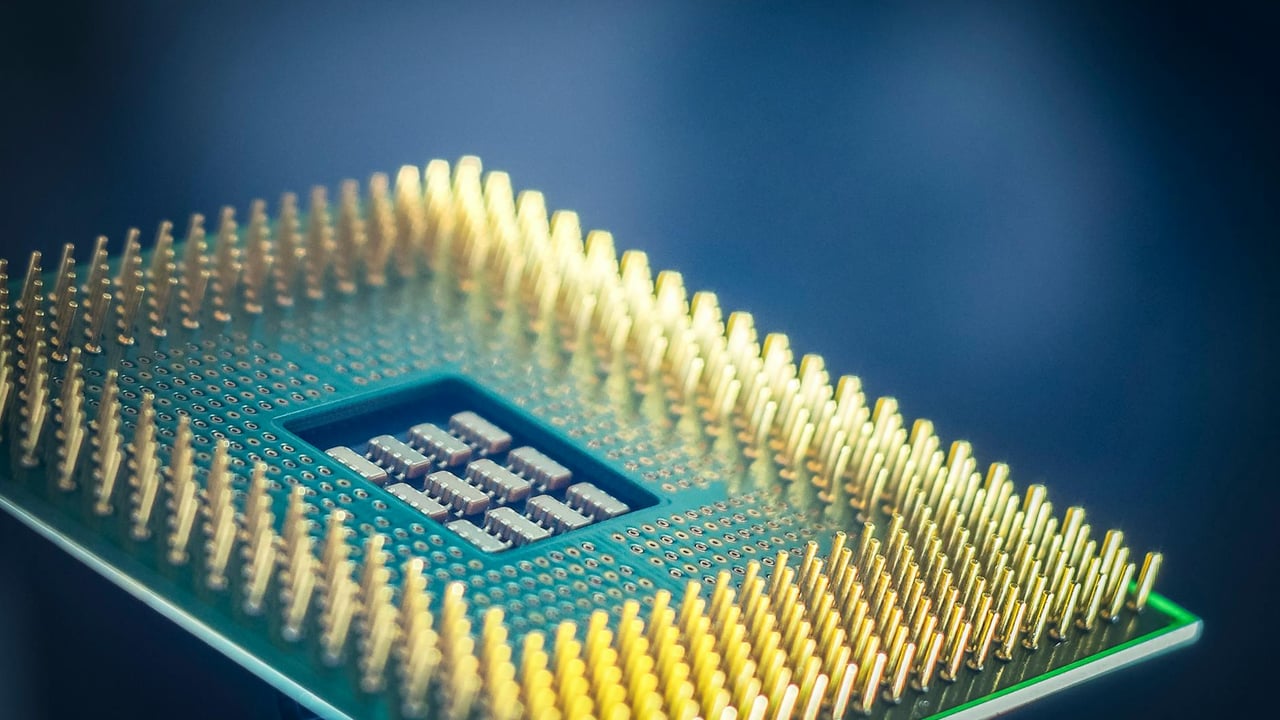

NVIDIA has officially transitioned its first CPU designed specifically for ‘Agentic AI’ from the laboratory to the production line, marking a significant evolution in the company’s hardware strategy. Vice President Ian Buck personally conducted the first wave of deliveries to the vanguard of Silicon Valley, including OpenAI, Anthropic, and SpaceX AI. The rollout was characterized by a high-touch, ceremonial approach, with Buck demonstrating the chip’s internal architecture to OpenAI engineers and discussing cooling solutions directly with Elon Musk at SpaceX AI.
This new processor, dubbed ‘Vera,’ is designed to solve the growing computational bottleneck in autonomous AI agents. While GPUs handle the massive parallel processing required for neural network training, Agentic AI—which involves AI performing complex, multi-step tasks—requires heavy lifting from the CPU for orchestration, tool-calling, and ‘sandboxing.’ NVIDIA’s move signals that as AI moves from simple generation to active agency, the balance of power within the data center is shifting toward more specialized, heterogenous computing.
Technically, Vera is built on NVIDIA’s proprietary ‘Olympus’ core architecture, featuring 88 cores that prioritize high-throughput inference and single-threaded efficiency. Compared to its predecessor, Grace, the Vera chip offers a 50% increase in single-core performance and a massive 1.2 TB/s memory bandwidth. By supporting FP8 precision directly on the CPU, the chip allows for seamless execution of reinforcement learning and inference tasks without the latency traditionally associated with moving data back and forth to a GPU.
Commercial adoption is already scaling beyond the initial research labs, with Oracle Cloud Infrastructure (OCI) announcing plans to deploy hundreds of thousands of Vera CPUs starting in 2026. Oracle executives emphasize that the efficiency of next-generation enterprise AI depends on maintaining sustained performance across long-context retrieval operations. This massive order validates CEO Jensen Huang’s projection at this year’s GTC conference that the CPU business represents the company’s ‘next multi-billion dollar opportunity.’
The broader strategic intent of Vera lies in its integration into the upcoming ‘Vera Rubin’ superchip platform. By utilizing NVLink-C2C technology to pair the CPU with two Rubin GPUs in a unified memory architecture, NVIDIA is effectively building an ‘AI Factory’ in a box. This full-stack approach ensures that the billions of dollars enterprises have invested in GPUs are not left idling while waiting for slower, traditional CPUs to process data-shuttling tasks and API calls.