Double Growler Down: US Navy Mid-Air Collision Highlights Risks in Aerial Demonstrations

Two U.S. Navy E/A-18G Growler electronic warfare jets collided mid-air during a flight demonstration at Mountain Home Air Force Base in Idaho. All four crew members successfully ejected without reported fatalities, though the loss of two high-value airframes marks a significant incident for Naval aviation.

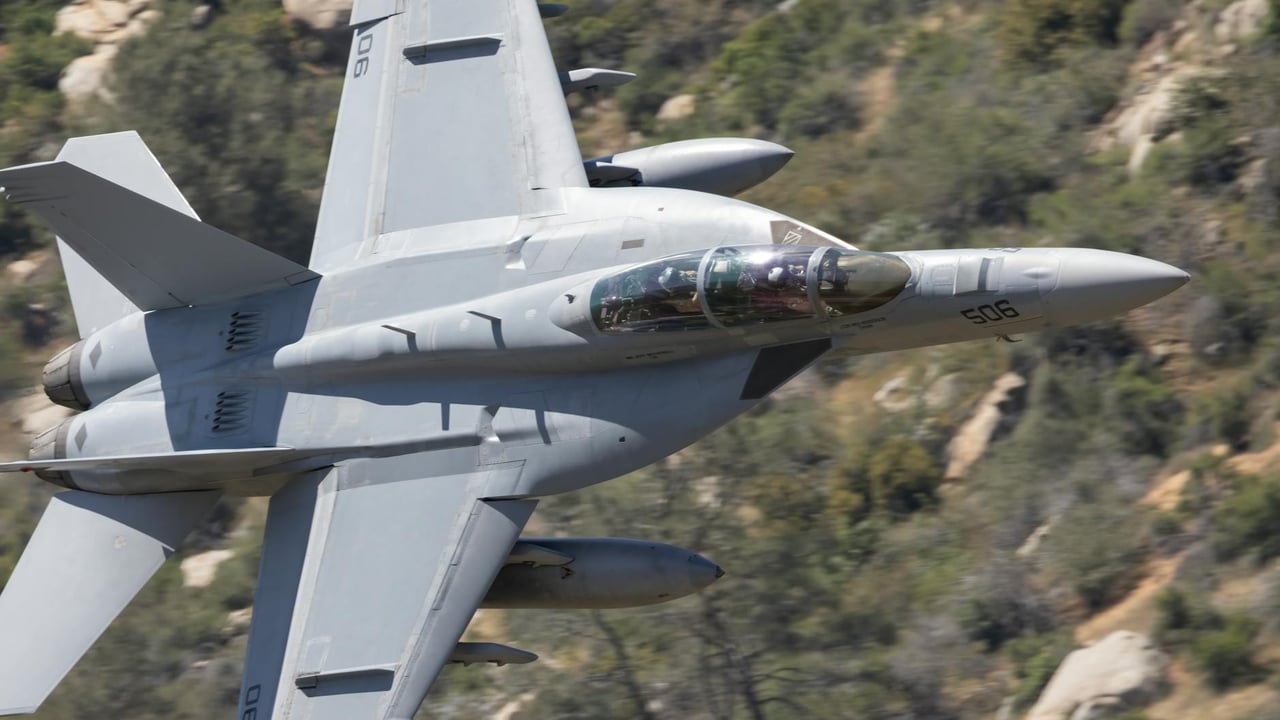
F-18 Super Hornet flying over rocky terrain in Kernville, California. Dynamic and powerful military aircraft.

Key Takeaways

  • 1Two U.S. Navy E/A-18G Growler aircraft were destroyed in a mid-air collision at Mountain Home AFB.
  • 2The crash occurred during a public flight demonstration on May 17, 2026.
  • 3All four crew members (two per aircraft) successfully ejected and survived.
  • 4No casualties or significant ground damage have been reported at this stage.
  • 5The U.S. military has initiated a formal investigation into the cause of the accident.

Editor's
Desk

Strategic Analysis

The loss of two E/A-18G Growlers is a substantial hit to the U.S. Navy's electronic warfare (EW) fleet. These are not standard fighters; they are highly specialized assets tasked with jamming enemy radar and protecting strike packages, and they are notoriously difficult to replace quickly due to their complex avionics suites. This incident may reignite the debate over the risk-to-reward ratio of performing high-stress maneuvers with critical frontline airframes during public air shows. Beyond the financial loss, investigators will scrutinize whether the accident was a result of pilot error, mechanical failure, or a breakdown in flight-lead coordination, as any systemic issue could have wider implications for the safety of the remaining Growler fleet.

China Daily Brief Editorial
Strategic Insight
China Daily Brief

On May 17, 2026, the skies over Idaho’s Mountain Home Air Force Base transformed from a stage for military precision into a scene of emergency survival as two U.S. Navy E/A-18G Growlers collided mid-air. The incident occurred during a scheduled flight demonstration, sending plumes of thick black smoke into the horizon and forcing four crew members to execute split-second emergency ejections.

Witnesses at the event reported seeing the specialized electronic warfare aircraft tangle during a maneuver before plummeting toward the desert floor. The successful deployment of four parachutes shortly after the impact provided a momentary sigh of relief for onlookers and base officials, who confirmed that all personnel involved were accounted for and survived the ordeal.

The E/A-18G Growler, a sophisticated derivative of the F/A-18F Super Hornet, serves as the cornerstone of the U.S. Navy’s tactical jamming and electronic suppression capabilities. Losing two such high-value platforms in a single non-combat incident represents a significant operational blow, given the aircraft's critical role in modern network-centric warfare and its high per-unit cost.

Emergency responders reached the crash site within minutes to contain the wreckage and secure the perimeter against potential hazards from the specialized equipment on board. While a formal investigation has been launched to determine the root cause of the collision, the mishap underscores the razor-thin margins for error that define high-speed military flight demonstrations.

Share Article

Related Articles

📰
No related articles found