
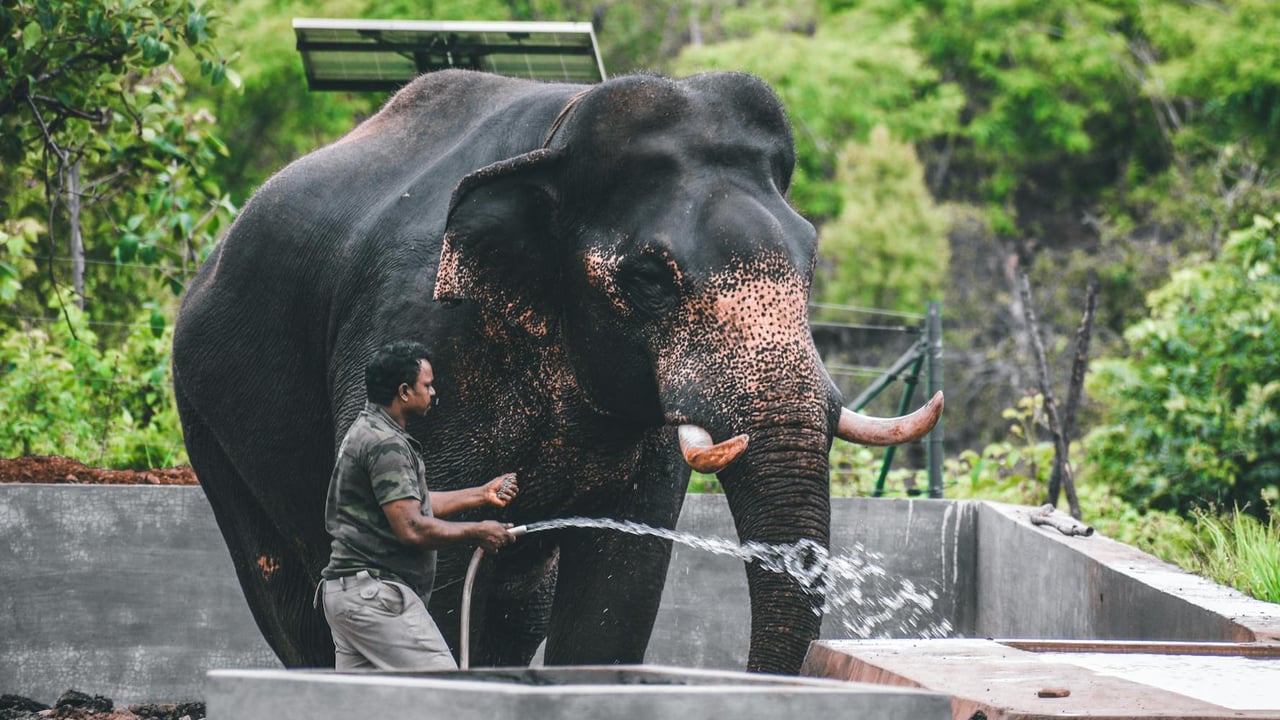

The delicate and often dangerous intersection of human life and wildlife in India was marked by tragedy this week when a routine riverbank scene turned into a fatal encounter. What began as a standard bathing session for two elephants escalated into a violent altercation between the massive pachyderms. During the heat of the struggle, one of the multi-ton animals lost its footing and collapsed, tragically crushing a woman who was standing nearby on the riverbank.
This incident is not merely a freak accident but a stark reminder of the inherent risks present in regions where large megafauna and human populations share increasingly crowded spaces. In many parts of South Asia, elephants are deeply integrated into social, religious, and economic life, often brought to public waterways for cooling and cleaning. However, the proximity of these powerful animals to bystanders requires a level of safety infrastructure that is frequently absent, leaving local communities vulnerable to the unpredictable nature of animal behavior.
Ecologists and wildlife management experts have grown increasingly concerned about the rising frequency of such conflicts. As natural habitats shrink and traditional buffer zones disappear, the frequency of high-stress encounters between humans and elephants—both wild and captive—has seen a measurable uptick. The psychological stress on these animals, combined with the lack of rigorous crowd control during public interactions, creates a volatile environment where the margin for error is non-existent.
Local authorities are now facing renewed pressure to implement stricter regulations regarding the management of elephants in public areas. While these animals remain a cultural staple, the loss of life underscores a desperate need for a modernization of safety protocols. Without clear physical barriers or specialized training for handlers in high-density areas, the traditional rhythms of river life will continue to be shadowed by the potential for sudden, unavoidable disaster.