Classroom Frontlines: Beijing Deploys Wartime Relics to Reinforce the 'Mainstay' Narrative

Beijing has launched a 22-school exhibition tour featuring historical artifacts to reinforce the narrative of the Communist Party as the central force in the war against Japan. The program uses peer-to-peer teaching and immersive performances to integrate state ideology into the education of youth from primary school through university.

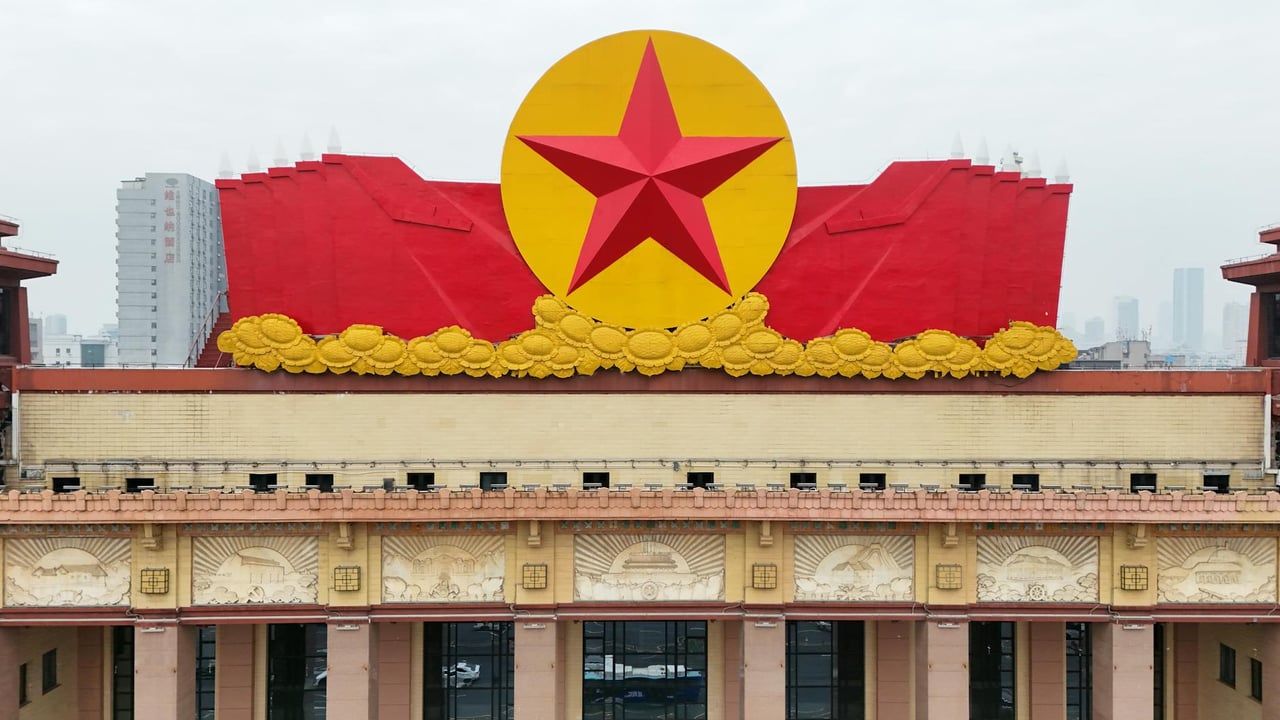
A vibrant red star adorns a building's facade, symbolizing historical significance in Nanchang, China.

Key Takeaways

  • 1The 'Mainstay' exhibition tour will visit 22 schools across Beijing to showcase CCP wartime relics.
  • 2The program is a collaboration between the Beijing Municipal Education Commission and the Museum of the War of Chinese People’s Resistance Against Japanese Aggression.
  • 3The initiative emphasizes 'red education' and patriotic sentiment through student-led tours and artistic performances.
  • 4The exhibition reinforces the CCP's historical legitimacy by highlighting its role as the 'mainstay' of the anti-Japanese resistance.

Editor's
Desk

Strategic Analysis

The 2026 campus tour illustrates the evolving sophistication of the CCP’s ideological infrastructure. By delegating the roles of 'storytellers' to students themselves, the state is effectively training a new generation of ideological ambassadors while making the content more relatable to young audiences. This 'soft' approach to political education—using music, artifacts, and peer interaction—is a direct response to the challenges of engaging Gen Z and Gen Alpha, who are increasingly insulated from the hardships of the mid-20th century. Strategically, this movement serves to preempt 'historical nihilism' by anchoring the Party’s foundational myths in tangible relics before students are exposed to alternative historical perspectives.

China Daily Brief Editorial
Strategic Insight
China Daily Brief

On May 19, 2026, the Beijing Municipal Education Commission launched an expansive campus tour of the 'Mainstay' exhibition, a curated collection of artifacts from the Chinese Communist Party's resistance against Japanese aggression. The opening ceremony, held at Beijing City University, marks the beginning of a strategic circuit that will bring historical relics directly into 22 primary, secondary, and tertiary institutions across the capital.

This initiative represents more than a history lesson; it is a sophisticated exercise in 'red education' aimed at the next generation of Chinese citizens. By moving these artifacts from the hallowed halls of the Museum of the War of Chinese People’s Resistance Against Japanese Aggression into the daily environment of students, authorities are attempting to close the gap between dry textbook theory and lived emotional experience.

The exhibition’s title, 'Mainstay' (Zhongliu Dizhu), carries significant political weight, reinforcing the official state narrative that the Communist Party was the primary force behind the defeat of Imperial Japan. This messaging is crucial for the Party’s historical legitimacy, particularly as the central leadership continues to emphasize 'ideological and political courses' as a cornerstone of modern Chinese pedagogy.

Observers noted a tactical shift in how this ideology is delivered, emphasizing peer-to-peer engagement over top-down lecturing. During the launch, university students acted as docents for primary school children, while choral performances of songs like 'Don't Forget the Original Intention' were used to frame the party's historical struggles as a continuous thread connecting the past to the modern era.

Share Article

Related Articles

📰
No related articles found