
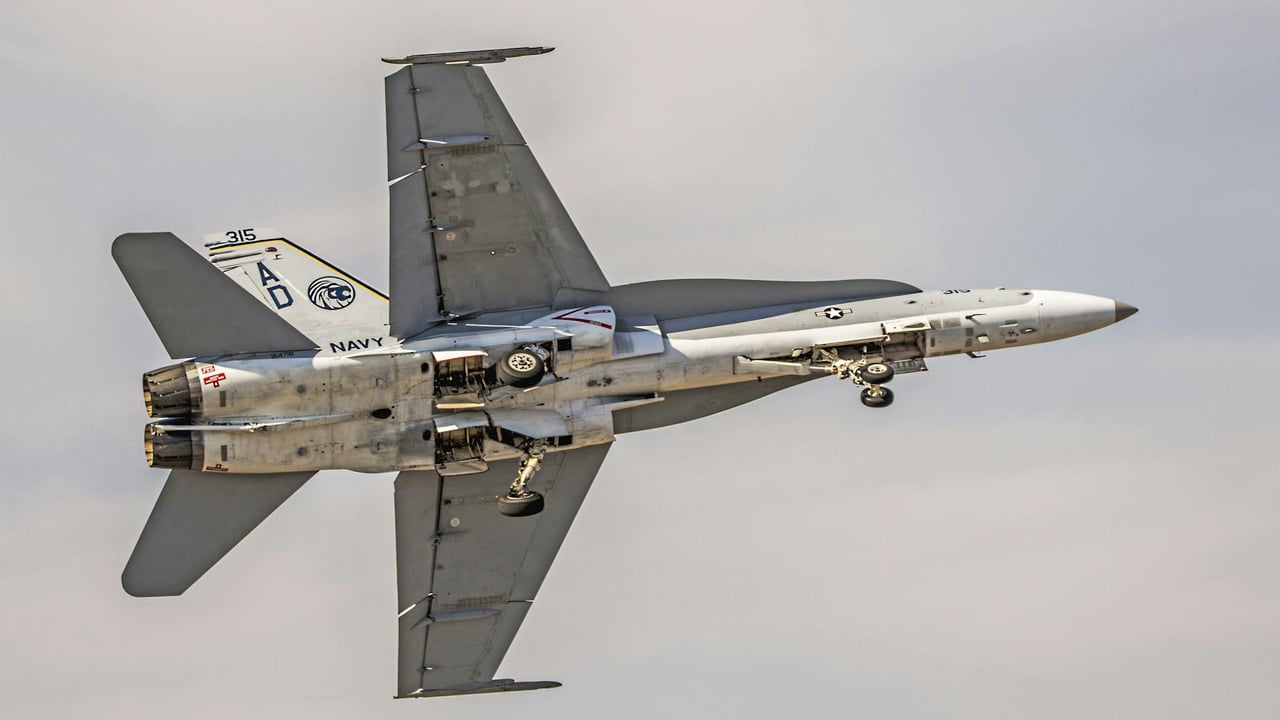

A surreal and catastrophic mid-air collision between two EA-18G Growler electronic warfare aircraft has sent shockwaves through the aviation community. The incident occurred during the 'Gunfighter’s Sky' airshow at Mountain Home Air Force Base in Idaho, an event intended to celebrate aerial heritage and project modern American military might. Instead, the crowd witnessed two of the Navy's most sophisticated tactical assets lock together in a terminal embrace before plummeting to the desert floor.
Footage of the accident revealed a haunting visual where the two jets appeared to momentarily 'hover' in mid-air, a phenomenon that sparked social media speculation of artificial intelligence manipulation. Military analysts explain that this eerie stillness was actually a state of total aerodynamic failure. At low altitude and low speed, the collision likely crippled the engines and destroyed the control surfaces, leaving the pilots with zero lift and no room to execute recovery maneuvers like a spin recovery.
The aircraft involved belonged to the VAQ-129 'Vikings' squadron based out of Whidbey Island, Washington. Critics within the defense community question the wisdom of tasking operational electronic attack crews with high-risk, tight-formation aerobatics. Unlike dedicated demonstration teams like the Blue Angels, these pilots are primarily trained for complex electromagnetic spectrum operations, and the larger, more cumbersome airframe of the Growler is less forgiving than the standard F/A-18 Hornet during close-quarters maneuvers.
The financial and strategic toll is staggering, with direct losses estimated to exceed $200 million. The EA-18G is not a standard fighter; it is a specialized 'door-kicker' equipped with high-cost electronic jamming pods designed to suppress enemy air defenses. Because the production line for these airframes has largely wound down and the total fleet size is relatively small, the loss of two aircraft represents a non-trivial reduction in the U.S. Navy’s global carrier-based electronic warfare capacity.
While the successful ejection of all four crew members is a testament to the reliability of modern escape systems, the optics of the crash remain a source of embarrassment for the Pentagon. Each crew consists of a pilot and a Weapon Systems Officer specialized in electronic counter-measures, making the personnel themselves nearly as valuable and difficult to replace as the hardware. This accident serves as a stark reminder of the inherent risks when the theater of public relations intersects with the unforgiving physics of naval aviation.