
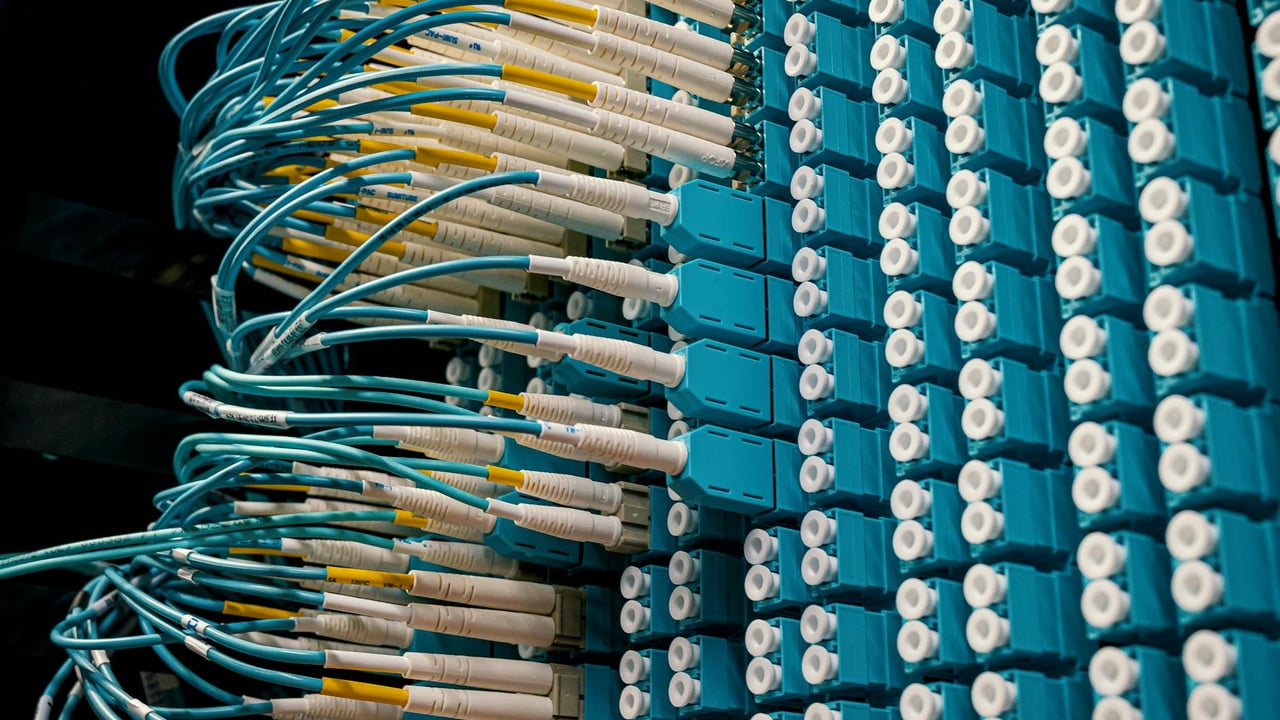

The global race for artificial intelligence supremacy is often viewed through the lens of high-end GPUs and massive data centers, but the hidden plumbing of this revolution—optical modules—is creating a new class of wealth in China. A trio of Shenzhen and Suzhou-listed companies, colloquially known in financial circles as 'Yi-Zhong-Tian,' have recently finalized a massive round of equity incentive vesting. Zhongji Innolight, Eoptolink, and TFC Optical have collectively generated over 3.25 billion RMB (approximately $450 million) in paper gains for nearly 1,500 employees, signaling a high-water mark for the sector.
This windfall is a direct byproduct of the insatiable demand for 800G and 1.6T optical transceivers, the critical components that allow AI servers to communicate at lightning speeds. As global tech giants from Microsoft to Meta aggressively expand their compute clusters, these Chinese suppliers have seen their stock prices skyrocket. For the employees of Zhongji Innolight alone, the latest vesting period resulted in an average per-capita gain of roughly 2 million RMB, with some senior technical staff seeing significantly higher returns.
However, these gains were not a mere gift of the market; they were tied to rigorous performance benchmarks that reflect the high-stakes nature of the industry. To unlock their shares, companies had to meet aggressive revenue and profit growth targets. Eoptolink, for instance, delivered cumulative revenue of over 33 billion RMB for the 2024-2025 period, nearly tripling its baseline requirement of 11 billion RMB. This level of over-performance highlights the explosive scale of the AI infrastructure build-out currently underway.
The technological frontier is shifting rapidly as the industry moves toward 1.6T modules and Co-Packaged Optics (CPO) technology. Analysts from major brokerages like Southwest Securities and Kaiyuan Securities have recently upgraded their outlooks, predicting that the next cycle of growth will be driven by the deployment of 1.6T products in North American data centers. These firms are no longer just domestic players; they are integral nodes in the global AI supply chain, with TFC Optical even moving to list on the Hong Kong Stock Exchange to further globalize its operations.
Despite the geopolitical tensions surrounding high-tech sectors, the dominance of the 'Yi-Zhong-Tian' trio underscores a critical reality: while the U.S. controls the logic chips, Chinese firms currently command a significant portion of the high-speed optical interconnect market. As long as the AI boom continues to demand faster data transmission, the engineers and managers behind these hardware giants are likely to remain among the biggest beneficiaries of the digital gold rush.