Crude Conflict, Electric Gains: How Mideast Volatility is Accelerating the EV Transition

The IEA reports that escalating tensions in the Middle East are driving a record-breaking surge in electric vehicle adoption as a strategy for energy security. Global EV sales are expected to reach 23 million units by 2026, fueled by volatile oil prices and China's dominance in battery innovation.

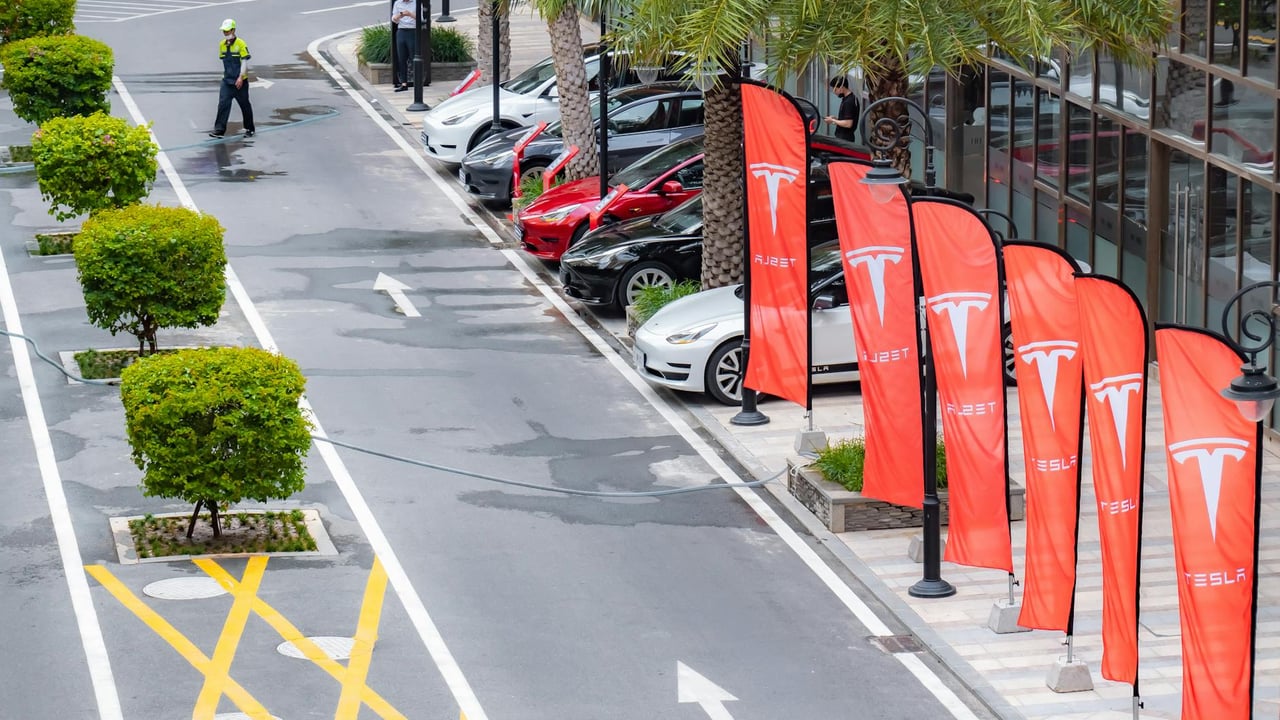
Aerial view of multiple Tesla cars parked alongside branded flags in a city street.

Key Takeaways

  • 1IEA forecasts global EV sales will reach 23 million units in 2026, driven by Middle East instability.
  • 2Iran-related conflict and threats to the Strait of Hormuz are turning EVs into a primary energy security tool.
  • 3Chinese automakers like Geely are leading the innovation race while legacy Japanese and European brands face declining ICE sales.
  • 4Nearly 30% of all new car sales globally are expected to be electric by late 2026.
  • 5Internal combustion vehicle sales are experiencing a sharp decline, particularly in the Chinese market due to aggressive price wars.

Editor's
Desk

Strategic Analysis

The intersection of the Iran-Israel shadow war and the global energy transition marks a significant turning point in 21st-century economics. Historically, Middle East conflict would simply lead to higher inflation and a transfer of wealth to OPEC; today, it acts as a 'supply shock' that validates the multi-billion dollar bets placed by Chinese and Western EV manufacturers. For China, the narrative is particularly strategic: by leading the world in EV adoption and manufacturing, Beijing is effectively neutralizing its greatest strategic vulnerability—its dependence on oil tankers passing through the Malacca Strait. The decline of the Japanese 'ICE' giants, as noted in recent earnings, serves as a cautionary tale for any industrial power that remains tethered to the 20th-century energy paradigm.

China Daily Brief Editorial
Strategic Insight
China Daily Brief

The specter of conflict in the Middle East has long been the primary driver of global energy anxiety, but according to the latest assessments from the International Energy Agency (IEA), the traditional oil shock is increasingly functioning as an involuntary accelerator for the global transition to electric vehicles (EVs). As tensions involving Iran threaten to disrupt the Strait of Hormuz—the world’s most critical maritime chokepoint for crude—the economic argument for ditching internal combustion engines has shifted from environmental idealism to hard-nosed energy security.

Global EV sales are now projected to hit a record 23 million units in 2026, as consumers and governments alike seek a hedge against volatile fuel prices. This surge is not merely a reaction to expensive gasoline; it represents a fundamental pivot in the automotive hierarchy. The IEA suggests that nearly 30% of all new car sales globally will be electric by the end of 2026, a milestone reached faster than many analysts predicted just two years ago.

Nowhere is this shift more visible than in China, where a brutal price war has already decimated the market share of traditional gasoline vehicles. While legacy Japanese and European manufacturers struggle with the transition, Chinese firms like Geely are topping global innovation indices. For the Chinese consumer, the move to electric is increasingly driven by the plummeting cost of ownership and a domestic supply chain that is largely insulated from Middle Eastern geopolitical tremors.

This forced evolution is creating a divergent global market where energy-importing nations are racing to decouple their transport sectors from the oil market. While the United States navigates political ambivalence toward green subsidies, the persistent instability in the Persian Gulf is effectively underwriting the demise of the gas-guzzler. Geopolitics, once the lifeline of the oil industry, is now the primary catalyst for the post-petroleum era.

Share Article

Related Articles

📰
No related articles found