
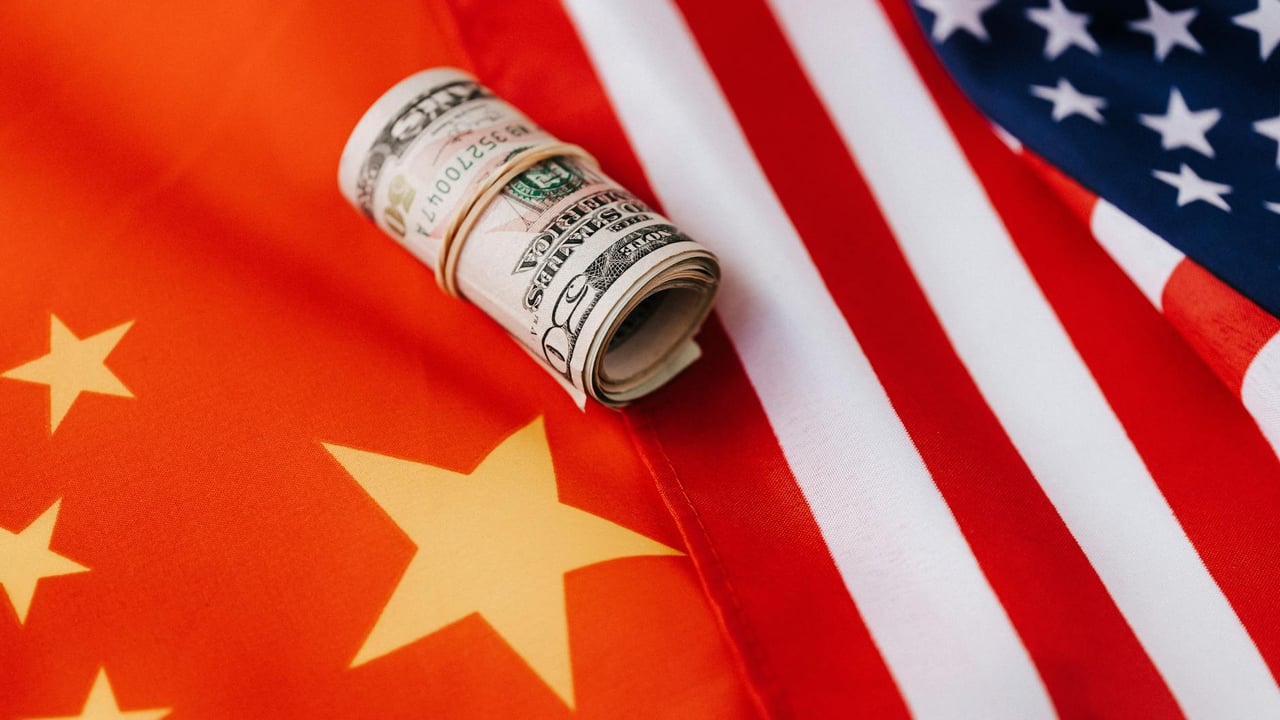

A recent admission from within the U.S. foreign policy establishment has signaled a departure from the bravado of the 'America First' era, acknowledging a stark new reality: in a head-to-head competition, the United States may no longer possess the unilateral weight to sideline China. This shift, articulated through a recognition of China’s superior manufacturing capacity, market scale, and expanding naval footprint, marks a transition from ideological dismissal to a form of power-realism that defines the current administration’s strategic anxiety.
To compensate for this perceived erosion of singular dominance, Washington is increasingly leaning into a 'multilateral containment' model. The strategic calculation is simple yet ambitious: by aggregating the economic might of the G7, the EU, and key Indo-Pacific partners like India and South Korea, the U.S. aims to project a combined economic front representing over 50% of global GDP. This 'strength in numbers' approach is designed to create a gravitational force that Beijing cannot easily ignore or circumvent.
However, the viability of this united front is being tested by the divergent economic interests of the very allies Washington seeks to recruit. In Europe, the facade of a unified stance on Chinese electric vehicles is already showing cracks. While the European Commission moves toward protective tariffs, Germany—the continent’s industrial heart—has signaled a more pragmatic path by reopening its markets to all competitors, including Chinese brands. This reflects a fundamental tension between political alignment and industrial survival.
Further complicating the U.S. strategy is the 'strategic autonomy' of the Global South, most notably represented by India. Despite its membership in the Quad and its importance in the Indo-Pacific strategy, New Delhi has demonstrated a consistent refusal to adopt Washington’s zero-sum world view. Its continued energy and military cooperation with Moscow, despite Western pressure, suggests that India prioritizes its sovereign interests over the demands of a Western-led bloc.
For Beijing, these internal contradictions within the U.S. alliance network provide a clear strategic roadmap. Rather than engaging in a rhetorical battle over global leadership, China is focusing on deepening its integration into global supply chains and leveraging the 'misalignment of interests' among Western allies. By making the cost of decoupling prohibitively high, Beijing seeks to prove that in a hyper-interdependent world, national interests will ultimately outweigh ideological camps.