
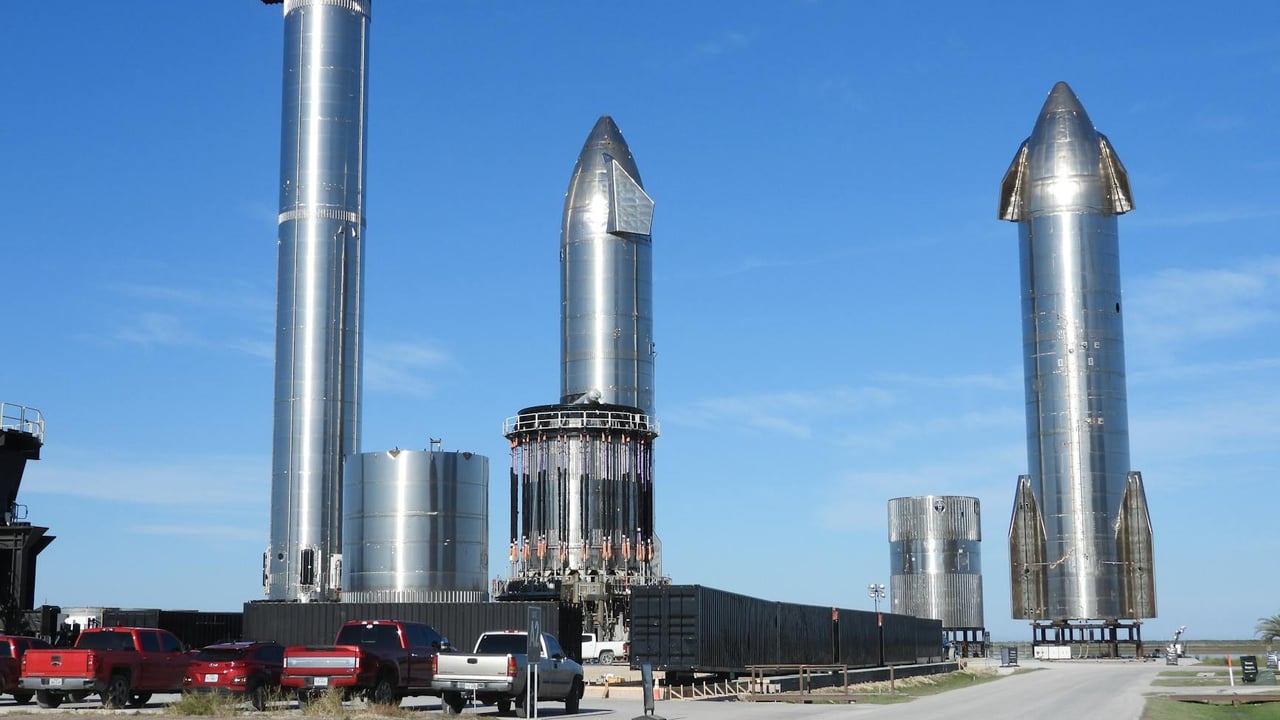

The horizon at SpaceX’s 'Starbase' in Texas remained silent on Wednesday as the much-anticipated test flight of the upgraded Starship V3 was halted in the final moments of the countdown. Technical discrepancies in fuel temperature and pressure readings, compounded by a failure in the launch tower’s hydraulic pins, forced a postponement just as the company prepares for its most audacious maneuver yet: a transition to the public markets. Chief Executive Elon Musk confirmed that the team is working through the night to rectify the mechanical issues, targeting a renewed launch window within 24 hours.
While technical delays are a staple of aerospace development, the stakes for this twelfth unmanned flight are uniquely high. This mission was designed to test critical deep-space capabilities, including ship-to-ship docking and orbital refueling, which are essential for NASA’s Artemis program and Musk’s own Martian ambitions. However, the mission is now shadowed by a tragic industrial accident; local authorities confirmed a contractor death at the Texas facility last Friday, highlighting the human cost of the company’s breakneck development pace.
Simultaneously, SpaceX has moved to formalize its financial dominance by filing an S-1 form with the SEC for an initial public offering that seeks a staggering $1.75 trillion valuation. Led by a heavyweight consortium including Goldman Sachs and Morgan Stanley, the offering aims to raise $75 billion. This valuation would not only make SpaceX the world’s most valuable aerospace entity but would also signify a massive bet on the synergy between space exploration, global connectivity, and artificial intelligence.
Financial disclosures within the filing reveal a company in a state of hyper-expansion. Following a 2026 merger with xAI, SpaceX now reports as a tripartite conglomerate spanning space, connectivity, and AI segments. While the company generated over $18.6 billion in revenue in 2025, it continues to operate at a significant loss, with nearly $3 billion annually funneled into R&D for the Starship program alone. This 'burn-to-build' strategy underscores the high-risk, high-reward nature of Musk’s portfolio, where profitability is secondary to total dominance of the orbital economy.
The IPO filing also sheds light on a compensation structure for Elon Musk that reads more like science fiction than corporate governance. One incentive tier grants Musk 1 billion restricted shares if SpaceX reaches a $7.5 trillion market capitalization, contingent upon the establishment of a permanent human colony on Mars with at least one million residents. This extraordinary link between personal wealth and extraterrestrial settlement highlights the degree to which SpaceX is less a traditional aerospace firm and more a vehicle for Musk’s civilizational vision.