
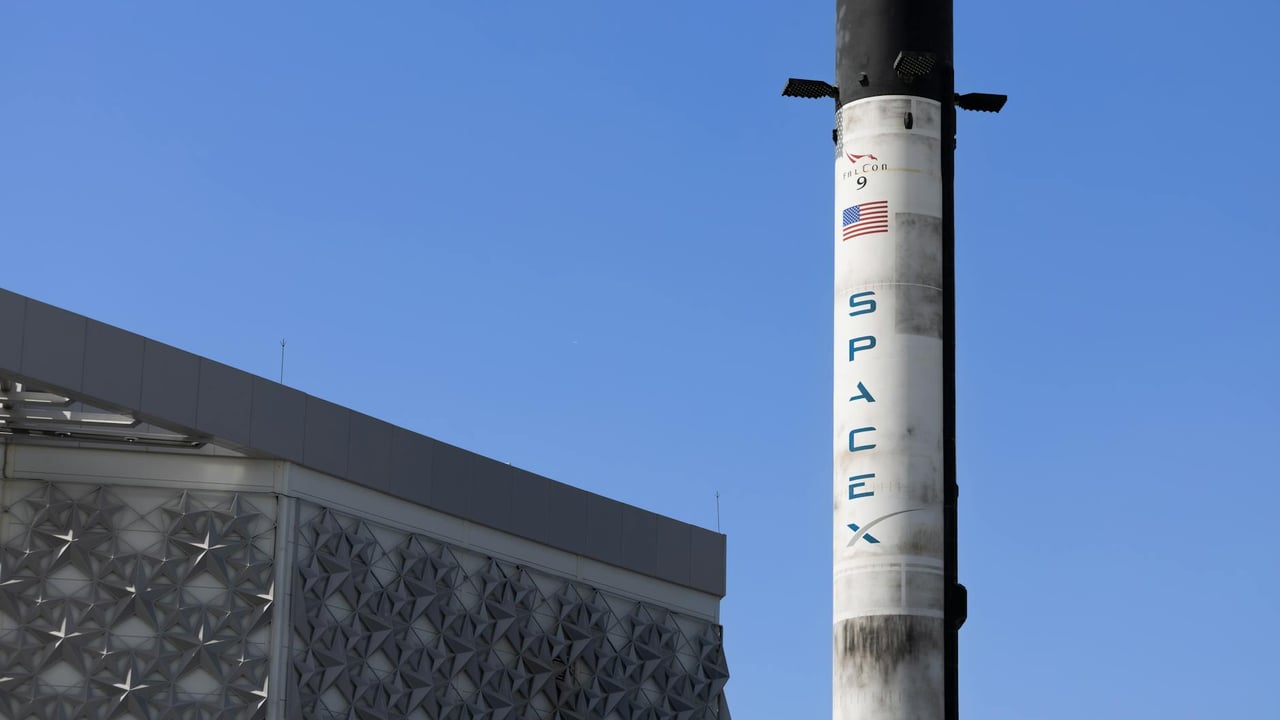

On the morning of May 23, 2026, SpaceX successfully launched its twelfth integrated flight test of the Starship system from Starbase, Texas. This mission marked the orbital debut of the Starship V3 architecture, a radical redesign of the world's most powerful launch vehicle. Utilizing the newly constructed Pad 2, the mission paired Ship 39 with Booster 19 for a suborbital flight that lasted over an hour and reached critical milestones.
While the primary objective of the mission was to gather data on the V3’s performance, the results were a study in mixed successes. The Super Heavy booster failed its controlled splashdown due to an early abort during the boostback burn, an anomaly that highlights the persistent difficulty of recovering the massive first stage. However, the upper stage, Ship 39, successfully deployed 22 satellites—double the payload of previous tests—demonstrating the craft's growing operational utility.
A significant technical highlight of Flight 12 was the unprecedented "self-check" of the vehicle’s thermal protection system. For the first time, SpaceX deployed two specialized microsatellites designed to scan the Starship’s belly and transmit high-resolution imagery of the heat shield back to Earth. This data is vital for solving the "tile problem," as the reuse of the thermal shield remains the single greatest bottleneck to achieving rapid, airplane-like turnaround times.
The V3 configuration represents more than just a minor update; it is a fundamental reconstruction of the vehicle’s internal and external systems. Featuring the new Raptor 3 engines, which offer higher thrust and a simplified, shieldless design, the V3 aims to shed significant mass while increasing reliability. The redesign also includes a shift in grid fin placement and a complete overhaul of the fuel delivery systems, enabling faster propellant loading and more robust in-flight maneuvering.
This launch occurs against a backdrop of immense financial pressure as SpaceX moves toward a historic initial public offering. Recent SEC filings suggest a target valuation of $1.75 trillion, a figure that hinges entirely on Starship’s ability to become an operational workhorse. With R&D costs for the program already exceeding $15 billion, every flight is now scrutinized by institutional investors as a bellwether for the company’s long-term profitability.
Beyond the balance sheet, the success of Flight 12 is essential for NASA’s Artemis program and the future of the Starlink mega-constellation. Starship V3 is the only vehicle capable of launching the larger Starlink V3 satellites, which are designed to provide direct-to-cell connectivity and massive data throughput. As SpaceX moves toward orbital refueling tests later this year, the lessons from Ship 39 will dictate the timeline for humanity’s return to the lunar surface.