Trump’s Polish Pivot: Transactional Diplomacy and the Realignment of US Power in Europe

President Trump has announced the deployment of 5,000 additional troops to Poland, framing it as a gesture of support for President Karol Nawrocki. The move underscores a broader strategy of rewarding loyal allies while simultaneously drawing down forces in Germany as a form of diplomatic leverage.

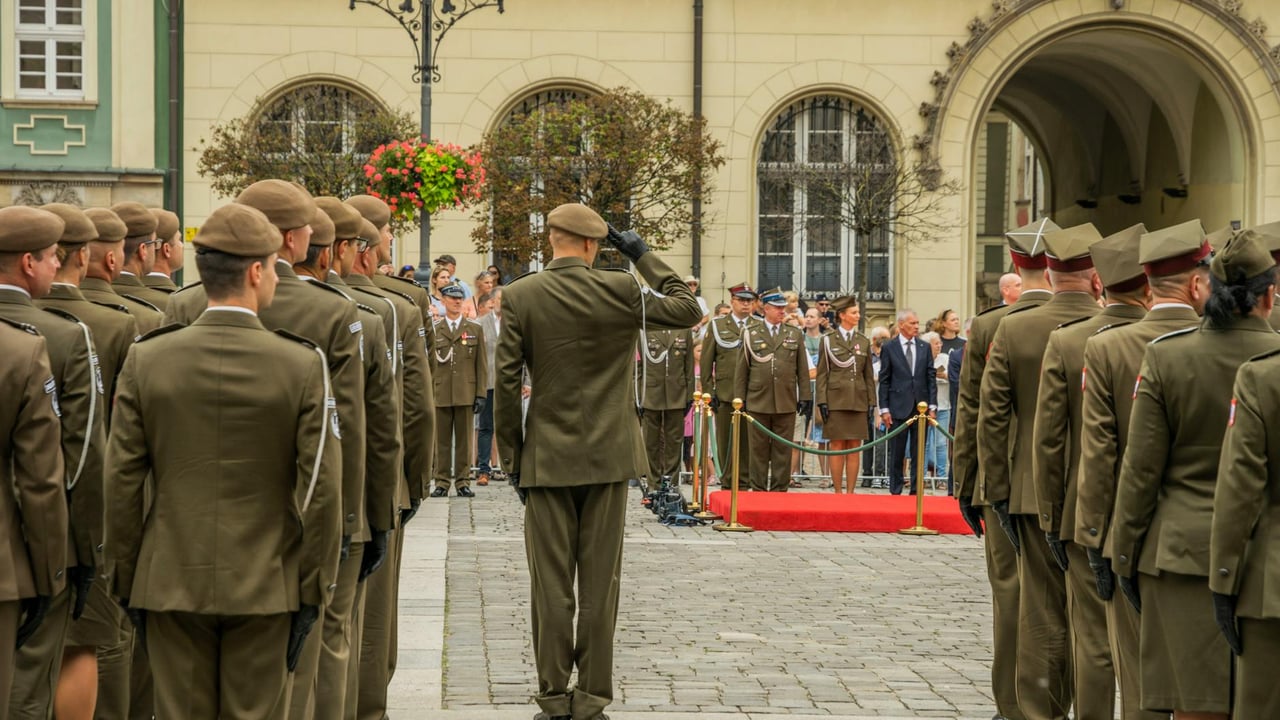
A formal military ceremony featuring Polish soldiers in uniform in Wrocław's historic square.

Key Takeaways

  • 1President Trump announced an additional 5,000 U.S. troops for Poland via social media.
  • 2The surge is tied to the political success of Karol Nawrocki, a Law and Justice-backed independent elected in 2025.
  • 3The deployment coincides with significant U.S. troop withdrawals from Germany, exceeding 5,000 personnel.
  • 4Internal administration messaging has been mixed, with recent cancellations of rotations by the Defense Department being re-framed as delays.
  • 5Poland is now characterized as the 'best-performing' U.S. ally by the administration.

Editor's
Desk

Strategic Analysis

This strategic realignment represents the ultimate manifestation of Trump’s 'transactional alliance' philosophy. By shifting the U.S. military center of gravity from Germany to Poland, the administration is bypassing traditional European power centers in favor of a bilateral security pact with a government that shares its populist leanings. This effectively creates a tiered hierarchy within NATO: those who contribute and align ideologically receive enhanced protection, while those who dissent face military abandonment. The long-term risk is a fragmented Europe where security is no longer a collective guarantee but a commodity traded for political favor, potentially weakening the alliance's overall deterrence capability against regional adversaries.

China Daily Brief Editorial
Strategic Insight
China Daily Brief

In a characteristic blend of personalist diplomacy and strategic reshuffling, President Donald Trump has announced plans to deploy an additional 5,000 U.S. troops to Poland. The decision, broadcast via social media, frames the surge not as a response to specific regional threats, but as a direct reward for the political ascent of Karol Nawrocki, the recently elected Polish president whom Trump notably supported during the 2025 campaign.

This troop movement signals a decisive shift in the U.S. military footprint in Europe, moving away from traditional hubs like Germany toward the more ideologically aligned 'Eastern Flank.' While Warsaw is being hailed as the premier American ally, Berlin is facing the opposite fate. Trump has indicated that withdrawals from Germany will far exceed the initially proposed 5,000 personnel, a move widely interpreted as a punitive measure against a NATO ally that resisted Washington’s military stance on Iran.

However, the announcement comes amid apparent friction within the U.S. defense establishment. Just days prior, Defense Secretary Hegseth ordered the cancellation of a scheduled armored brigade rotation to Poland, a move Vice President JD Vance later characterized as a 'routine delay' rather than a permanent cut. This internal push-and-pull highlights a tension between established Pentagon planning and the White House’s desire for rapid, high-impact diplomatic gestures.

For the broader European security architecture, this move cements the rise of a 'New Europe' bloc that prioritizes bilateral security guarantees with Washington over integrated NATO frameworks. By leveraging troop deployments as political currency, the Trump administration is effectively redrawing the map of American influence, rewarding loyalty with 'boots on the ground' while leaving long-standing partners to navigate a more transactional trans-Atlantic relationship.

Share Article

Related Articles

📰
No related articles found