
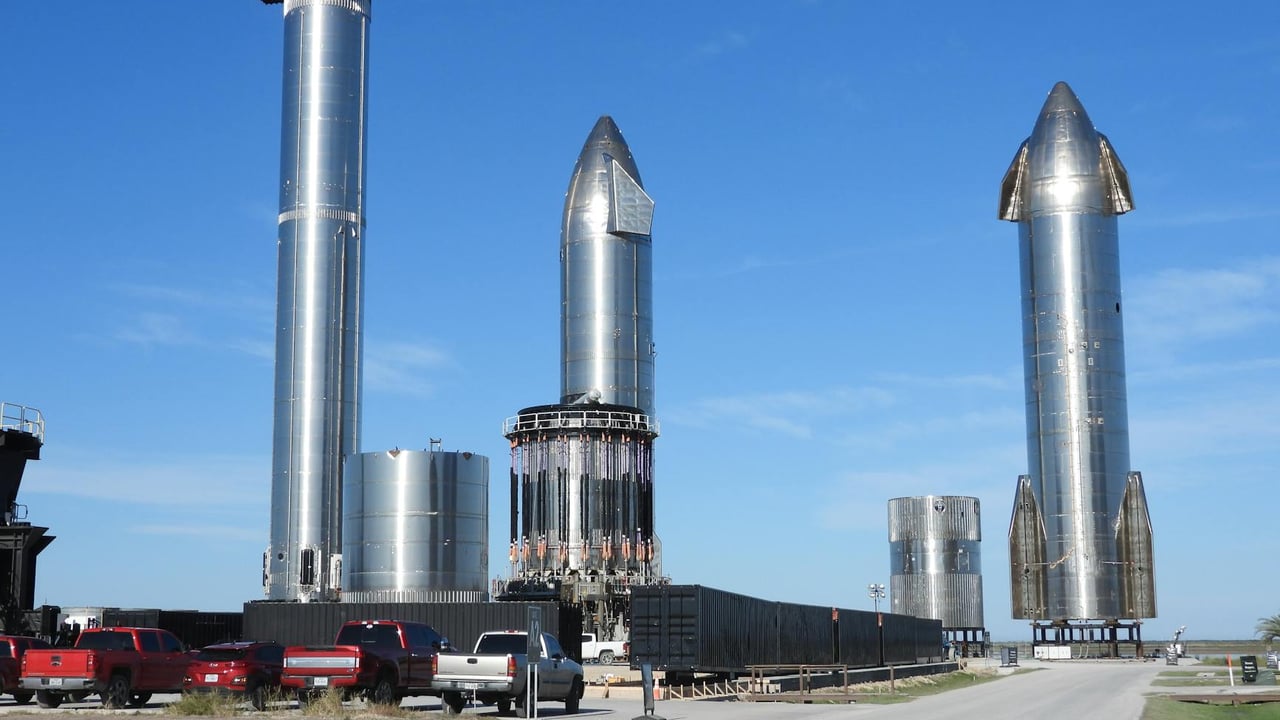

On May 23, 2026, SpaceX’s most formidable launch vehicle to date, the Starship V3, finally roared into the Texas sky from the Starbase facility. This twelfth integrated flight test was more than just a technological demonstration; it served as a high-stakes litmus test for the company’s ambitious roadmap. While the mission achieved several primary objectives, including reaching orbit and deploying 22 satellites, the presence of persistent technical anomalies suggests that the path to operational reliability remains fraught with challenges.
The V3 model represents a significant evolution in Elon Musk’s quest for a fully reusable interplanetary transport system. Featuring 33 next-generation Raptor 3 engines, the Super Heavy booster now boasts a combined thrust of 18 million pounds—nearly double that of the Saturn V. Beyond raw power, the V3 incorporates structural refinements, such as streamlined grid fins and expanded propellant tanks, designed to optimize aerodynamic efficiency and payload capacity for deep-space missions.
Despite the successful deployment of 20 Starlink units and two dedicated test satellites into the Indian Ocean trajectory, the mission was far from flawless. The Super Heavy booster failed its return burn, spiraling out of control before splashing down—and likely disintegrating—in the Gulf of Mexico. Furthermore, one of the Starship’s upper-stage engines shut down prematurely, forcing controllers to scrap a planned in-orbit relight test. Such glitches highlight the iterative, often explosive, nature of SpaceX’s development cycle.
These technical hurdles come at a delicate moment as SpaceX prepares for a landmark IPO, potentially as early as June 2026. With a target valuation of $1.75 trillion and a fundraising goal of $75 billion, the company is positioning itself as a cornerstone of the global infrastructure of the future. Investors are looking closely at Starship’s progress, as the vehicle is the lynchpin for the company’s most lucrative projections, particularly its planned orbital AI computing constellation.
The human dimension of the Starship program also took center stage with the announcement of Chun Wang, a Chinese-born crypto entrepreneur, as a key mission commander. Wang is slated to lead the first commercial lunar flyby before eventually commanding a two-year Mars mission. While these plans underscore the commercial maturity of private spaceflight, the safety concerns raised by the V3’s recent anomalies may delay the timeline for such high-risk manned endeavors.
SpaceX’s transition from a launch provider to a multifaceted technology titan is evident in its revenue shift. Starlink and connectivity services now account for over 80% of the company's income, yet this entire ecosystem relies on the heavy-lift capabilities of Starship. As the company moves toward its public debut, the success of the V3 will be measured not just in successful orbits, but in the ability to turn these technical triumphs into a predictable, high-frequency utility.