
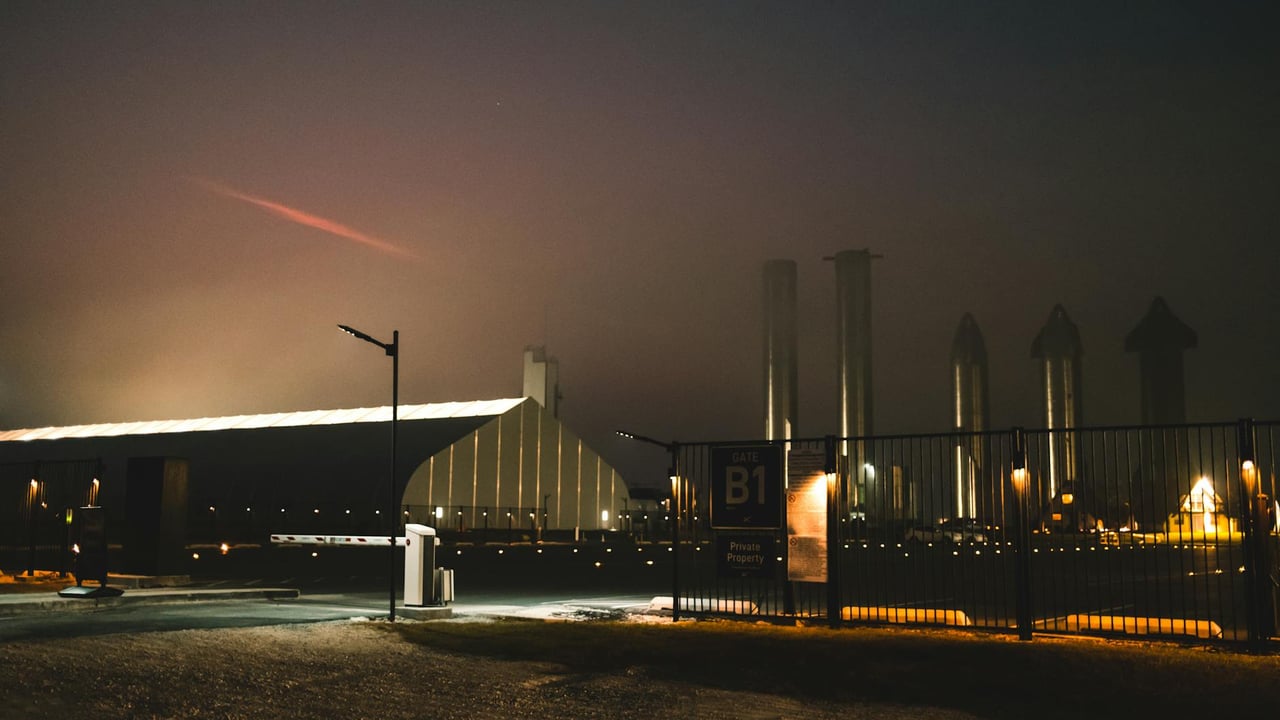

On May 23, 2026, the scorched plains of Starbase, Texas, bore witness to the thunderous ascent of Starship V3, the most powerful iteration of Elon Musk’s interplanetary ambitions to date. This twelfth test flight for the Starship program served as more than just a technical demonstration; it was the final 'final exam' before SpaceX’s anticipated initial public offering (IPO) scheduled for June. While the vehicle successfully reached orbit and deployed a payload of virtual Starlink satellites, the mission was far from a flawless victory, revealing the persistent engineering challenges of heavy-lift rocketry.
The V3 model represents a significant leap over its predecessors, boasting 33 third-generation Raptor engines capable of delivering a staggering 18 million pounds of thrust. Despite these upgrades, the mission highlighted the inherent volatility of Musk's 'fail-fast' development cycle. The Super Heavy booster failed its return burn and crashed into the Gulf of Mexico, while a premature engine shutdown on the upper stage forced mission controllers to scrap several planned orbital tests. In the traditional aerospace world, such anomalies might be viewed with alarm, but within SpaceX, they are typically framed as data-rich learning opportunities.
The timing of these glitches is particularly sensitive as SpaceX prepares for a landmark IPO that targets a $1.75 trillion valuation and a $75 billion capital raise. Investors are being asked to buy into a vision where SpaceX is no longer just a launch provider, but a vertically integrated titan of connectivity and artificial intelligence. According to internal filings, the company’s roadmap now includes the deployment of millions of 'AI compute satellites' by 2028, a plan that relies entirely on Starship V3’s ability to achieve rapid, low-cost reusability.
Adding a layer of human drama to the technical complexity is the involvement of Chun Wang, a Chinese cryptocurrency pioneer who has been named commander for upcoming lunar and Martian voyages. His scheduled global commercial circumlunar flight and subsequent Mars flyby underscore the increasingly international and private nature of deep-space exploration. As the June IPO looms, the market must now decide whether to focus on the raw, unprecedented power of the Starship V3 or the technical gremlins that continue to haunt its descent back to Earth.