
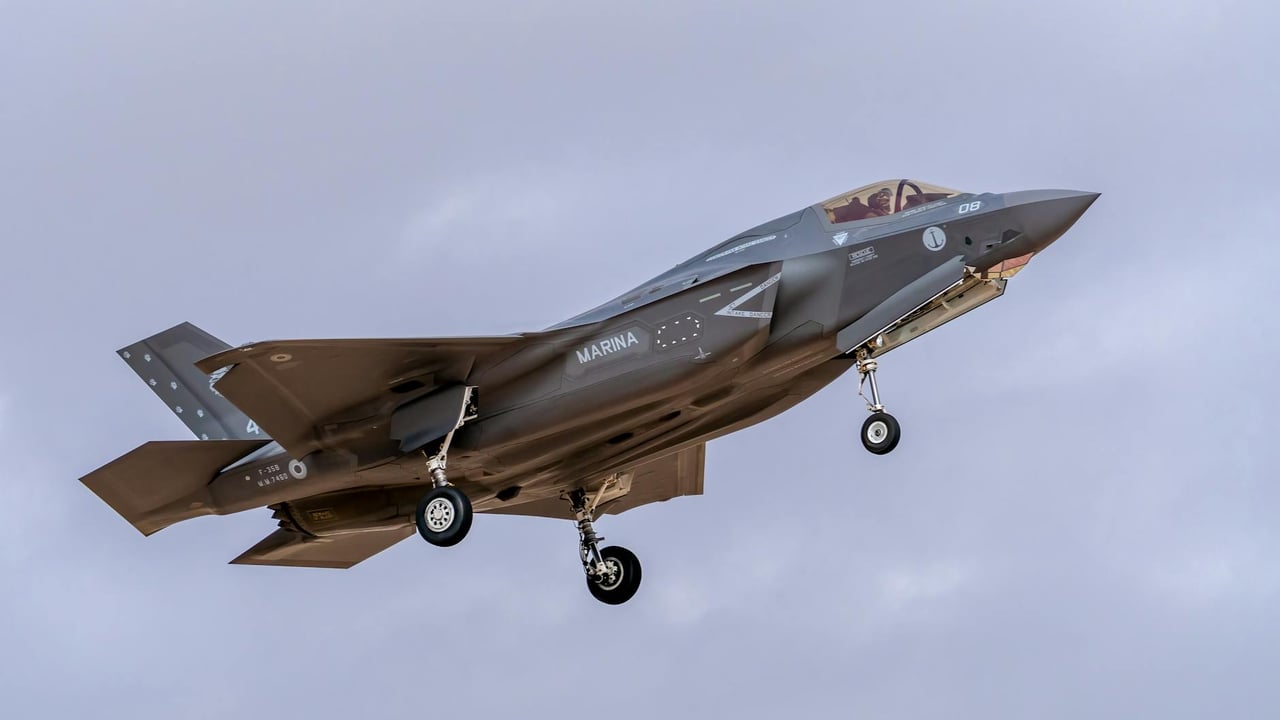

The arrival of the first three F-35 Lightning II fighter jets in Poland marks a transformative moment for European security architecture. Announced by Polish Deputy Prime Minister and Defense Minister Władysław Kosiniak-Kamysz, these fifth-generation aircraft are the first of their kind to be permanently stationed on NATO's eastern edge. This deployment signals a decisive shift in the alliance’s aerial capabilities directly adjacent to the Russian sphere of influence.
While the formal induction ceremony is scheduled for June 12, the physical presence of the stealth fighters represents the fruition of Warsaw's multi-billion-dollar defense overhaul. For years, Poland has been aggressively modernizing its military, transitioning away from Soviet-era hardware toward a high-tech arsenal compatible with the United States. The F-35 acts as the centerpiece of this transition, providing not just firepower but unparalleled sensor fusion and networking capabilities.
Strategically, these jets serve as a potent deterrent against regional aggression. By placing fifth-generation technology on the front lines, NATO significantly complicates the operational calculus for any potential adversary. The F-35’s stealth profile allows it to operate within advanced anti-access/area-denial (A2/AD) zones, effectively neutralizing the advantages of sophisticated surface-to-air missile systems deployed in the region.
Beyond mere hardware, the arrival of these jets underscores Poland's emergence as the primary military heavyweight in Central and Eastern Europe. Warsaw’s defense spending has soared to approximately 4% of its GDP, far exceeding the NATO-recommended 2%. This commitment positions Poland as a critical anchor for the alliance, ensuring that the 'Eastern Flank' is no longer a vulnerable perimeter but a fortified bastion of modern air power.