
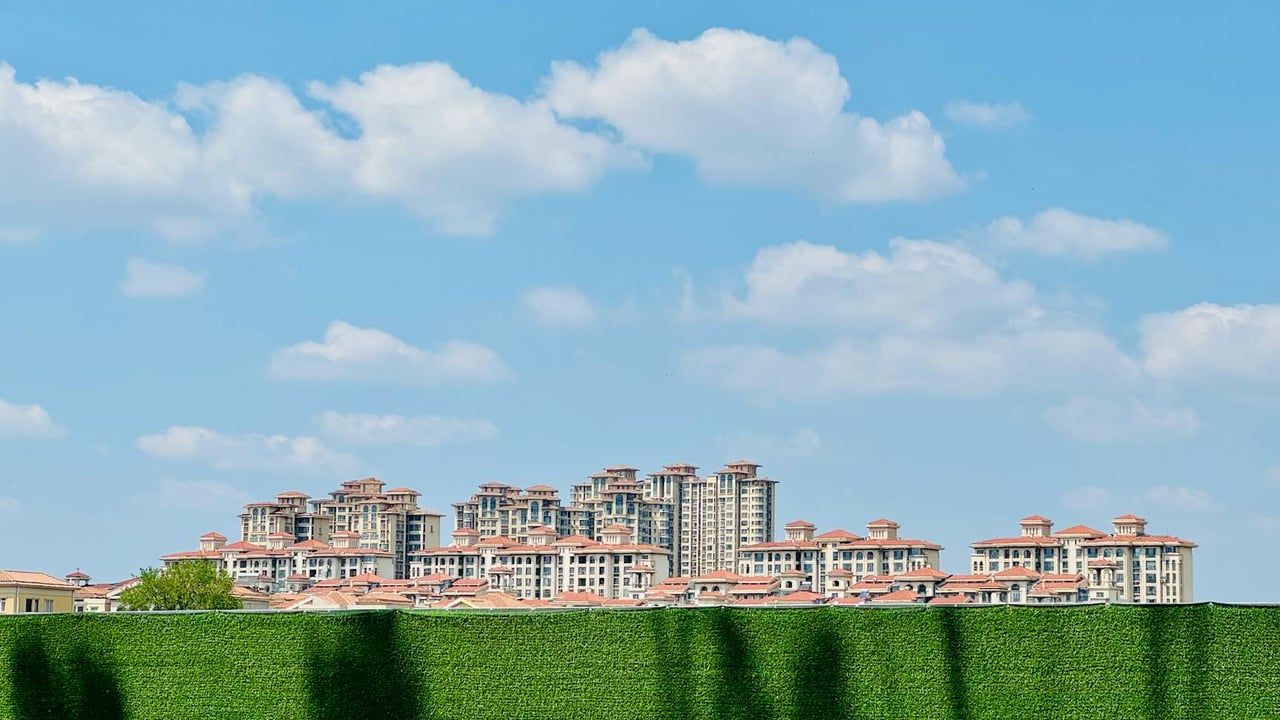

In a stark illustration of the ongoing erosion of China’s real estate valuations, the 'Hengda Sea Castle Hotel'—a once-heralded crown jewel of the massive Evergrande Sea Venice development—finally found a buyer. After five separate attempts to auction the property and nearly 16 months of market rejection, the hammer fell at 69.49 million RMB ($9.6 million). The sale price represents a staggering 70% discount from its initial 2025 valuation of over 200 million RMB, signaling the desperate search for a floor in a cooling secondary market.
Located in the Round Torch Cape (Yuantuo Jiao) scenic area of Qidong, Jiangsu, the Sea Venice project was once the archetype of the 'cultural tourism' boom that defined China’s pre-crisis property expansion. Spanning nearly 9,000 acres, the development was designed to be a seaside utopia for Shanghai’s middle class. However, as China Evergrande Group spiraled into a debt crisis, these sprawling peripheral developments have become liabilities rather than assets, plagued by high maintenance costs and dwindling foot traffic.
The auction process for the Sea Castle Hotel highlights the profound lack of liquidity for specialized commercial assets in the current climate. Despite over 3,000 spectators watching the digital auction, only one bidder participated, securing the asset at the absolute minimum starting price. This lack of competition mirrors the broader regional malaise, where residential units within the same complex are now being listed for as little as 3,400 RMB per square meter—less than half of their peak values.
Industry analysts suggest that while the price is demoralizing for creditors, the completion of the sale is a necessary evil for the local economy. A vacant, rotting 'castle' at the gateway of a major tourism zone acts as a visual blight that further depresses neighboring property values. By offloading the asset to a new operator, the local government hopes to revitalize the area’s commercial prospects and prevent the project from becoming a permanent 'ghost' monument to the era of overleveraged expansion.
Ultimately, the Sea Castle sale serves as a benchmark for the 'distressed asset' phase of China's property cycle. It demonstrates that buyers do exist for Evergrande’s remnants, but only when prices are slashed to levels that reflect the harsh reality of oversupply and the high risks associated with maintaining specialized leisure infrastructure in a post-boom economy.