Targeting the Blue Line: Israeli Airstrike on Gaza Police Signals Pressure on Local Governance

An Israeli airstrike in northern Gaza has killed five police officers, marking another blow to the territory's remaining civil administrative structures. The incident highlights the growing security vacuum in Gaza as traditional policing entities are dismantled amid the ongoing conflict.

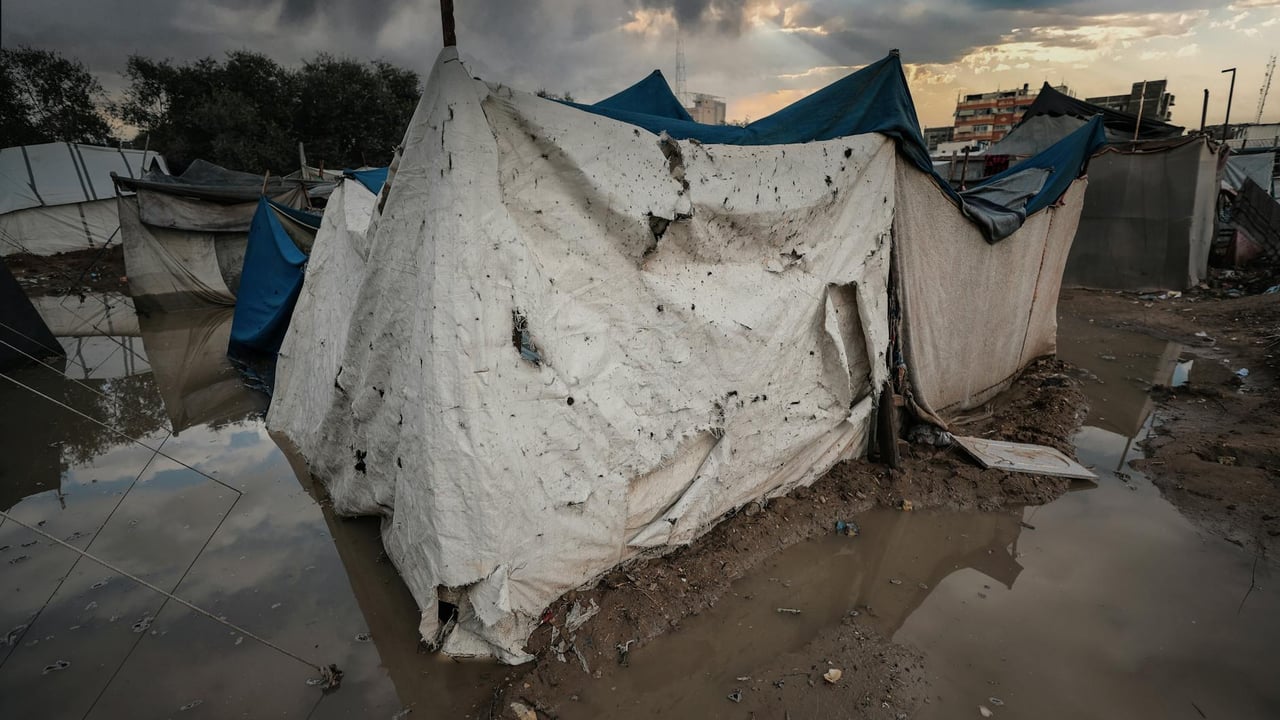
A damaged tent shelter in a flooded area of a Gaza refugee camp under stormy skies.

Key Takeaways

  • 1An Israeli airstrike killed five police officers in northern Gaza on May 23.
  • 2The deaths led to mourning ceremonies at Al-Shifa Hospital, a facility that remains a focal point of the humanitarian crisis.
  • 3The strike reflects a strategic focus on neutralizing the civil security apparatus managed by Hamas.
  • 4The degradation of local police forces significantly increases the risk of lawlessness and complicates the delivery of international aid.
  • 5This incident underscores the ongoing challenge of distinguishing between military targets and civil governance in the Gaza conflict.

Editor's
Desk

Strategic Analysis

The targeting of Gaza’s civil police force represents a calculated attempt by the IDF to ensure that the post-war environment does not include any remnants of Hamas-led governance. While Israel argues that the civil and military wings of Hamas are fundamentally inseparable, the immediate consequence of this policy is the rapid 'Somalization' of the Gaza Strip. Without a recognizable security force to manage distribution or local disputes, the territory risks sliding into a state of localized anarchy. This lawlessness may ultimately prove more difficult for Israel to manage than the centralized adversary it is currently attempting to eradicate, as it creates an unpredictable environment for both humanitarian operations and long-term security planning.

China Daily Brief Editorial
Strategic Insight
China Daily Brief

The ongoing conflict in the Gaza Strip entered another grim chapter this week as an Israeli airstrike targeted a police administrative hub in the northern sector, claiming the lives of five officers. This precision strike, occurring in an area already hollowed out by months of intense urban warfare, underscores the persistent volatility of the region even as international diplomatic pressure for a ceasefire continues to mount.

Following the attack, scenes at the ruins of Al-Shifa Hospital were marked by profound grief as families and colleagues gathered to mourn the fallen officers. While the Israel Defense Forces (IDF) frequently characterize such targets as integral components of Hamas’s security and intelligence infrastructure, the loss of civil police officers further complicates the already Herculean task of maintaining basic social order among the remaining civilian population.

The systematic targeting of local police forces is widely viewed by analysts as part of a broader Israeli strategy to dismantle the administrative backbone of the Hamas-led government. By neutralizing civil security personnel, the military objective is to prevent any resurgence of Hamas’s governing authority. However, this strategy creates a vacuum that is often filled by local clans or criminal elements, making the secure distribution of humanitarian aid increasingly difficult.

For the residents of Gaza City, the destruction of a police facility serves as a stark reminder of the total collapse of the pre-war social fabric. As the conflict drags on, the blurring of lines between military combatants and civil servants remains a central point of contention in the global discourse on the proportionality and legality of urban warfare in densely populated zones.

Share Article

Related Articles

📰
No related articles found