Orbital Ambitions: Shenzhou-23 and China’s Pivot to Space-Based Energy Dominance

China’s Shenzhou-23 mission has successfully reached orbit, carrying critical experiments including a landmark study on perovskite solar cells for space use. The mission signals Beijing's transition from space exploration to space utilization, focusing on long-term energy solutions for lunar and deep-space infrastructure despite short-term fluctuations in aerospace stocks.

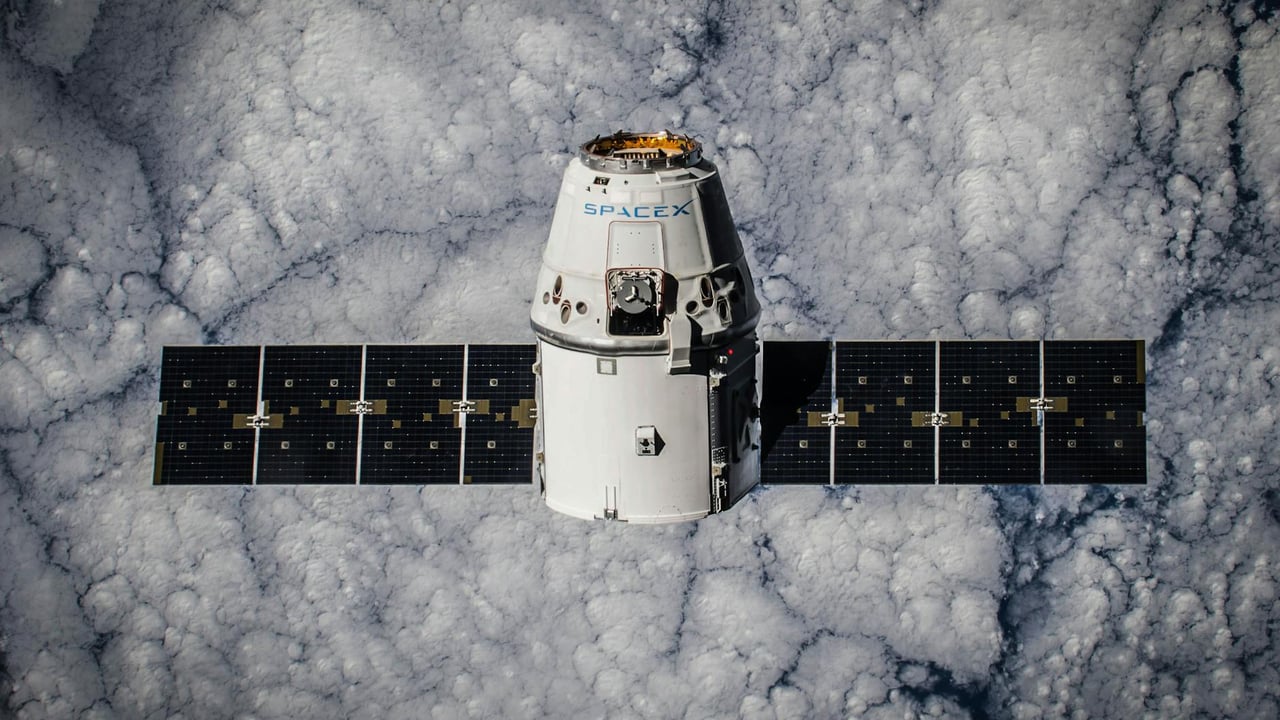
SpaceX Dragon spacecraft in orbit, highlighting advanced space technology with cloud backdrop.

Key Takeaways

  • 1Shenzhou-23 successfully delivered 54.1 kilograms of experimental equipment to the Tiangong Space Station.
  • 2A world-first dynamic service experiment for perovskite batteries is being conducted to test conversion efficiency in extreme space environments.
  • 3The mission is a key component of China's preparation for lunar bases and in-situ space resource manufacturing.
  • 4Market performance of aerospace ETFs showed a short-term decline despite the successful launch, indicating a correction after recent speculative gains.
  • 5Increasing geopolitical tensions are driving higher state investment into defense and commercial space industries as part of the upcoming 15th Five-Year Plan.

Editor's
Desk

Strategic Analysis

The Shenzhou-23 mission represents the 'utilization phase' of China’s space program, where the focus shifts from merely building the station to extracting tangible technological advantages. The prioritization of perovskite solar cells is particularly telling; energy is the primary constraint for any permanent lunar or orbital colony. By establishing early standards and performance data for this material in space, China is positioning itself to lead the 'Cislunar Economy.' Furthermore, the integration of these advancements with the goals of the 15th Five-Year Plan suggests that the Chinese government views space not as a scientific vacuum, but as a critical theater for industrial policy and strategic military depth. The current market dip in aerospace stocks is likely a transient reaction to immediate earnings pressures, masking a long-term trajectory of massive state-led capital infusion into the sector.

China Daily Brief Editorial
Strategic Insight
China Daily Brief

The successful launch of the Shenzhou-23 crewed mission marks a critical shift in China’s space strategy, moving beyond the prestige of orbital residency toward the granular mastery of space-based industrial technology. While the Long March 2F rocket delivered its payload with the usual precision, the true significance lies in the cargo: nine sophisticated scientific experiments, including a pioneering test of perovskite solar cells. This experiment aims to monitor efficiency degradation in the extreme vacuum and radiation of space, providing the raw data needed to power future lunar bases and deep-space exploration.

Perovskite technology is widely regarded as the next frontier in photovoltaics, offering higher theoretical efficiency and lower manufacturing costs than traditional silicon. By testing these cells’ durability in situ, the Chinese Academy of Sciences is effectively laying the groundwork for 'in-space manufacturing.' If successful, these high-efficiency power systems could become the standard for the next generation of low-earth orbit satellites and the primary energy source for Beijing’s planned permanent presence on the moon.

Despite these technical milestones, the financial markets reacted with a characteristic 'sell the news' posture. The Aerospace ETF and major defense contractors like AECC Power saw modest declines, reflecting a temporary disconnect between state-level strategic successes and short-term retail investment sentiment. However, institutional analysts remain focused on the broader horizon, specifically the transition into China’s 15th Five-Year Plan, which is expected to pour unprecedented capital into the commercial space sector and military-industrial integration.

The mission also highlights the accelerating convergence of civilian aerospace and national security. The push for reusable rocket technology and the expansion of the 'space application system' are not merely scientific endeavors; they are responses to heightening global geopolitical tensions. As the 2027 centenary of the People’s Liberation Army approaches, every successful Shenzhou mission serves as a dual-purpose demonstration of logistical prowess and strategic deterrent in the increasingly contested domain of cislunar space.

Share Article

Related Articles

📰
No related articles found