
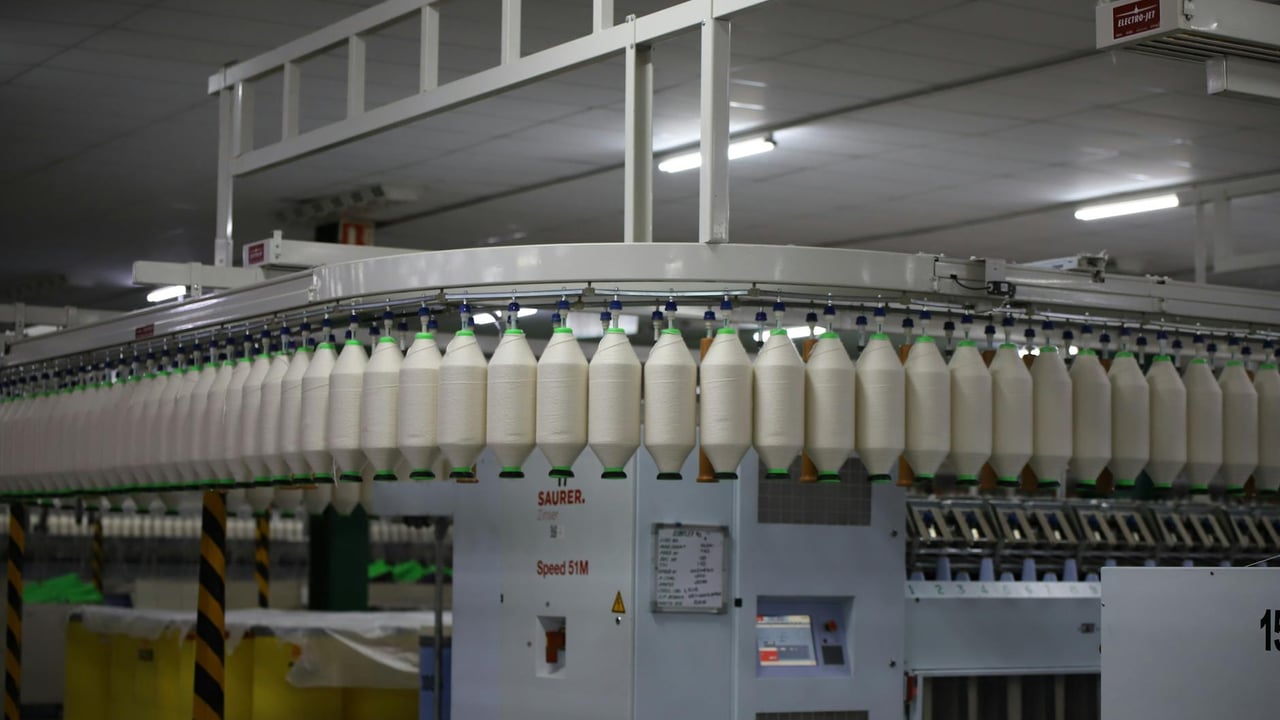

Beijing has solidified its support for the Xinjiang cotton industry, renewing a critical price-support mechanism that serves as the bedrock of the region’s agrarian economy. The National Development and Reform Commission (NDRC) and the Ministry of Finance have set the target price for Xinjiang cotton at 18,600 yuan (approximately $2,560) per ton for the 2026–2028 cycle. This decision reinforces China's commitment to self-sufficiency in textile raw materials while insulating its most sensitive border region from global market volatility.
The policy, which has been in place since 2014, is transitioning from a tool of simple volume expansion to one of strategic consolidation. While the target price remains steady, authorities have introduced a fixed subsidy cap of 5.1 million tons. This cap indicates that the central government is no longer seeking to increase total acreage, but is instead focused on managing the fiscal burden and balancing domestic supply with environmental realities.
Environmental sustainability and resource management are now central pillars of China's cotton strategy. The new directive explicitly calls for an "orderly withdrawal" of cotton planting from non-advantageous areas, particularly those suffering from critical groundwater depletion. By narrowing the focus to high-yield, resource-efficient zones, Beijing aims to mitigate the ecological impact of intensive farming in the arid far-west while maintaining a reliable harvest.
Furthermore, the 2026–2028 framework places a newfound emphasis on quality over quantity. The government intends to refine quality certification standards and optimize the subsidy distribution mechanism to reward the production of premium fibers. This shift is a calculated move to enhance the competitiveness of Xinjiang cotton in a global market where traceability and fiber quality have become paramount concerns for international textile brands.