
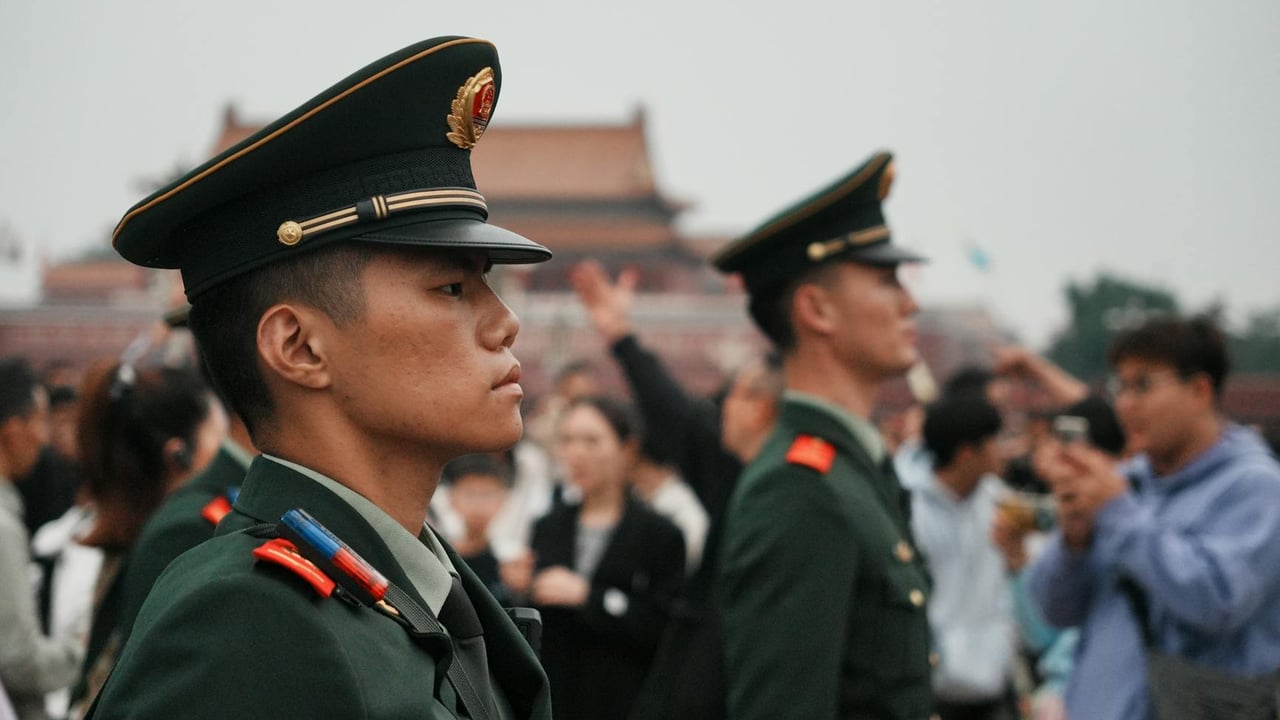

In the highly choreographed world of international diplomacy, the smallest details are often the most scrutinized. Recently, a 23-year-old Chinese People’s Armed Police soldier named Liu Zhencheng has become an unexpected focal point of China’s soft power push. Standing motionless just twenty meters from the roaring engines of the U.S. President’s Air Force One, Liu’s rigid posture and unwavering focus have been framed by state media as the ultimate symbol of a rising China.
Known as the 'First Sentinel of the Nation’s Gate,' Liu belongs to an elite unit of the Beijing People’s Armed Police tasked with guarding the aircraft of visiting heads of state. The role is less about tactical combat and more about the aesthetics of statehood. In the calculus of Beijing’s 'Major Country Diplomacy,' these guards serve as the first physical impression of the Chinese state, designed to project an image of absolute order and stoic discipline to the world.
The selection process for this unit is more akin to a premier modeling agency than a standard military draft. Candidates must stand strictly between 1.85 and 1.90 meters tall and undergo grueling simulations to endure extreme weather and jet engine noise without flinching. This 'aesthetic of endurance' is a deliberate choice, signaling that the Chinese military is not only modernizing its hardware but also perfecting its symbolic presence on the world stage.
Liu’s account of his proximity to Air Force One underscores the physical toll of this symbolic labor. He describes the 'thermal waves' from the aircraft engines hitting his back while he remained immobile. By highlighting these stories, Chinese state media is pivoting away from purely militaristic rhetoric toward a more sophisticated narrative of 'military professionalism' that seeks to command respect through poise rather than just firepower.