
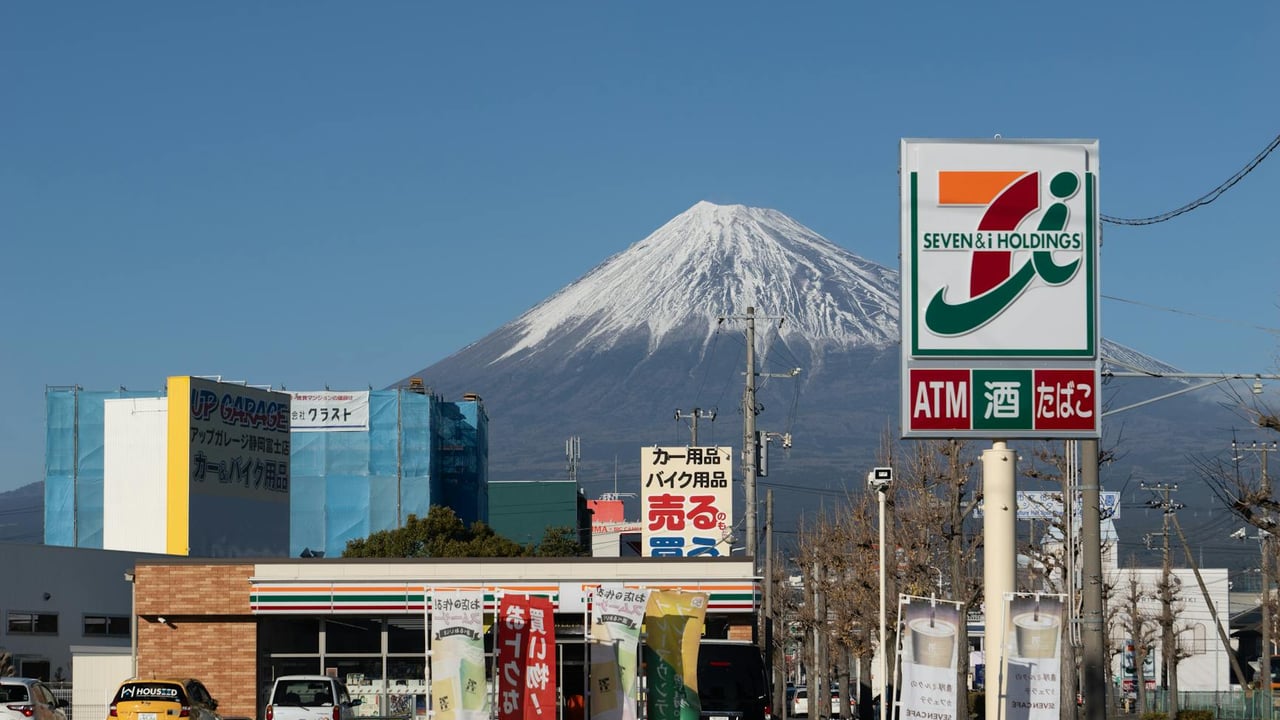

The passing of Toshifumi Suzuki at age 93 marks more than the end of a long life; it signals the definitive closing of a chapter in global retail history. Suzuki, the man who transformed a small American experiment into the backbone of Japanese urban life, died on May 18, 2026, leaving behind a legacy that redefined the relationship between consumer and store. His 'Philosophy of Retail' was not merely a textbook for his employees, but a manifesto for a generation of entrepreneurs across Asia who sought to replicate his uncanny ability to predict human desire.
Suzuki’s journey began with a bold defiance of corporate skepticism. In 1973, as a mid-career executive at Ito-Yokado, he pushed for the licensing of the 7-Eleven brand from the US-based Southland Corporation despite intense internal pushback. Where his peers saw a risk, Suzuki saw the future of Japan’s densifying cities. He eventually led a team of 15 'amateurs' to launch the first Japanese 7-Eleven in Tokyo, an endeavor so successful that by 1991, the Japanese subsidiary famously conducted a reverse takeover of its bankrupt American parent company.
The genius of Suzuki lay in his rejection of conventional industry wisdom. He famously stated that his true competitors were not Lawson or FamilyMart, but the 'ever-changing needs of the customer.' This psychological approach led to innovations that are now global standards, such as the introduction of fresh rice balls (onigiri), 24-hour service, and the transformation of convenience stores into administrative hubs where citizens could pay utility bills or access banking services. He treated the retail space as a living organism that required constant refinement based on statistical rigor and obsessive quality control.
However, the golden era of 7-Eleven began to fade following Suzuki’s acrimonious departure in 2016. Since his exit, the brand has struggled to maintain its innovative edge, often described by critics as a 'boring overachiever' that has been slow to adapt to the digital-first habits of younger consumers. In China, once a primary growth engine, 7-Eleven has been overtaken by local competitors like Meiyijia, which utilized Suzuki’s own theories to build more agile, algorithm-driven networks. The recent announcement of mass store closures in North America serves as a grim punctuation mark to this era of stagnation.
Ultimately, Suzuki’s life serves as a case study in the power and peril of the visionary founder. While his meticulous attention to detail—from the temperature of a chilled noodle bowl to the texture of a rice ball—built a global empire, his departure left a vacuum that the subsequent corporate hierarchy has struggled to fill. As 7-Eleven faces a future of consolidation and identity crisis, the retail world mourns a man who proved that business, when executed with precision and empathy, could indeed change the temperature of the world.