
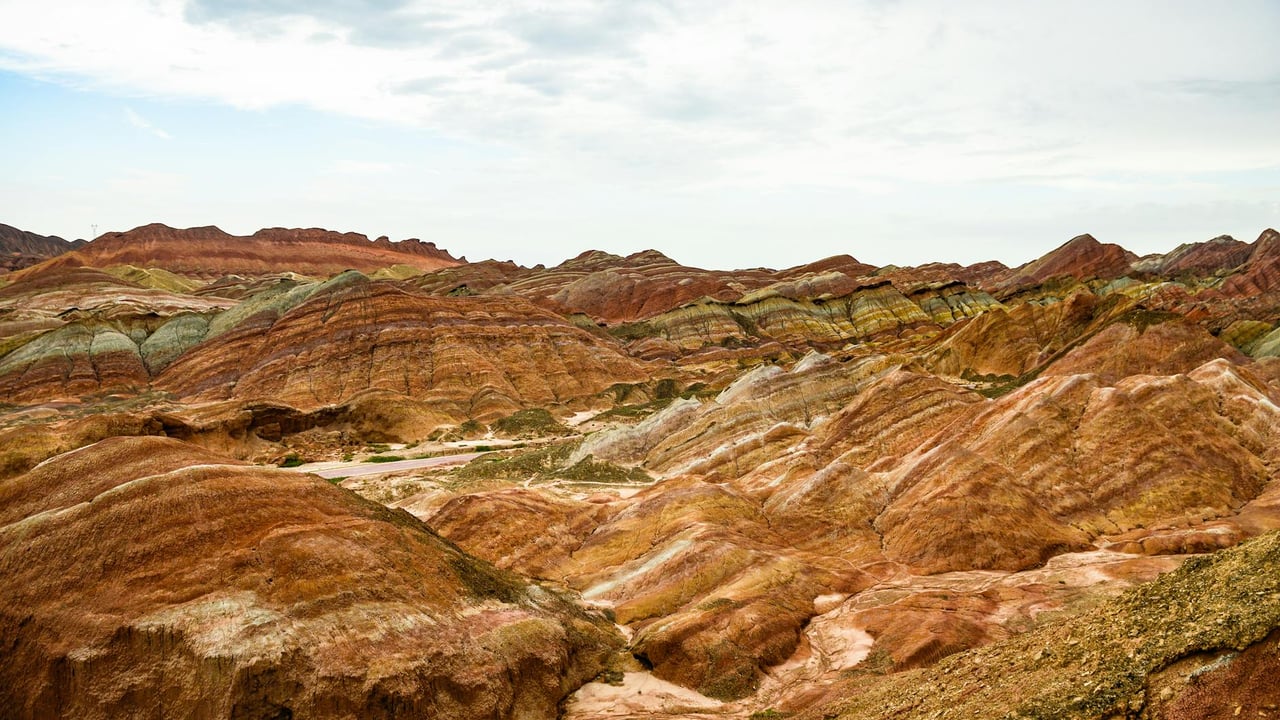

Deep beneath the permafrost of China’s traditional industrial heartland, geologists have uncovered what could be the next decisive weapon in the global resource war. A vast new deposit of "dissociated" rare earth minerals has been identified across more than 1,000 square kilometers in Heilongjiang and Jilin provinces. Initial estimates suggest the site holds reserves 1.2 to 1.5 times larger than the famous ion-adsorption deposits in southern China, which currently supply the vast majority of the world’s heavy rare earths.
Unlike traditional mining in Inner Mongolia or the environmentally taxing chemical leaching processes used in the south, this northern discovery offers a unique geological gift. Over millions of years, the extreme freeze-thaw cycles of the Northeast have acted as a natural crusher, grinding hard granite into loose gravel and sand. This allows for physical extraction methods that bypass the need for massive chemical injections into the soil, significantly reducing the environmental footprint while maximizing recovery rates.
The economic implications of this discovery are staggering. While the extraction of one ton of rare earth in southern China costs approximately 80,000 RMB ($11,000), the new dissociated deposits can be processed for just 32,000 RMB ($4,400) per ton. This 60% reduction in cost further solidifies China’s price-setting power in a market where Western competitors are already struggling to remain commercially viable without massive government subsidies.
Beijing’s dominance in the rare earth sector has long been built on two pillars: the technological breakthrough of cascade extraction pioneered by Xu Guangxian in the 1970s and a ruthless focus on cost efficiency. This dual advantage pushed Western producers out of the market decades ago, leading to a "path dependency" where the U.S. and Europe lost the talent and infrastructure necessary for high-purity refining. Today, Chinese facilities routinely achieve 6N-level purity (99.9999%), while Western counterparts often struggle to reach the 3N or 4N threshold.
As the United States attempts to forge a "Minerals NATO" and signs bilateral agreements with 11 nations to secure alternative supply chains, this discovery serves as a potent reminder of the commercial barriers to entry. China’s new northern reserves effectively lower the global price floor. This creates a strategic dilemma for Washington: if it subsidizes domestic mining, it faces an ever-widening gap against China’s plummeting production costs, potentially turning Western investments into "stranded assets."
In the ongoing technological rivalry, rare earths are the vital components for everything from semiconductor manufacturing to electric vehicle motors and stealth fighter jets. By discovering an even cheaper, cleaner, and larger source of these materials, China is not just expanding its inventory; it is reinforcing a structural monopoly that may take the West decades to challenge. The geopolitical map of rare earths is being redrawn, and once again, the center of gravity remains firmly in Beijing’s favor.