
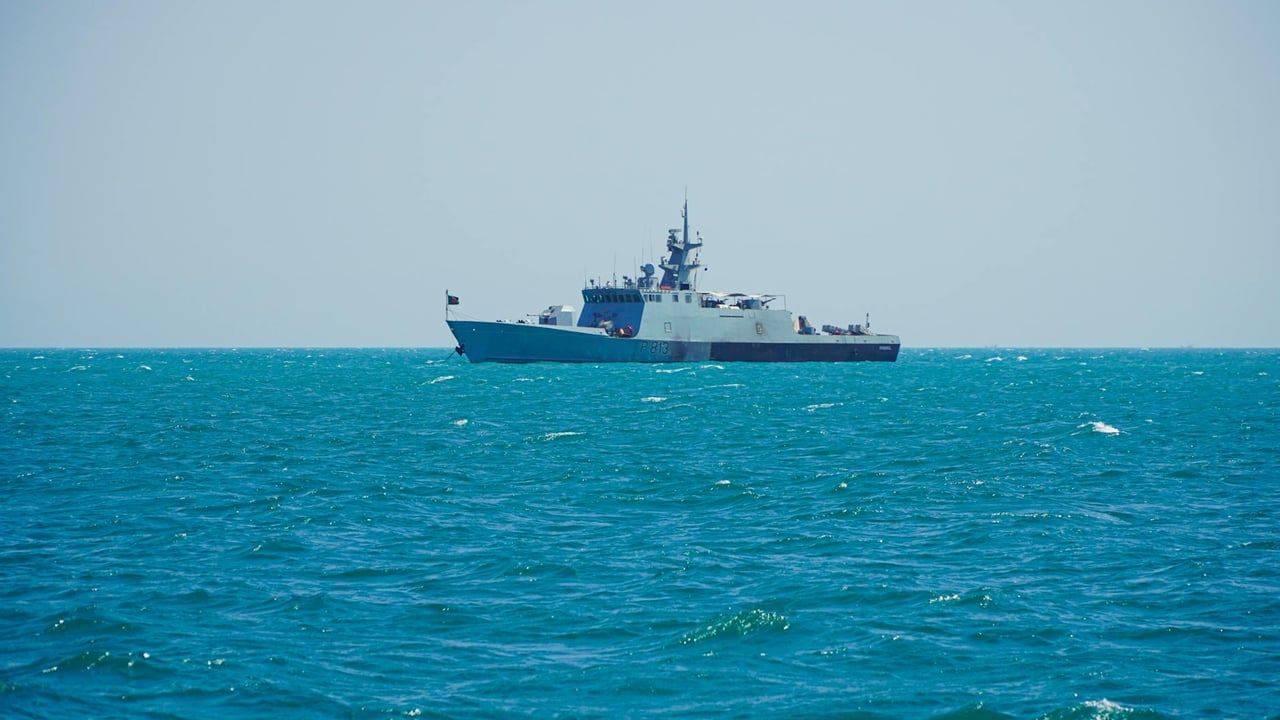

The waters of the Persian Gulf were once again churned by kinetic action on May 25, 2026, as the United States military launched targeted strikes against Iranian installations. This escalation occurred precisely as a high-powered Iranian delegation arrived in Doha to salvage a precarious diplomatic framework. According to U.S. Central Command, the self-defense strikes targeted missile launch sites and vessels engaged in minelaying operations near the Strait of Hormuz, the world’s most critical maritime chokepoint.
The operation targeted assets belonging to the Islamic Revolutionary Guard Corps (IRGC), specifically two vessels caught attempting to plant naval mines and a surface-to-air missile site in Bandar Abbas that had reportedly engaged American aircraft. While explosions echoed through the Iranian port city, officials in Washington were quick to categorize the move as a tactical necessity rather than a strategic pivot away from diplomacy. The message from CENTCOM was clear: restraint does not equate to a lack of resolve when American forces are under direct threat.
This flare-up arrives at an incredibly sensitive moment for regional stability. A delegation comprising top Iranian officials—including Foreign Minister Abbas Araghchi and central bank chief Abdolnaser Hemmati—had just touched down in Qatar to discuss high-level uranium enrichment and maritime security protocols. The juxtaposition of missile strikes and diplomatic overtures illustrates the talk-and-fight reality that has come to define the modern U.S.-Iran relationship, where both sides utilize military pressure to gain leverage at the negotiating table.
Tehran’s response was predictable but firm, with the IRGC claiming to have activated air defense systems and previously downing an enemy drone. Despite the kinetic engagement, sources close to the negotiations suggest that the fragile ceasefire agreement remains technically intact for now. However, the incident highlights the razor-thin margin for error in the Persian Gulf, where a single tactical miscalculation could derail months of arduous back-channel diplomacy and plunge the global energy market into chaos.