
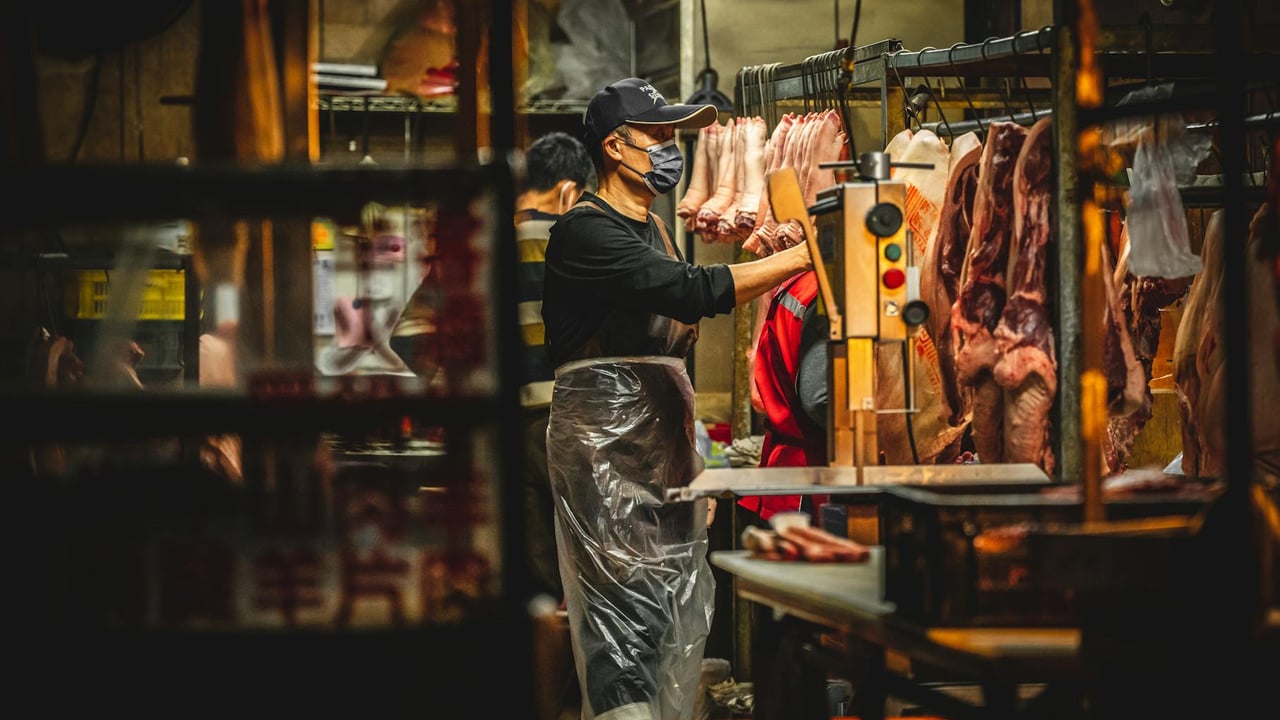

China’s meat processing titan, Henan Shuanghui Investment & Development, is once again in the crosshairs of public outrage after market regulators in Heilongjiang Province detected antibiotic residues in its pork products nearly 38 times the legal limit. A batch of 'pork hindquarters' produced by Wangkui Shuanghui Beidahuang Food—a subsidiary majority-owned by Shuanghui—was found to contain 7,700 μg/kg of Lincomycin. This concentration dwarfed the national safety standard of 200 μg/kg, representing a staggering 37.5-fold violation that has reignited fears regarding the safety of the country’s industrial food supply.
The response from Shuanghui has been a masterclass in corporate buck-passing. The company attributed the failure to 'upstream farming links' where producers allegedly ignored mandated withdrawal periods before sending livestock to slaughter. Crucially, Shuanghui defended its own quality control protocols by stating that Lincomycin is not a mandatory test item for slaughterhouses under current national regulations. This defense—that the company simply did not look for what it was not legally required to find—has done little to satisfy a skeptical public familiar with the giant’s checkered history.
Legal experts and consumer advocates note that under China’s Food Safety Law, the manufacturer is the 'first person responsible' for the safety of its products. The argument that a 38-fold spike in a common antibiotic could bypass internal screening points to a catastrophic failure in vendor management. Critics argue that for a company of Shuanghui’s scale, which prides itself on vertical integration and modern logistics, blaming small-scale upstream partners is a hollow excuse that undermines its brand premium as a 'safe' alternative to wet markets.
Adding to the concern is the significant time lag in the regulatory process. The contaminated meat was produced in August 2025, yet the official notification was not released until May 2026, meaning the batch has likely long since been consumed. This delay highlights a persistent weakness in the state's oversight mechanism, where reactive testing often arrives far too late to protect public health. For a nation still haunted by the 2011 'lean meat powder' scandal, this latest revelation suggests that despite over a decade of regulatory overhauls, the fundamental challenges of policing a fragmented agricultural supply chain remain unsolved.