
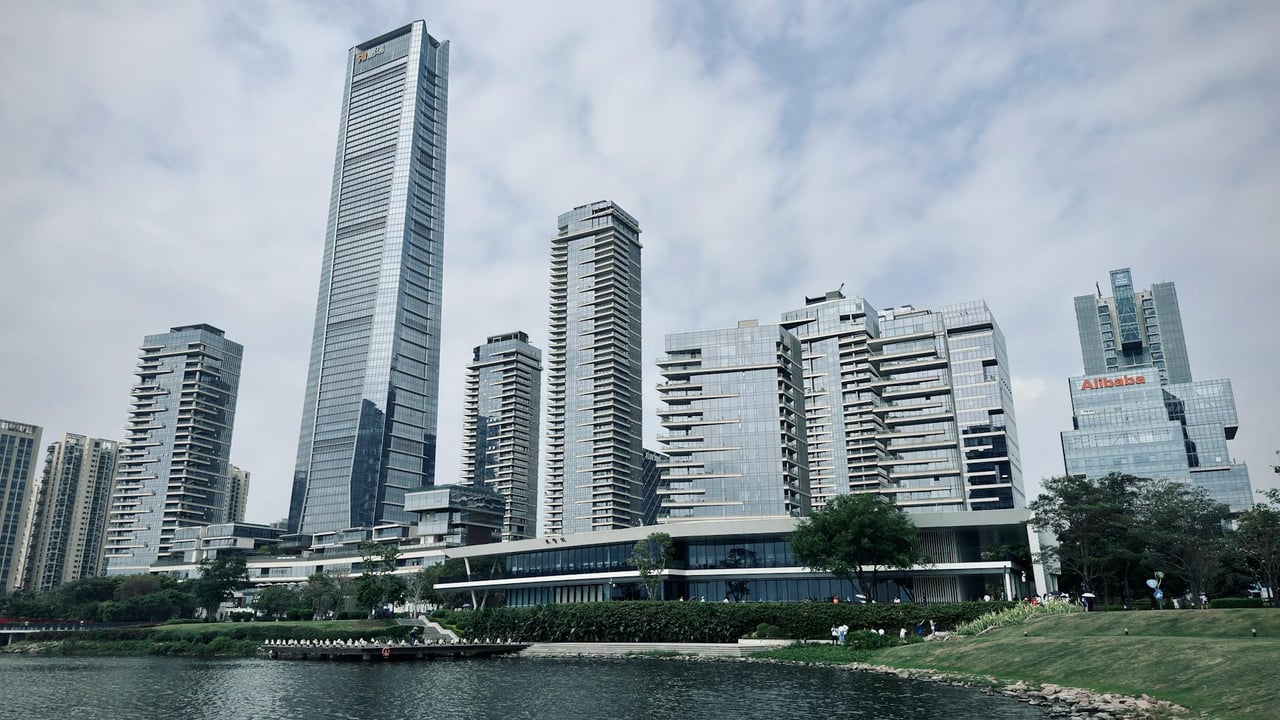

Tencent is nearing the completion of its massive new headquarters in Shenzhen’s Qianhai district, a project colloquially known as 'Penguin Island.' This ambitious development represents more than just a corporate office expansion; it is a sprawling 'Net City' designed to integrate work, life, and leisure within a self-contained ecosystem. Recent reports highlighting employee apartments priced as low as 2,000 RMB per month—located just a ten-minute walk from workstations—have sparked intense discussion regarding the future of work-life balance in China’s tech sector.
The development comes at a critical juncture for the Chinese tech industry, which has shifted from the breakneck growth of the previous decade to a focus on efficiency and high-end talent retention. By offering heavily subsidized housing in one of the world’s most expensive real estate markets, Tencent is effectively insulating its workforce from the external pressures of urban living. This paternalistic approach aims to maximize productivity by eliminating the grueling multi-hour commutes that have long characterized the lives of 'tech workers' in Tier-1 cities.
However, the move is not without its critics. While the low rent is an undeniable perk in a cooling economy, some observers view the 10-minute commute as a double-edged sword that further blurs the lines between professional and private life. The 'campus-as-a-city' model ensures that employees remain within the corporate sphere 24/7, raising questions about whether this is a utopian benefit or a more sophisticated evolution of the infamous '996' work culture. The proximity to the office ensures that the 'always-on' expectations of the AI era can be met with minimal friction.
Strategically, the new headquarters serves as a physical manifestation of Tencent’s resilience and long-term commitment to Shenzhen's Greater Bay Area. As competition for AI talent intensifies and the regulatory environment stabilizes, providing a high-quality, low-cost lifestyle is becoming a powerful recruitment tool. By building a fortress that provides for every basic need, Tencent is betting that a stable, physically integrated workforce will be the key to winning the next decade of global technological competition.