
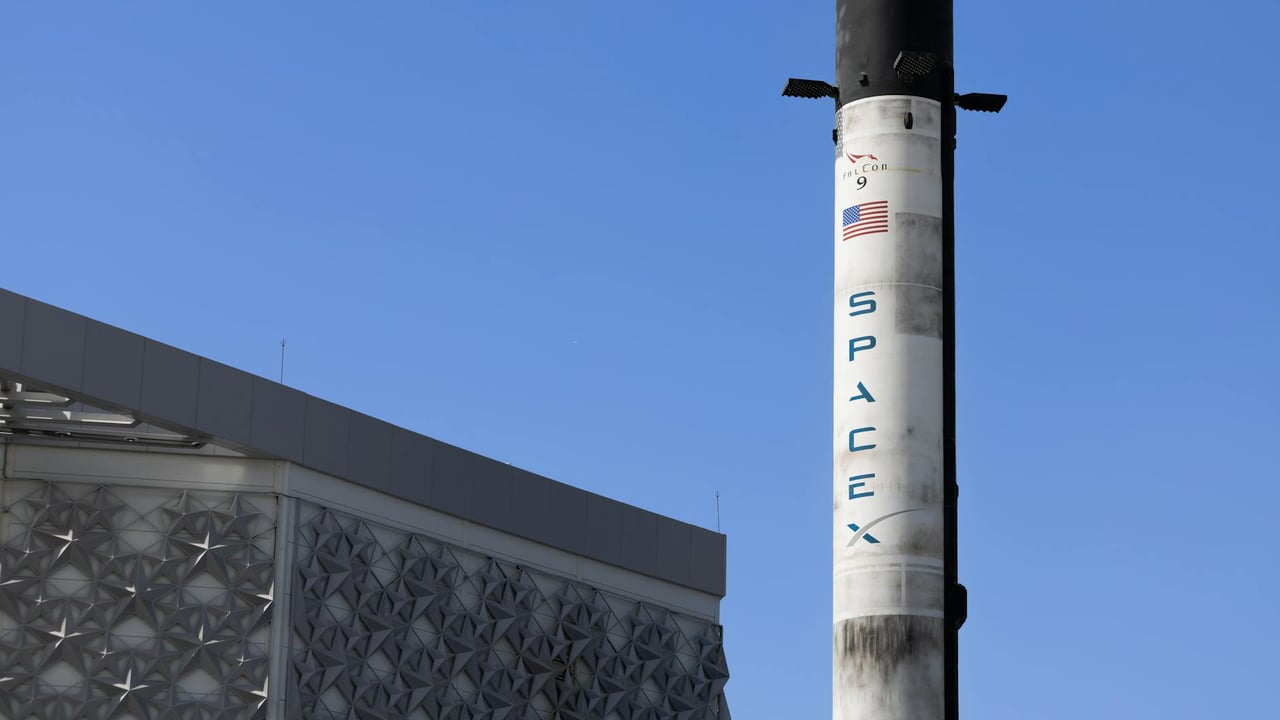

In a move that underscores the global gravity of Elon Musk’s aerospace empire, the Hang Seng Index Company has announced that SpaceX will be fast-tracked into its Hong Kong-US Technology Index. This proactive inclusion, announced on May 27, 2026, signals that the long-awaited public offering of the world’s leading private rocket company is no longer a matter of 'if' but 'when.' The index provider’s decision reflects an urgent need for institutional benchmarks to capture what is expected to be the most significant market entry of the decade.
According to the updated methodology, SpaceX will join a select group of US-listed technology giants within the index. To maintain balance, the weights of eight existing US-listed constituents will be recalculated to an equal-weight distribution following SpaceX’s seventh day of trading. These changes are scheduled to become fully effective by the eleventh day of the company’s debut, provided the listing is officially confirmed. This structured approach aims to mitigate the volatility typically associated with high-profile 'mega-IPOs.'
For investors in the Asia-Pacific region, the inclusion of SpaceX in a major Hang Seng-branded index provides a critical bridge to the 'New Space' economy. Traditionally, Hong Kong-based indices have been dominated by internet platforms and hardware manufacturers; however, the integration of a US-based frontier-tech firm like SpaceX suggests a strategic pivot. It highlights a maturing market where the lines between traditional aerospace and high-growth technology are increasingly blurred by reusable rocket technology and satellite internet constellations.
This development comes amid a flurry of market activity surrounding Musk’s ventures, including rumors of strategic consolidations and record-breaking valuation estimates. By positioning itself early, the Hang Seng Index is attempting to secure its relevance as a premier gateway for cross-border technology investment. As SpaceX prepares to transition from a private disruptor to a public juggernaut, the global financial architecture is already shifting to accommodate its massive footprint.