
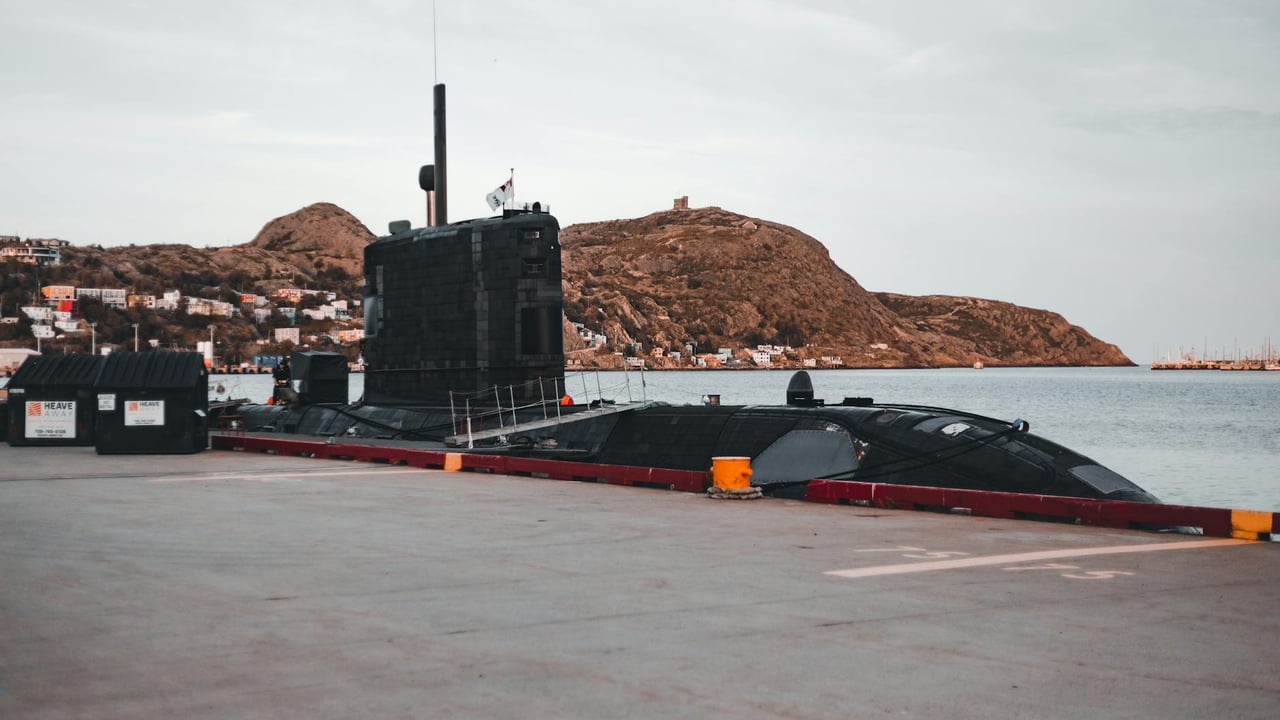

In a decisive move that signals a shift in the Indo-Pacific’s underwater balance of power, South Korea has officially unveiled its roadmap to acquire nuclear-powered submarines. Defense Minister An Gyu-baek announced that the government intends to launch its first nuclear-powered vessel by the mid-2030s, with a full operational deployment slated for the late 2030s. This announcement marks the first time Seoul has formalized a policy document detailing the acquisition and operational principles for such a sensitive strategic asset.
The strategic rationale behind this pursuit is increasingly clear. As North Korea advances its sea-based nuclear triad with solid-fuel submarine-launched ballistic missiles (SLBMs), the Republic of Korea Navy (ROKN) requires platforms capable of persistent, high-speed underwater surveillance. Unlike conventional diesel-electric submarines, which must surface or snorkel to recharge batteries, nuclear-powered variants (SSNs) can remain submerged indefinitely, allowing them to shadow North Korean ballistic missile submarines from the moment they leave port.
However, Seoul’s ambitions face significant geopolitical and legal hurdles. The project must navigate the complexities of the South Korea-U.S. Civil Nuclear Agreement, which currently restricts Seoul from enriching uranium for military purposes. By explicitly stating its intention to uphold nuclear non-proliferation obligations, the South Korean government is signaling to Washington and the International Atomic Energy Agency (IAEA) that it seeks a path forward similar to the precedent set by the AUKUS agreement between the U.S., UK, and Australia.
This development represents more than just a military upgrade; it is a declaration of South Korea’s desire for greater strategic autonomy within the alliance. As regional tensions rise, the transition from a green-water navy to a blue-water force equipped with nuclear propulsion underscores Seoul's commitment to becoming a pivotal global state. The success of this project will ultimately depend on whether South Korea can secure the necessary diplomatic carve-outs to fuel its nascent fleet while maintaining its standing in the global non-proliferation regime.