China’s All-in-One Answer to the Drone Menace: The Rise of Integrated Counter-UAS Platforms

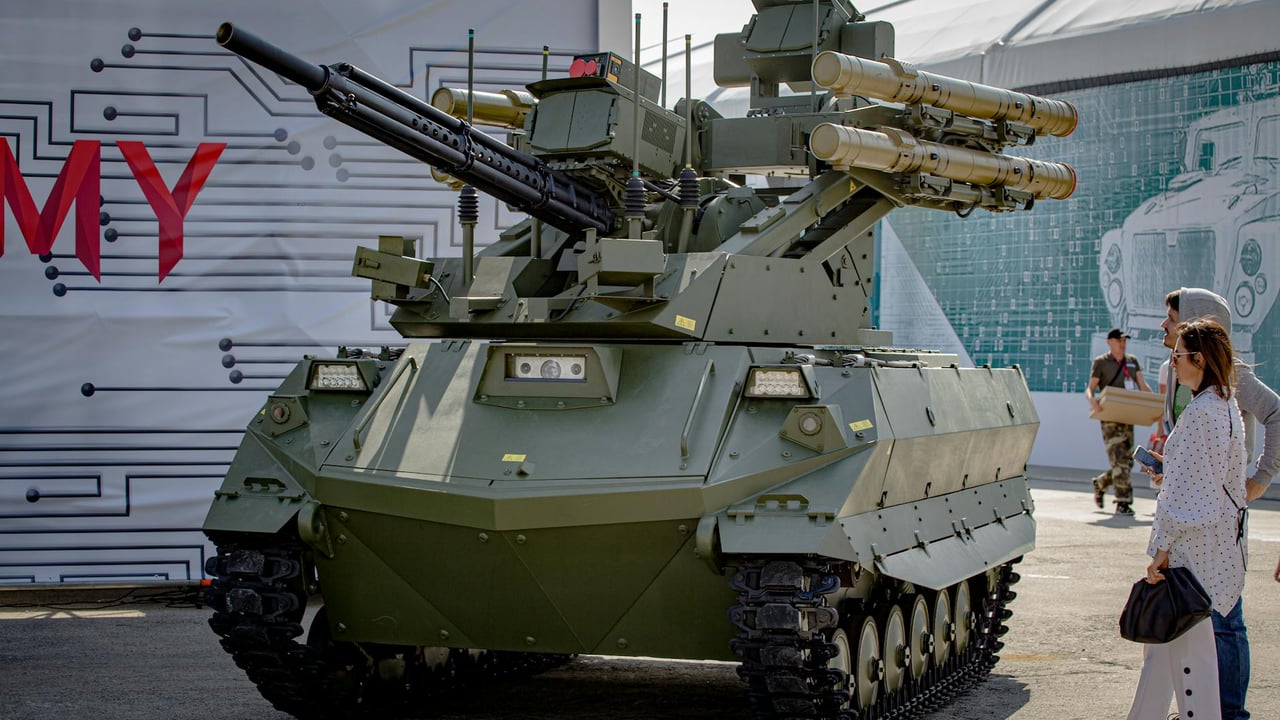
China has unveiled a new mobile counter-drone vehicle that integrates electronic warfare and kinetic weapons to neutralize unmanned aerial threats. This unified platform is designed to counter drone swarms and reflects a strategic pivot toward protecting mobile military units from asymmetric, low-cost aerial attacks.

Green military tank with missile launchers on display outdoors with spectators.

Key Takeaways

  • 1The new platform combines 'soft-kill' electronic jamming and 'hard-kill' kinetic destruction on a single mobile chassis.
  • 2The system is specifically designed to address the tactical lessons learned from recent conflicts like the war in Ukraine.
  • 3Integration allows for a more rapid response to 'saturation attacks' where multiple drones target a single objective simultaneously.
  • 4China is positioning itself as a global leader in the export of cost-effective, comprehensive counter-drone technologies.

Editor's
Desk

Strategic Analysis

The strategic significance of this 'drone-killer' lies in its modularity and mobility. Historically, air defense was a tiered system of long-range and short-range assets that were often static or slow to deploy. In the age of FPV (First-Person View) drones and loitering munitions, defense must be as agile as the threat. China’s ability to condense sophisticated radar, electronic interference, and kinetic interception into one vehicle suggests a maturing of their 'System of Systems' approach. This technology not only protects the People's Liberation Army's own interests but also serves as a potent export product for states that cannot afford expensive Western-made air defense systems but face immediate drone threats from non-state actors or modern militaries.

China Daily Brief Editorial
Strategic Insight
China Daily Brief

The conflict in Ukraine has fundamentally altered the calculus of modern warfare, proving that cheap, off-the-shelf drones can neutralize multi-million dollar armored vehicles. As the global arms race shifts toward unmanned systems, Beijing is pivoting its defense industrial complex to provide a comprehensive answer to this pervasive asymmetric threat.

A new mobile counter-unmanned aerial system (C-UAS) platform has recently debuted in Beijing, signaling a major shift in China’s tactical defense doctrine. Unlike previous generations that relied on localized jamming or separate, cumbersome missile batteries, this single-vehicle solution integrates both soft-kill and hard-kill capabilities into a unified mobile unit.

The soft-kill components utilize advanced electronic warfare to sever the data links between a drone and its operator or to spoof GPS signals entirely, forcing drones to land or crash. By contrast, the hard-kill mechanisms—likely comprising rapid-fire cannons or small-scale interceptor missiles—provide a kinetic insurance policy for autonomous drones that are resistant to electronic interference.

This integration addresses a critical vulnerability in current air defense networks: the saturation attack. By combining multiple layers of defense on a single chassis, the system reduces the response time and logistical footprint required to protect mobile columns, making it far more effective against coordinated drone swarms than traditional, fragmented defenses.

Beyond the technical specifications, the unveiling of such a system highlights China's ambition to become a leading provider of C-UAS technology to the global market. As nations worldwide scramble to mitigate the threat of low-cost aerial attrition, Beijing is leveraging its manufacturing speed to field-test and export comprehensive solutions for a drone-saturated battlefield.

Share Article

Related Articles

📰
No related articles found