
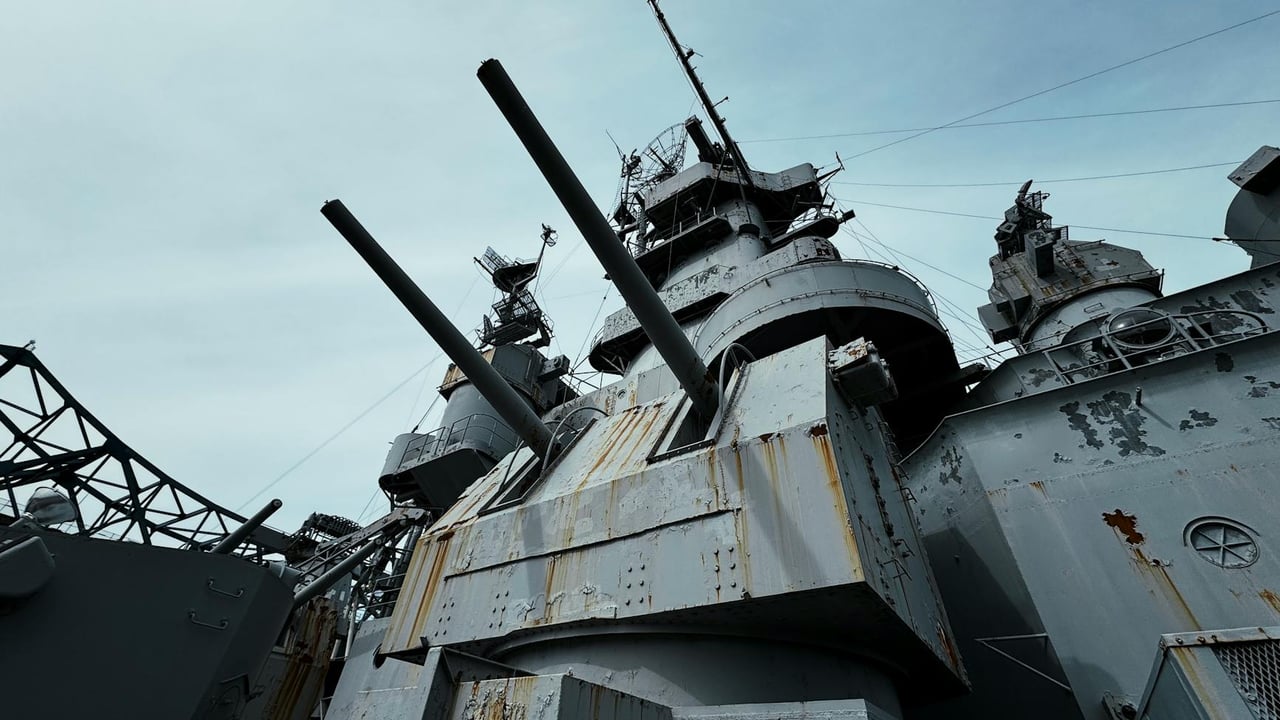

The vision of a revitalized American naval supremacy, anchored by a new generation of capital ships, has hit a formidable legislative wall. Despite recent momentum toward the realization of the so-called 'Trump-class' battleship—a project defined by its shift back to nuclear propulsion and 'distributed' modular construction—the United States Congress has signaled a significant retreat. Lawmakers are now moving to legally prohibit the commencement of the lead ship’s construction until the Pentagon can provide ironclad guarantees regarding the maturity of its core offensive technologies.
At the heart of this standoff is the U.S. Navy’s ambitious reliance on 'unproven' and 'next-generation' weapon systems. The specific points of contention include electromagnetic railguns and high-power laser directed-energy weapons, both of which have faced long developmental cycles with varying degrees of success. For a Congress wary of historical cost overruns, the prospect of building a massive hull around weapons that may not function as intended is a risk too far.
This legislative skepticism is deeply rooted in the traumatic legacy of the Zumwalt-class destroyer and the early difficulties of the Gerald R. Ford-class aircraft carriers. In those instances, 'concurrency'—the practice of beginning construction while critical systems were still in design—led to billions in wasted taxpayer dollars and years of operational delays. By demanding that these advanced systems be 'fully verified' before the first steel is cut, lawmakers are attempting to enforce a new era of fiscal and technical realism on the Navy’s long-range shipbuilding plans.
Beyond the hardware, the debate reflects a broader strategic soul-searching within the American defense establishment. While proponents argue that a nuclear-powered battleship with directed-energy defenses is the only way to counter emerging anti-access/area-denial (A2/AD) threats in the Indo-Pacific, critics view the project as a vanity endeavor that duplicates the vulnerabilities of existing platforms. For now, the 'Trump-class' remains a conceptual titan, stalled by a Congress that values technological certainty over political symbolism.