
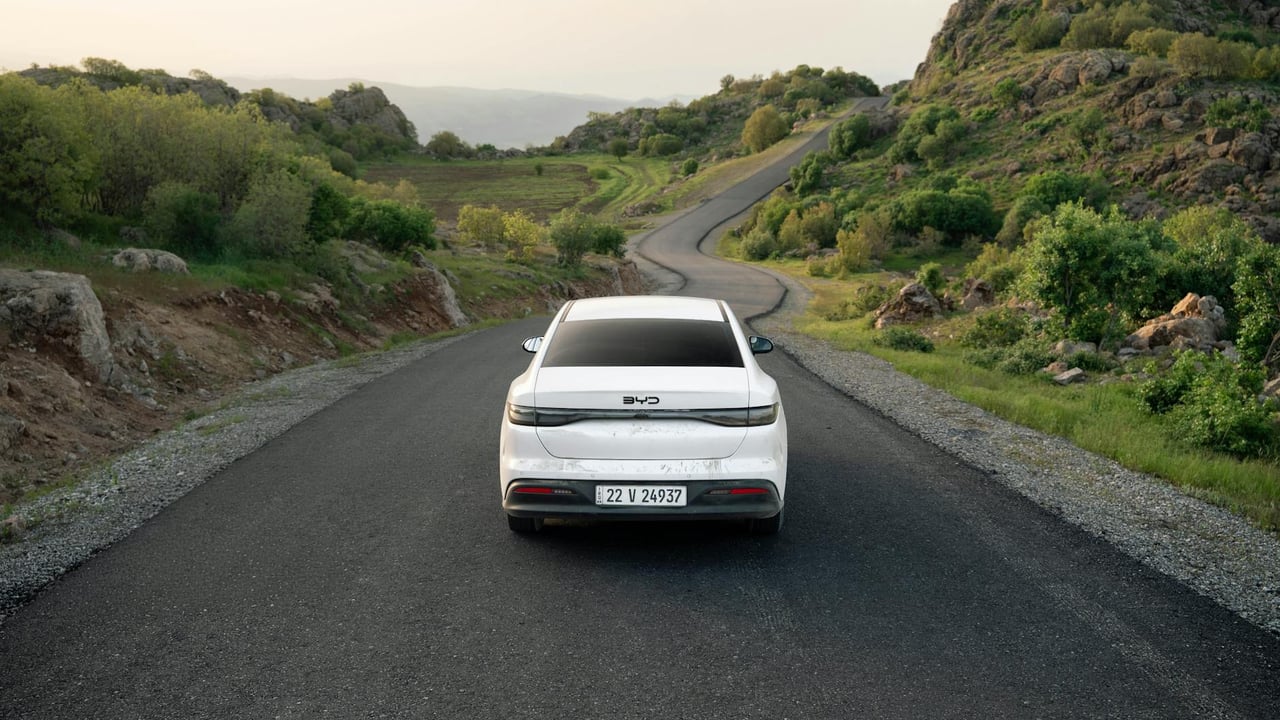

The relentless evolution of China’s automotive landscape has shifted from a race for range to a brutal war of technological democratization. In a single week, the industry witnessed a flurry of launches that suggest features once reserved for luxury flagships—such as LiDAR-based city navigation and 900-plus horsepower—are now standard fare for the middle class. Leading the charge is BYD, which has integrated its high-end 'God’s Eye' driver assistance system into the Song Ultra DM-i, a plug-in hybrid SUV priced as low as 129,900 RMB (approximately $18,000).
Beyond hardware specs, BYD is attempting to bridge the consumer trust gap with a provocative 'safety guarantee.' The company has pledged to provide one year of safety underwriting for its city navigation systems, effectively assuming commercial responsibility for the performance of its ADAS technology. This move signals a transition from using autonomous driving as a high-priced gimmick to a competitive tool designed to win over skeptical mass-market buyers who prioritize safety over sheer novelty.
Meanwhile, Geely’s premium brand, Lynk & Co, is challenging the performance sector with the 10+ sedan. By offering a dual-motor setup delivering a staggering 925 horsepower for roughly 220,000 RMB, Lynk & Co is effectively commoditizing supercar performance. This strategy leverages Geely’s motorsport heritage to ensure that high performance is not just a digital stat but a tangible brand asset, forcing competitors to rethink the value proposition of high-output electric drivetrains.
The influence of Huawei continues to permeate the sector through deep collaborations with traditional state-owned enterprises. GAC’s new Qijing GT7, a high-end shooting brake, and FAW’s Bestune Yueyi 08 both lean heavily on Huawei’s Qiankun software ecosystem. These partnerships allow legacy manufacturers to bypass their internal software deficiencies, bringing sophisticated cockpit experiences and Level 2+ autonomous driving to market at price points that would have been unthinkable just eighteen months ago.
This convergence of price and performance creates a high-pressure environment for global legacy automakers. While Western brands struggle to define their software-defined vehicle strategies, Chinese players are already scaling those technologies across their entire portfolios. The market is no longer asking if a car can drive itself or charge in minutes; it is asking how cheaply those features can be delivered to the average commuter.