
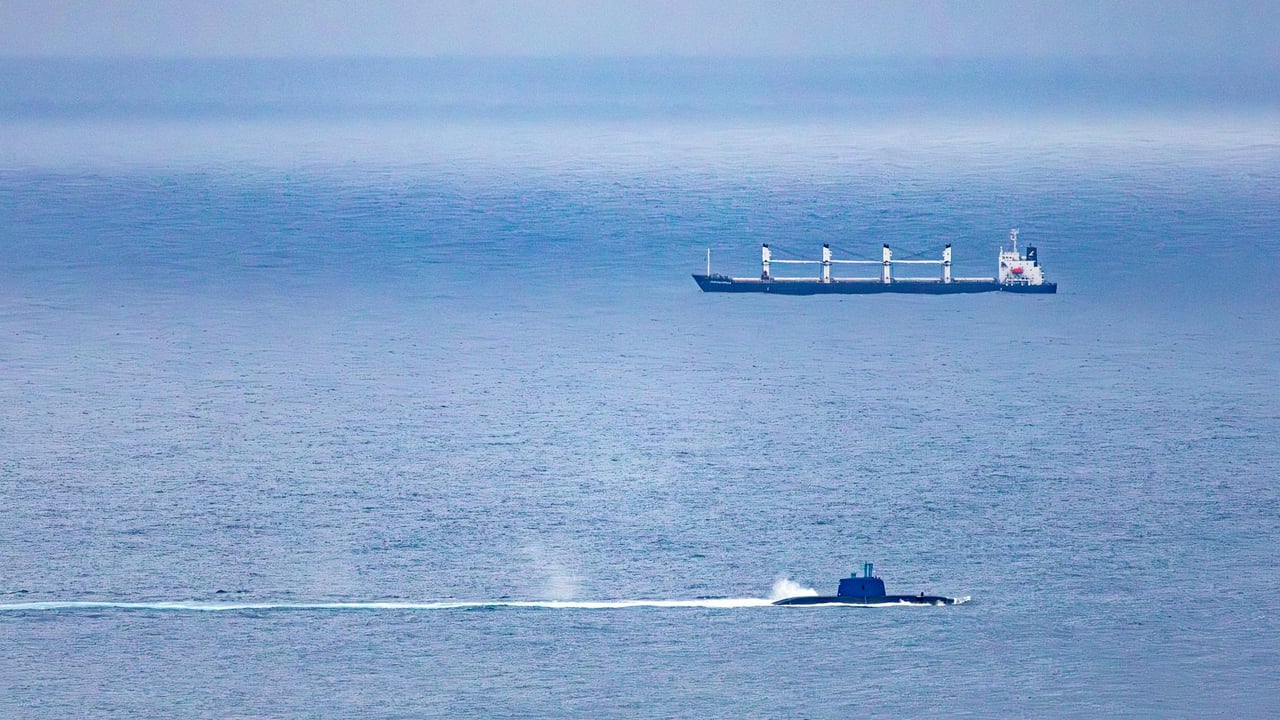

For decades, the underwater domain was the one theater of war where the United States maintained an unquestioned qualitative lead over the People’s Liberation Army Navy (PLAN). The emergence of the Type 095 nuclear-powered attack submarine (SSN) signals that this era of acoustic impunity is coming to a definitive end. As satellite imagery reveals the first of these third-generation vessels hitting the water, military analysts are reassessing the balance of power in the Indo-Pacific.
The Type 095 represents more than a mere iterative upgrade of the previous Type 093 fleet; it is a technological leap toward parity with the world’s most elite platforms. With a displacement estimated at 10,000 tons—a 50% increase over its predecessor—the vessel provides the necessary volume for advanced noise-reduction technologies. These include sophisticated vibration isolation, a quiet-running nuclear reactor, and an X-shaped stern for enhanced maneuverability in shallow littoral waters.
Most significant is the adoption of pump-jet propulsion, a feature found on the latest American and British submarines. Unlike traditional propellers, pump-jets significantly reduce cavitation, allowing the submarine to maintain high tactical speeds without alerting enemy sonar arrays. Former Western naval officers have noted that the Type 095’s acoustic signature may finally rival the U.S. Navy’s Seawolf or the Russian Yasen-M classes, effectively neutralizing the "acoustic advantage" the West has relied upon since the Cold War.
Beyond stealth, the submarine serves as a formidable launch platform for Beijing’s latest asymmetric weapons. It is reportedly designed to carry the YJ-21 hypersonic ballistic missile and the YJ-19 hypersonic cruise missile. These weapons, which move at speeds exceeding Mach 5, present a defensive nightmare for carrier strike groups and are capabilities that the U.S. Navy currently lacks in its own submarine-launched inventory.
The industrial dimension of this development is equally concerning for Pentagon planners. China’s shipbuilding capacity, now the largest in the world, is operating at a tempo that suggests it could outproduce American nuclear submarine output by 2025. While the U.S. faces chronic delays in its Virginia-class production due to shipyard bottlenecks, China is successfully leveraging its massive commercial maritime infrastructure to accelerate its naval modernization.
Ultimately, the Type 095 changes the strategic calculus for any potential conflict in the Pacific. If the PLAN can successfully hide its attack submarines while simultaneously threatening the U.S. surface fleet with hypersonic strikes, the fundamental nature of maritime deterrence changes. The silent service is no longer a one-sided American advantage, but a contested frontline where the margin for error has narrowed to zero.