
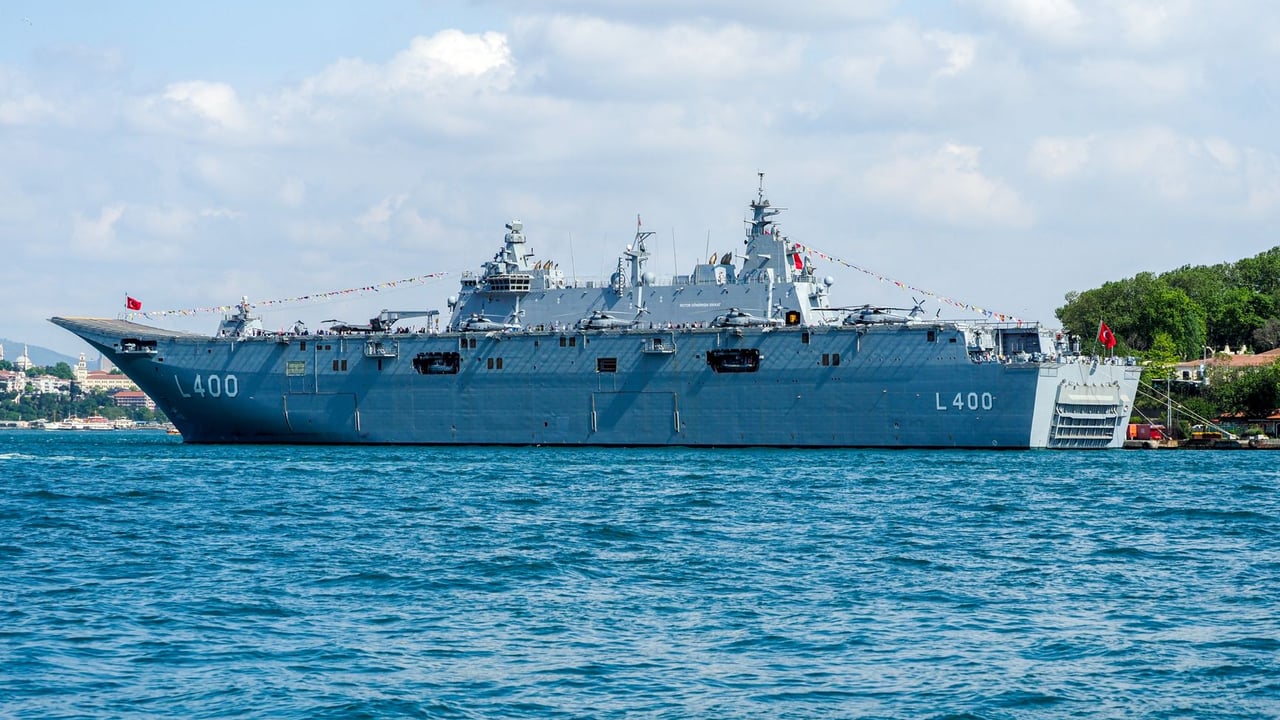

In the competitive landscape of Southeast Asian naval procurement, Malaysia has sent a clear signal by opting for Turkish-made Ada-class corvettes over further Chinese acquisitions. The deal, valued at approximately $550 million for three 2,500-ton vessels, represents a significant escalation in both capability and cost compared to the previous procurement of Chinese 'Keris-class' Littoral Mission Ships. While the Chinese vessels were smaller and notably cheaper at $67 million each, Kuala Lumpur's shift suggests that price is no longer the primary driver in its maritime strategy.
This decision is underscored by a stark contrast in naval philosophy and domestic political pressures. The older Chinese-built ships, the oldest of which is only six years into its service life, are being sidelined in favor of larger, more versatile Turkish platforms before even reaching their mid-life refit milestones. This rapid pivot highlights the volatile nature of Malaysian defense procurement, where shifts in government often lead to the re-evaluation of major contracts and the redirection of capital toward new strategic partners.
Historical baggage also weighs heavily on Kuala Lumpur’s decision-making. The ongoing saga of the French 'Gowind-class' littoral combat ships, which have faced decade-long delays and corruption allegations, has made the Malaysian Ministry of Defense wary of traditional Western suppliers. In this context, Turkey has emerged as a 'middle-path' provider, offering high-tech NATO-standard equipment without the heavy political conditions or the delivery risks associated with more established European shipyards.
Turkey’s success in this tender is also attributed to its pragmatism regarding financial and geopolitical sensitivities. Ankara’s willingness to accept flexible payment terms, including portions in local currency, significantly eases the burden on Malaysia’s treasury. Furthermore, as a non-claimant in the South China Sea disputes, Turkey offers a 'politically harmless' alternative for Malaysia, which seeks to modernize its fleet without appearing to align too closely with either Washington or Beijing.
Despite the shift, Beijing’s role in the region is far from diminished. China’s successful and timely delivery of the first four Keris-class vessels has established a reputation for reliability that contrasts sharply with European delays. As Malaysia continues its '15-to-5' fleet transformation program—which aims to consolidate a disparate fleet into five distinct classes—China remains a formidable contender for future bids involving mid-to-low tonnage patrol craft and support vessels.
Ultimately, the Malaysian naval landscape is being reshaped by a desire for strategic autonomy and domestic political maneuvering. The move to Turkish corvettes illustrates how middle powers in Southeast Asia are leveraging a multipolar world to diversify their arsenals. While the price tag is high, the perceived value of a supplier that offers both technological sophistication and political neutrality is, for the current administration in Kuala Lumpur, worth the premium.