
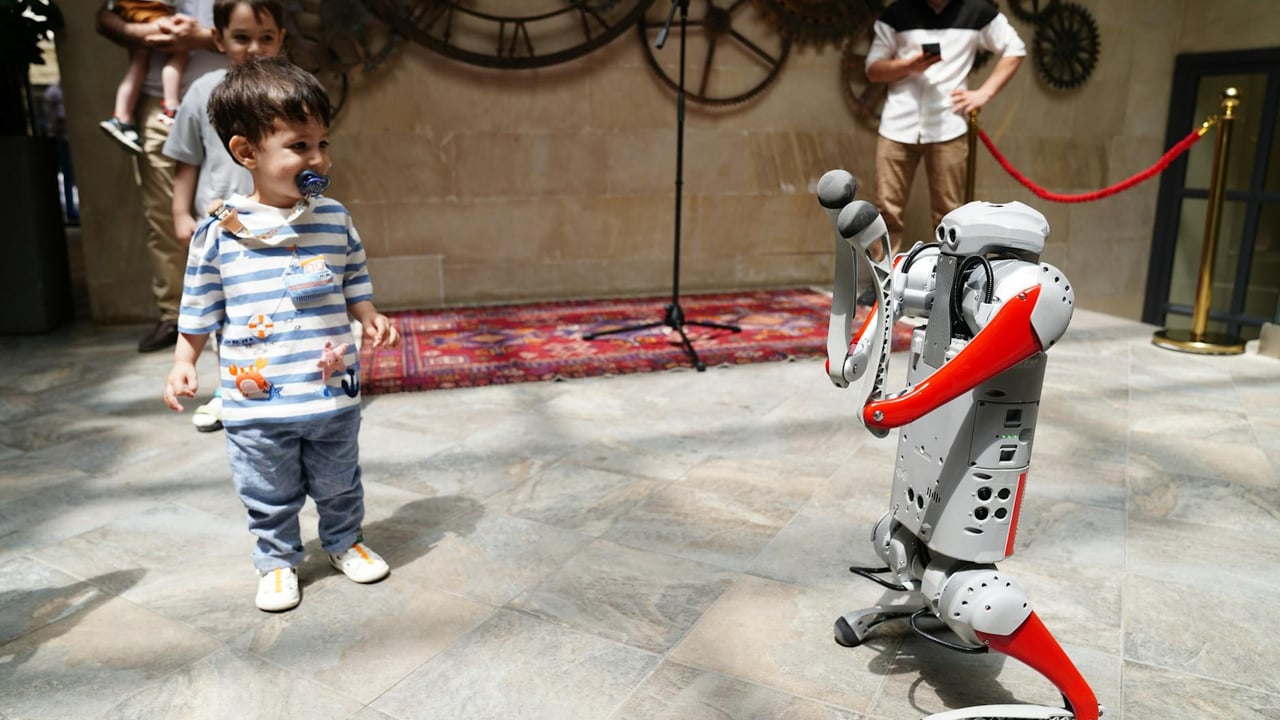

Unitree Robotics, a leading force in the global push for "embodied intelligence," has successfully cleared its listing hearing for the Shanghai Stock Exchange’s STAR Market. This milestone marks a pivotal moment for China’s robotics sector as it transitions from laboratory experimentation to a high-stakes commercial reality. The company plans to issue at least 40.4 million new shares to fund a massive expansion into humanoid AI models and the construction of a major manufacturing base.
Often compared to international rivals like Boston Dynamics, Unitree has carved out a niche by prioritizing rapid commercialization and scale. Its product lineup, which includes the iconic Go-series quadrupeds and the sophisticated H and G-series humanoid robots, has moved beyond tech demos into actual sales across various industrial and consumer sectors. This aggressive market entry has translated into a meteoric rise in revenue, ballooning from roughly 159 million yuan in 2023 to 1.7 billion yuan by 2025.
However, the latest financial disclosures also reveal the growing pains of a hyper-growth tech firm. While the company achieved profitability in 2024, its growth rate moderated in early 2026, and quarterly profits dipped due to a surge in research and development costs. Unitree’s management argues that these high expenditures are a strategic necessity to maintain a competitive edge as the market for high-performance robotics becomes increasingly crowded and price-competitive.
Unitree’s ascent is bolstered by its deep integration into the global AI ecosystem, most notably through its collaborations with NVIDIA. By leveraging advanced GPU-accelerated simulation and training environments, the firm has shortened the development cycle for its 1.8-meter-tall humanoid robots. As Unitree moves toward its public debut, it stands as a bellwether for whether China can lead the world in the next frontier of robotics—the integration of sophisticated physical hardware with generative AI.