
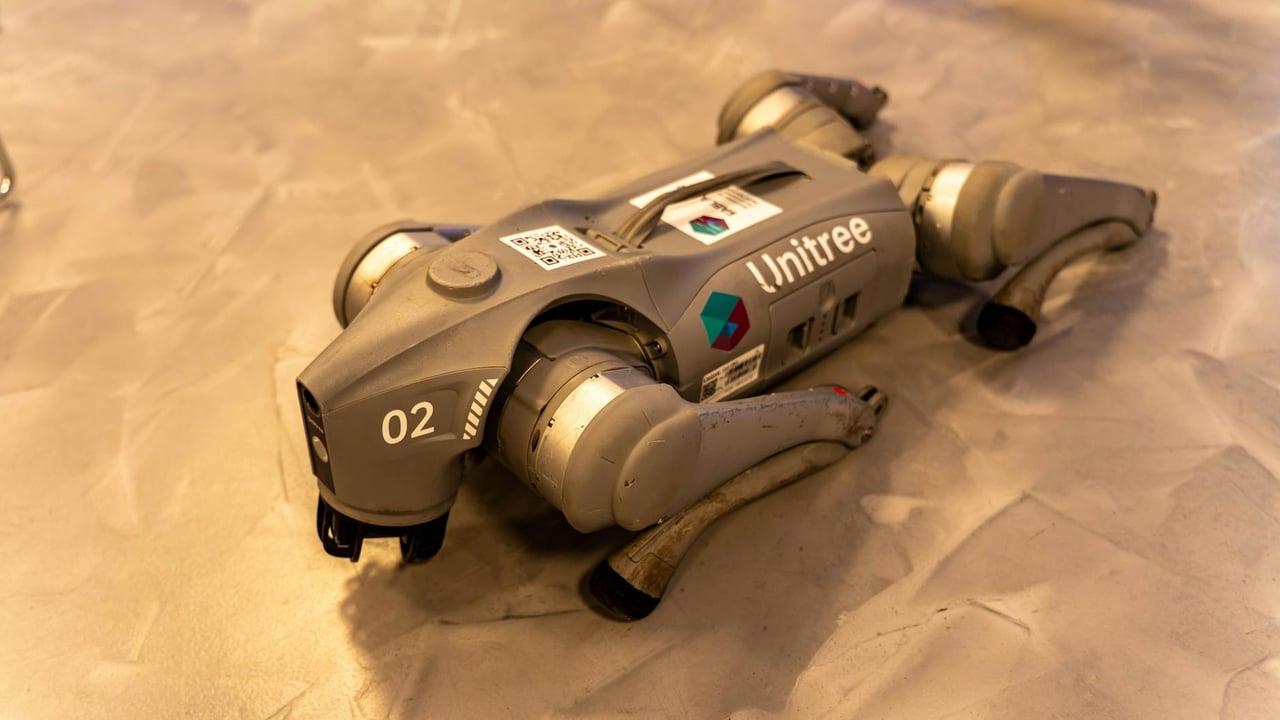

The landscape of global robotics is shifting as Unitree Robotics, the Hangzhou-based powerhouse often dubbed China’s answer to Boston Dynamics, successfully cleared its initial public offering review for Shanghai’s tech-heavy STAR Market. On June 1, the Listing Review Committee of the Shanghai Stock Exchange confirmed that Unitree meets all issuance and information disclosure requirements. This move marks a pivotal moment for a company that has evolved from a startup selling quadruped 'robodogs' to a serious contender in the race for general-purpose humanoid machines.
Unitree aims to raise approximately 4.202 billion RMB ($580 million USD), a capital injection that would propel its estimated market valuation to 42 billion RMB. This scale of investment reflects the intensifying arms race in embodied artificial intelligence, where hardware is no longer the sole differentiator. The company has explicitly stated that the proceeds will be used to bridge the gap in 'robot brains'—the general embodied large models that allow machines to perceive, reason, and interact with the physical world autonomously.
While Unitree has already made waves with its H1 and G1 humanoid models, which boast impressive agility and price-to-performance ratios, the real battleground lies in the intelligence layer. By focusing on large-scale model integration, Unitree is positioning itself to compete directly with American titans like Tesla’s Optimus and Figure AI. These Western rivals have set a high bar for autonomous functionality, and Unitree’s IPO is a strategic bet that Chinese hardware can be paired with sophisticated proprietary AI to create a truly versatile workforce.
This listing comes at a critical juncture for China’s technology sector as it seeks self-reliance in high-end manufacturing and artificial intelligence. The STAR Market was designed specifically to support firms that possess 'hard tech' and significant growth potential. Unitree’s successful crossing of this regulatory threshold signals strong state and market confidence in the humanoid robotics sector as a future pillar of the national economy, potentially transforming logistics, elder care, and manufacturing over the next decade.