
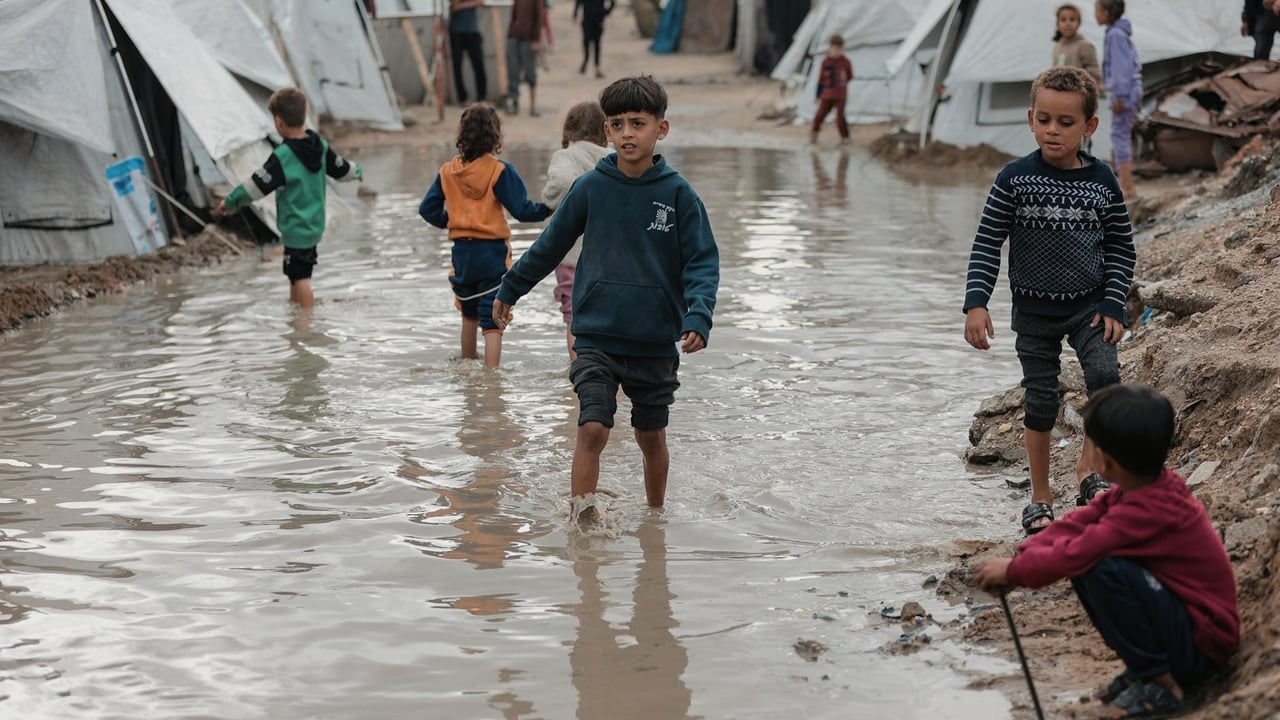

June 1st is ostensibly a day of celebration, marked globally as International Children’s Day. Yet, across the fractured landscapes of the Middle East—from the rubble of Gaza to the volatile borders of Lebanon—the day serves as a grim reminder of a childhood defined not by play, but by the visceral reality of survival. For many, the sky is filled not with kites, but with the smoke of ongoing bombardments.
The holiday itself was born from the ashes of the Second World War, established in 1949 to honor children killed by the Nazis in the Lidice massacre. It was intended to be a safeguard for the most vulnerable, a global pledge to prioritize the safety and rights of the next generation. However, nearly eight decades later, the humanitarian cost of modern regional conflicts suggests that this international commitment remains tragically unfulfilled.
Recent data underscores the severity of the crisis, particularly within the Gaza Strip. By March 2026, the ongoing conflict has claimed the lives of over 21,000 children, with tens of thousands more suffering from permanent disabilities. These are not merely statistics; they represent the wholesale destruction of the region's social and demographic future.
The violence has also expanded its reach into Lebanon and Iran. Since the resurgence of hostilities along the Lebanese-Israeli border in early March, over 200 children have been killed, and hundreds of thousands have been forced into displacement. In Iran, the city of Minab recently saw the deaths of 168 students in a single primary school airstrike, an event that has sparked international outrage and deep local mourning.
Beyond the immediate physical casualties, the long-term psychological toll is staggering. UNICEF and other humanitarian agencies warn that children exposed to constant warfare suffer from severe trauma, malnutrition, and a total disruption of their education. A childhood torn apart by violence often requires decades of rehabilitation, and for many, the mental scars will be permanent obstacles to a productive life.
Protecting children is not merely a humanitarian obligation but a prerequisite for regional stability. When schools are reduced to ruins and the sounds of laughter are replaced by explosions, it marks a dark chapter for human civilization. The international community must move beyond rhetoric and intensify mediation efforts to ensure that war no longer consumes the future of the Middle East.