

As China grapples with its fourth consecutive year of national population decline, a select group of economic powerhouses is successfully bucking the trend. New data for 2025 reveals that 21 of China’s 29 'Trillion-Yuan Cities'—those with a GDP exceeding one trillion RMB—added a combined 1.66 million residents. This growth signals a profound consolidation of human capital into high-productivity urban centers, even as the broader national demographic outlook remains grim.
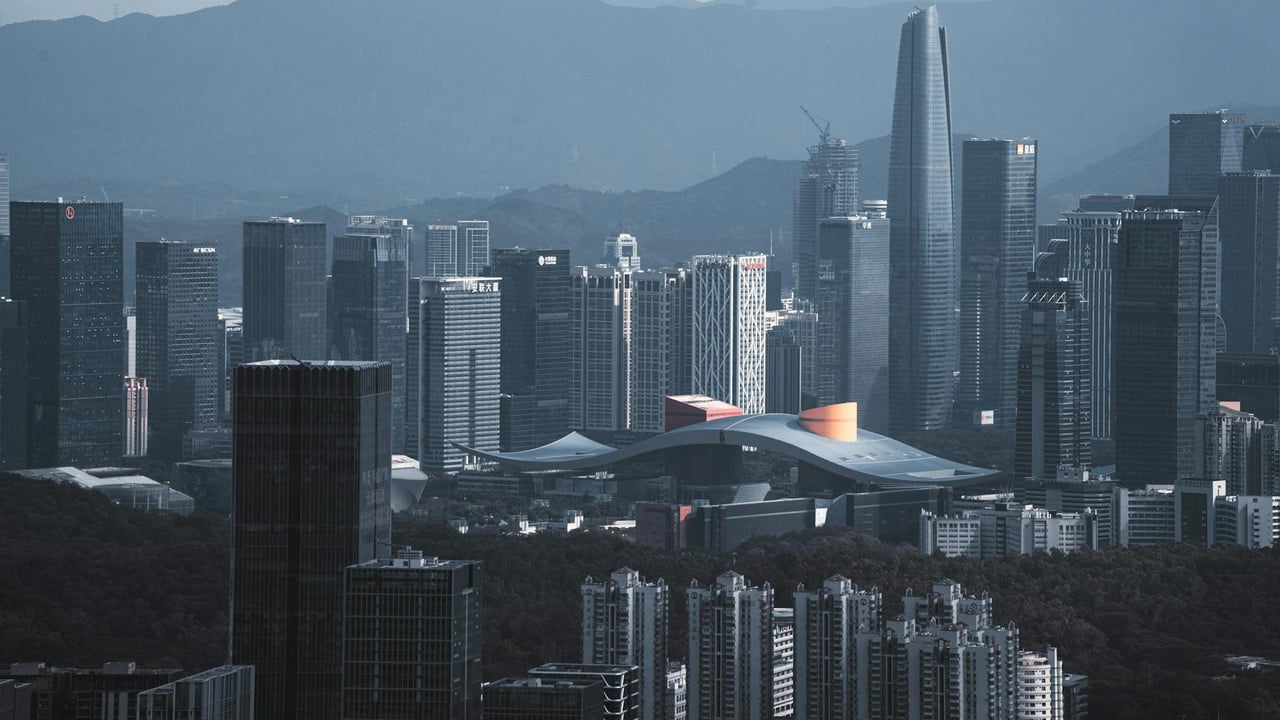
Shenzhen has reclaimed its position as the country's primary magnet for talent, recording an increase of 259,000 residents and pushing its total population past the 18-million mark. This resurgence is fueled by the city’s dominance in emerging sectors like artificial intelligence, electric vehicles, and high-end electronics. Unlike the 'statistical recovery' seen in cities like Wuhan following the pandemic, Shenzhen’s growth represents a strategic shift of labor toward innovation-led manufacturing and services.
Guangdong Province continues to serve as the engine of Chinese urbanization, with four of its cities ranking in the top ten for population growth. Beyond the top-tier hubs of Shenzhen and Guangzhou, satellite cities like Dongguan and Foshan are absorbing spillover from the core. These cities offer a competitive middle ground, providing robust manufacturing ecosystems and significantly lower living costs than their hyper-expensive neighbors, making them attractive to young professionals and industrial workers alike.
In the interior, a 'Strong Provincial Capital' strategy is paying dividends for cities like Changsha, Hefei, and Xi'an. These hubs have leveraged their status as regional centers for education, healthcare, and transportation to draw residents from surrounding rural areas and smaller towns. By concentrating provincial resources, these cities are creating localized economic gravity wells that can compete with the coastal giants for a shrinking pool of young labor.
However, the demographic dividend is not being shared equally among the elite. Beijing, Chongqing, and Tianjin all reported population contractions in 2025, reflecting the headwinds of high living costs and industrial restructuring. As Beijing continues its policy of 'de-compacting' non-essential functions and Chongqing faces the challenges of a massive, aging rural hinterland, the limitations of the traditional mega-city model are becoming increasingly apparent.
The race to become a 'Double-Ten City'—possessing both a trillion-yuan GDP and ten million residents—has become the new benchmark for urban competitiveness. Ningbo and Wenzhou are currently on the cusp of this milestone, viewing population growth as vital for maintaining both consumer market depth and regional influence. In an era of national shrinkage, the ability to attract and retain youth is no longer just a metric of success; it is a prerequisite for economic survival.