
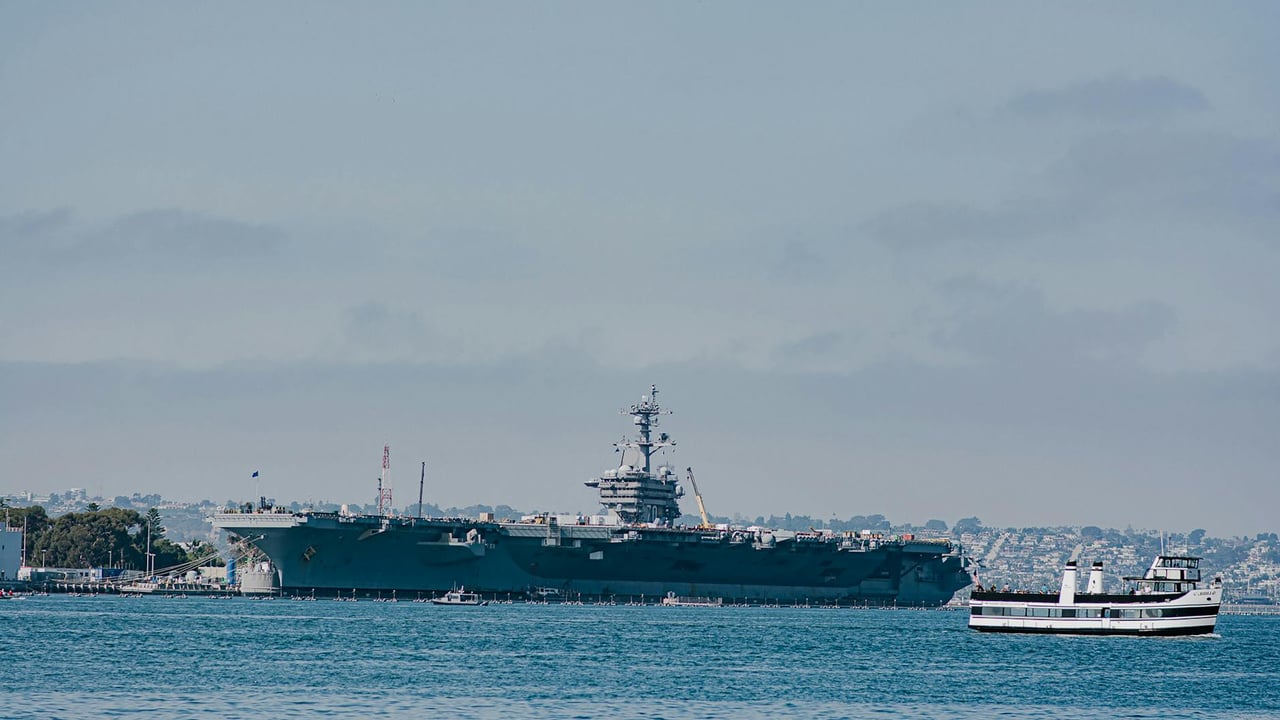

The arrival of the USS Nimitz in Kingston Harbor this week marks more than a routine logistics stop for the world’s oldest serving nuclear-powered aircraft carrier. As the massive vessel docked in the Jamaican capital on June 1, 2026, it signaled the conclusion of the 'Southern Seas 2026' deployment, a mission designed to reassert American naval presence throughout the Western Hemisphere. The five-day visit is ostensibly focused on regional cooperation, yet the shadow cast by the 100,000-ton supercarrier reaches far beyond the blue waters of the Caribbean.
Positioned a mere 145 nautical miles from the Cuban coast, the presence of the Nimitz is impossible to decouple from the escalating friction between Washington and Havana. Recent months have seen the United States intensify its economic and diplomatic pressure on the Cuban government, citing security concerns and democratic backsliding. By placing a carrier strike group within a stone's throw of the island, the Pentagon is employing a classic display of power projection that serves as a visceral reminder of U.S. kinetic capabilities in its 'near abroad.'
This deployment also serves as a strategic counterweight to the growing footprint of extra-regional actors in the Caribbean Basin. Over the past decade, Chinese investment in Jamaican infrastructure and port facilities has grown significantly under the Belt and Road Initiative, causing concern in Washington about the long-term erosion of American influence. The Nimitz’s stop in Kingston is a clear message that while commercial ties may be shifting, the security architecture of the region remains firmly anchored to the United States Navy.
While the Jamaican government has welcomed the visit as a sign of strong bilateral ties, the geopolitical subtext is unavoidable for regional observers. The transition of the Caribbean from a 'zone of peace' to a theater of high-stakes signaling reflects a broader global trend of maritime competition. As the Nimitz prepares to depart on June 5, the ripples it leaves behind will likely be felt in Havana and Beijing long after the ship has disappeared over the horizon.