
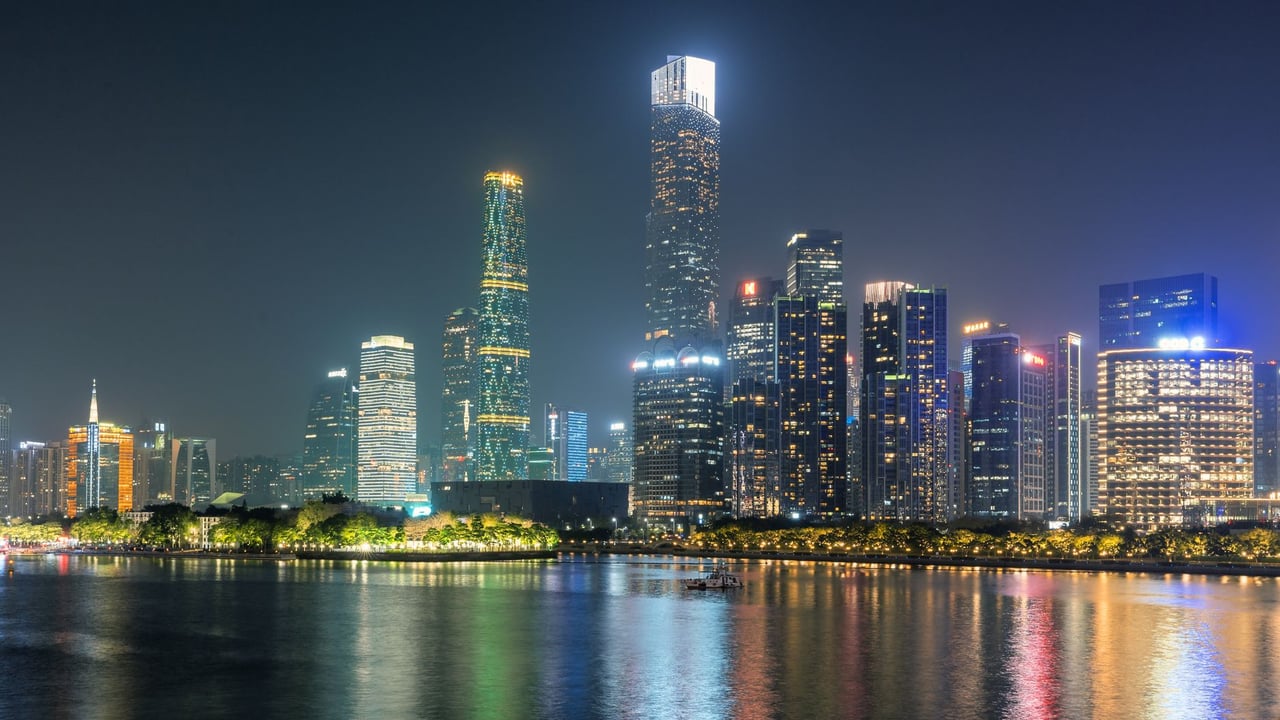

For decades, the quartet of Beijing, Shanghai, Guangzhou, and Shenzhen has defined the pinnacle of Chinese urban success. But as the 2026 Forbes list of China’s top 50 AI firms reveals a stark disparity—assigning 15 companies to Beijing and only one to Guangzhou—the southern metropolis faces a nagging existential question. While its streets remain crowded and its GDP formidable, Guangzhou is increasingly becoming 'invisible' on the map of China’s high-tech future.
The debate over whether Guangzhou should be demoted from 'Tier 1' status in favor of Hangzhou is often dismissed as a semantic game, yet it reflects a profound structural shift. Hangzhou, with several million fewer residents and a significantly smaller total GDP, is outpacing its southern rival in the metrics that matter for the next decade. The core of this divergence is not found in industrial output, but in the granularity of personal income tax data.
By 2025, Hangzhou’s total personal income tax revenue—a proxy for high-paying jobs and equity incentives—reached approximately 70.5 billion RMB, nearly 30% higher than Guangzhou’s. This 'Gold Cross' occurred around 2011, coinciding with the rise of the mobile internet and the Alibaba ecosystem. Since then, the gap has widened, suggesting that while Guangzhou is a massive engine of traditional trade, Hangzhou has become a denser hub for the 'new economy' elite.
Within the Greater Bay Area (GBA), Guangzhou has settled into a comfortable but secondary role as the region’s 'Living City.' It offers premier healthcare, education, and relatively affordable housing, yet it struggles to retain its own talent. Graduates from the city’s top universities, such as Sun Yat-sen and South China University of Technology, frequently migrate to Shenzhen to launch their ventures, drawn by a more concentrated venture capital ecosystem and a higher appetite for risk.
Historically, Guangzhou was an internet powerhouse, birthing titans like NetEase and WeChat. However, the narrative has stalled since the mid-2010s. While ByteDance, Pinduoduo, and DeepSeek emerged from other hubs, Guangzhou has failed to produce a nationally significant tech story since WeChat. The city’s capital structure—dominated by state-owned enterprises and large foreign investors—lacks the 'fission' quality seen in the private-sector clusters of Hangzhou or Beijing.
Ultimately, Guangzhou’s challenge is not about being 'kicked out' of an unofficial ranking, but about its future relevance. A city that functions primarily as a lifestyle and logistics hub may find itself increasingly sidelined in a national strategy that prizes technological self-reliance and innovation. Without a new 'national story' to follow the WeChat era, Guangzhou risks being politely omitted from the maps that define China’s technological frontier.